
Mold Removal vs Mold Remediation in Huntersville, NC
Mold removal kills what you can see. Mold remediation removes the material the mold is feeding on and fixes the water that let it grow. In a Huntersville house, only one of those keeps the patch from coming back.
Get a call back
Fill in the form or call (980) 250-4059. Calls are answered day and night.
§ 01 / 08
The short answer
If the growth is sitting on tile or glass and the leak is already stopped, a wipe-down can be a complete job. If mold is in drywall, a ceiling cavity, or anything porous, wiping the surface is theater: the colony lives underneath and re-fruits the week the moisture returns. Remediation is the full job, and it starts with the water, not the mold.
Which one your house needs depends on the wall, the ceiling, and how long the water has been there.
§ 02 / 08
Mold removal: what it actually is
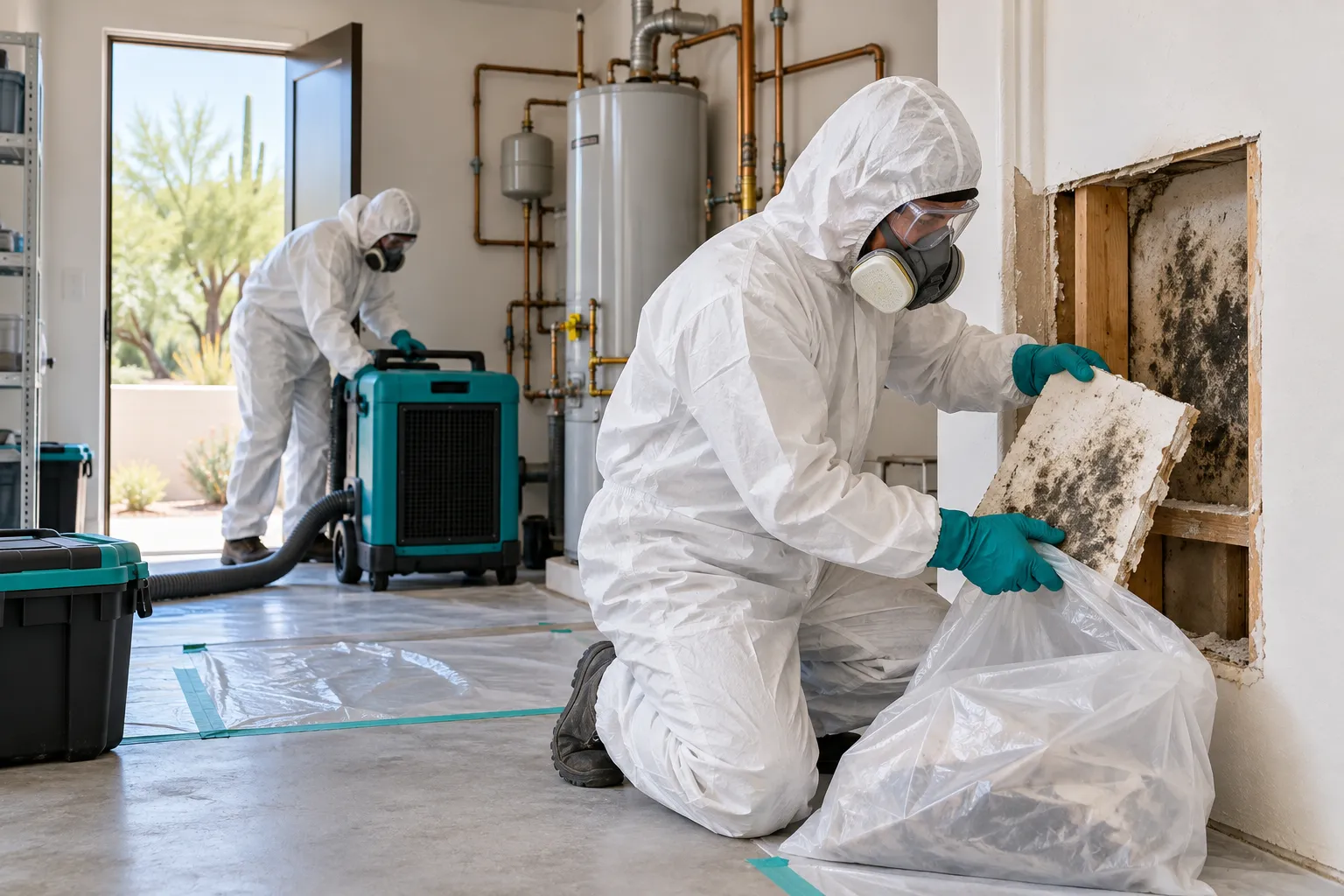
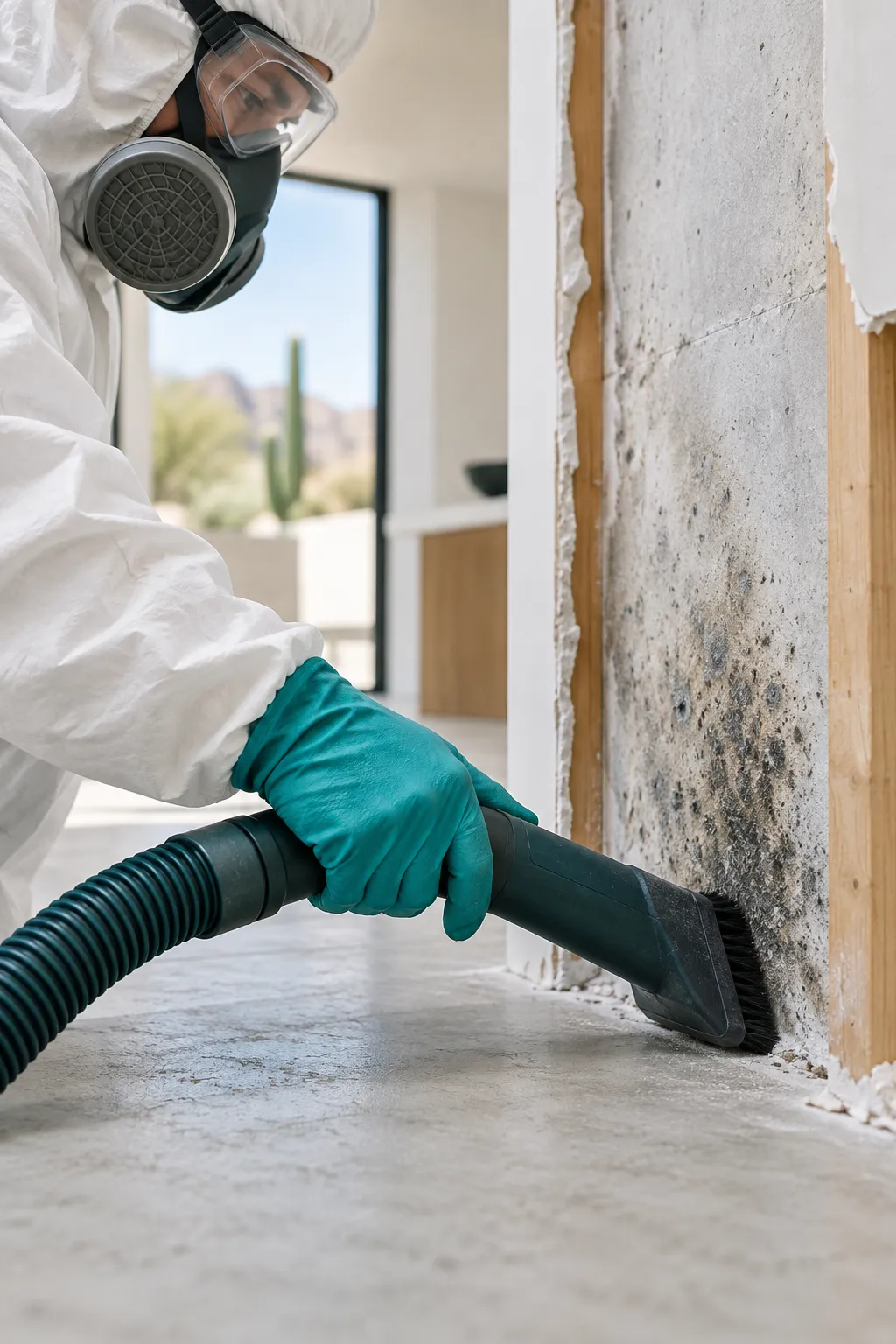
Removal is a surface treatment. Someone wipes, sprays, or scrubs visible growth off tile, grout, window tracks, or painted drywall. On a hard, non-porous surface with the source already fixed, that can genuinely be the end of it.
The limit is what removal never touches. Mold sends root-like threads called hyphae into the material it feeds on. Drywall is food on both sides of the paper: the colony runs through the paper face and into the gypsum core behind the paint. Wipe the paint clean and the colony is still in there, digesting the paper. Add water and it fruits through the surface again in days. That is why a stain that came back was never gone.
Removal also does nothing about the air. Spores from a hidden colony move through a house every time a door closes or the AC kicks on. You can scrub the visible patch flat while the rest of the house keeps circulating the problem. If the growth is in a ceiling cavity, the AC and duct mold page explains where that kind of colony actually lives.
§ 03 / 08
Mold remediation: what it actually is
Remediation starts with the water. In North Carolina, mold almost always starts at a water source, as well as persistent indoor humidity. A slow supply-line leak, a condensate line dripping in a ceiling, a summer storm leak at a parapet. The first move is finding that source and stopping it, because anything done before that is temporary.
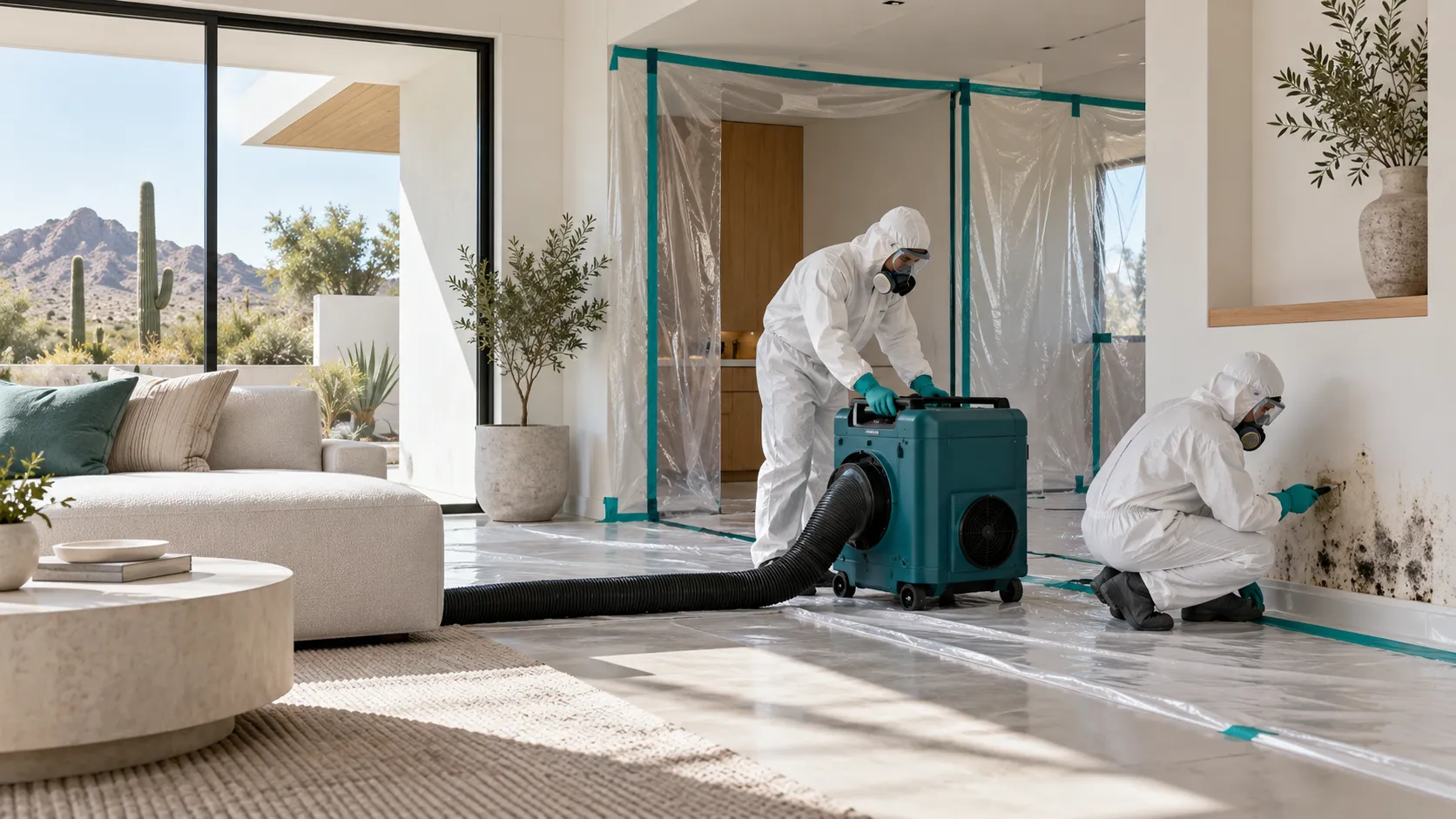
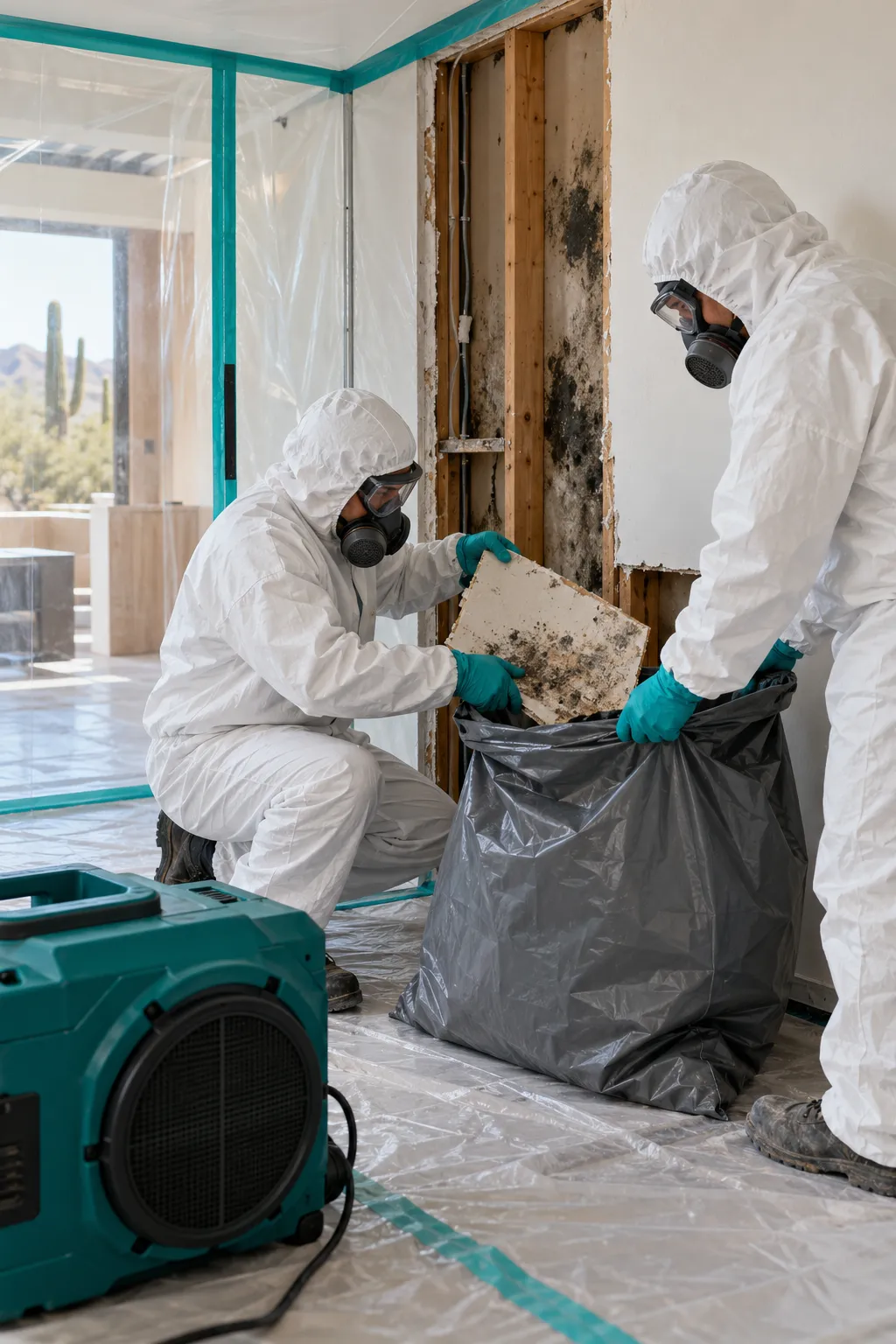
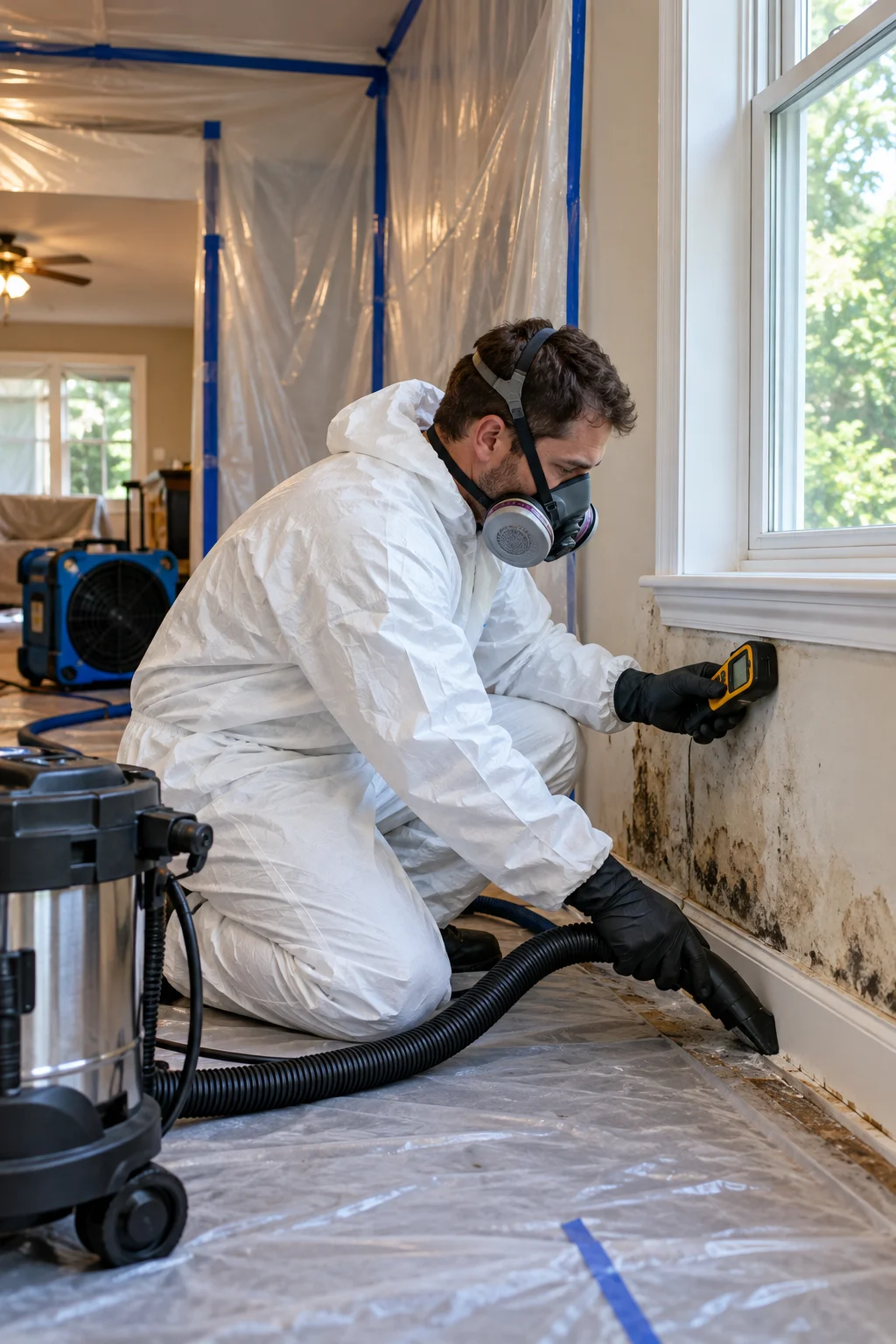
Then the physical work. Containment goes up so spores from demolition do not drift through the rest of the house. Wet or colonized drywall, insulation, and trim come out. Framing that can be saved gets cleaned and dried with a moisture meter on the wood, not a guess. The air gets scrubbed while the work happens. And the job ends with a clearance check: air samples that show indoor spore counts back in line with the outside air before the plastic comes down.
Remediation is not a bigger wipe. It is a different job built around a different question: where did the water come from, and what does it cost to make sure the answer is stopped. The mold inspection and testing page covers the source hunt that comes first.
§ 04 / 08
Where mold removal fails here
Huntersville has a lot of second homes that sit closed from May through September. That is exactly how a small problem becomes a wall full of it. A condensate line above a ceiling drips for weeks with nobody home to hear it. A summer storm storm ponds on a flat roof and seeps at a parapet. By the time someone walks in, the stain on the ceiling is a map of everything underneath.
That is the house where surface removal fails. The visible patch gets wiped, the place smells fine for a weekend, and the moisture in the cavity is still there. The colony re-fruits before the next visit. You did not remove mold, you moved the stain around. The same trap catches homeowners who chase a patch with store products instead of asking where the water is. If the drip is still dripping, the wipe is a subscription, not a fix. The bleach vs vinegar page shows why the product never mattered as much as the water.
Line open now
Mold growing right now?
Describe what you see or smell. You do not need to diagnose anything yourself.
§ 05 / 08
Where mold remediation fails here
Remediation fails in Huntersville when the quote is for a show. Homeowners report numbers that swing wildly for the same room, and the cause is usually scope, not price. One quote prices containment, drying, and clearance. Another prices a wipe-down and paint. Both call it remediation. Only one is. If you cannot tell what is being priced, you cannot tell which one you are paying for, and the quote walkthrough covers that line by line.
The other failure is skipping the source. If the condensate line that dripped all summer is not repaired or rerouted, or the parapet leak is left for the next storm, the remediation is a cleanup that sets up the next cleanup. The moisture source comes first, always.
§ 06 / 08
What it costs and what drives the number
The price is a range, and it moves with the job. A small patch on a bathroom wall with the source already fixed sits at the low end. Containment, air scrubbing, drywall removal, and a clearance test push the number up, and it keeps climbing with every extra room and every foot of vaulted ceiling. What drives the number is not the brand of chemical. It is how much material comes out, how tall the space is, and how long the water ran before anyone saw it.
Ask any quote to name the moisture source. If it cannot, the number does not mean anything. The pricing page explains how a scope is built, and the services page lists what each line item actually involves.
§ 07 / 08
What good work looks like in Huntersville
- The water comes first. The first question is where the moisture came from and whether it is stopped, because that decides whether the job is small or big.
- The scope gets priced, not a vague promise. Containment, demo, drying, and clearance are line items, so you can set two quotes side by side and see what one of them left out.
- The job matches the house. A closed-up second home in Huntersville gets checked for the drip that ran all summer, not just the stain it left behind.
- Sometimes removal is enough. If the surface is hard and the leak is fixed, you should not be paying remediation money.
§ 08 / 086 questions
Mold Removal vs Mold Remediation: your questions
01Is mold removal the same as remediation?
No. Removal treats what is visible. Remediation removes colonized material, dries the cavity, and fixes the water source so the growth does not return.
02Will mold come back after a wipe-down?
Usually, in Huntersville. If the leak that fed it is still active, or the colony is inside the drywall, the patch returns within weeks.
03Does insurance pay for either one?
That depends on the policy and what caused the water. Read the scope and ask who bills whom before the work starts, not after.
04How do I know if my house needs full remediation?
Follow the water. A stain with an active drip above it, a musty smell, or growth on drywall after a summer storm leak points to remediation, not a wipe. The black mold vs mildew page helps you read what you are looking at.
05What is a clearance check?
Air sampling after the work, compared against the outside air. It is how you know spore levels are down before the plastic comes off.
06Can I stay in the house during remediation?
Often yes for a small job. When containment goes up over a large demolition, whoever does the work should tell you which rooms to stay out of.