
Attic Mold Removal in North Huntersville, NC
Attic mold in North Huntersville usually starts with a roof leak or AC problem that went unnoticed. Here is how attic mold removal works here, what it costs, and what to do first: call (980) 250-4059.
Get a call back
Fill in the form or call (980) 250-4059. Calls are answered day and night.
§ 01 / 06
What does attic mold removal in North Huntersville involve?
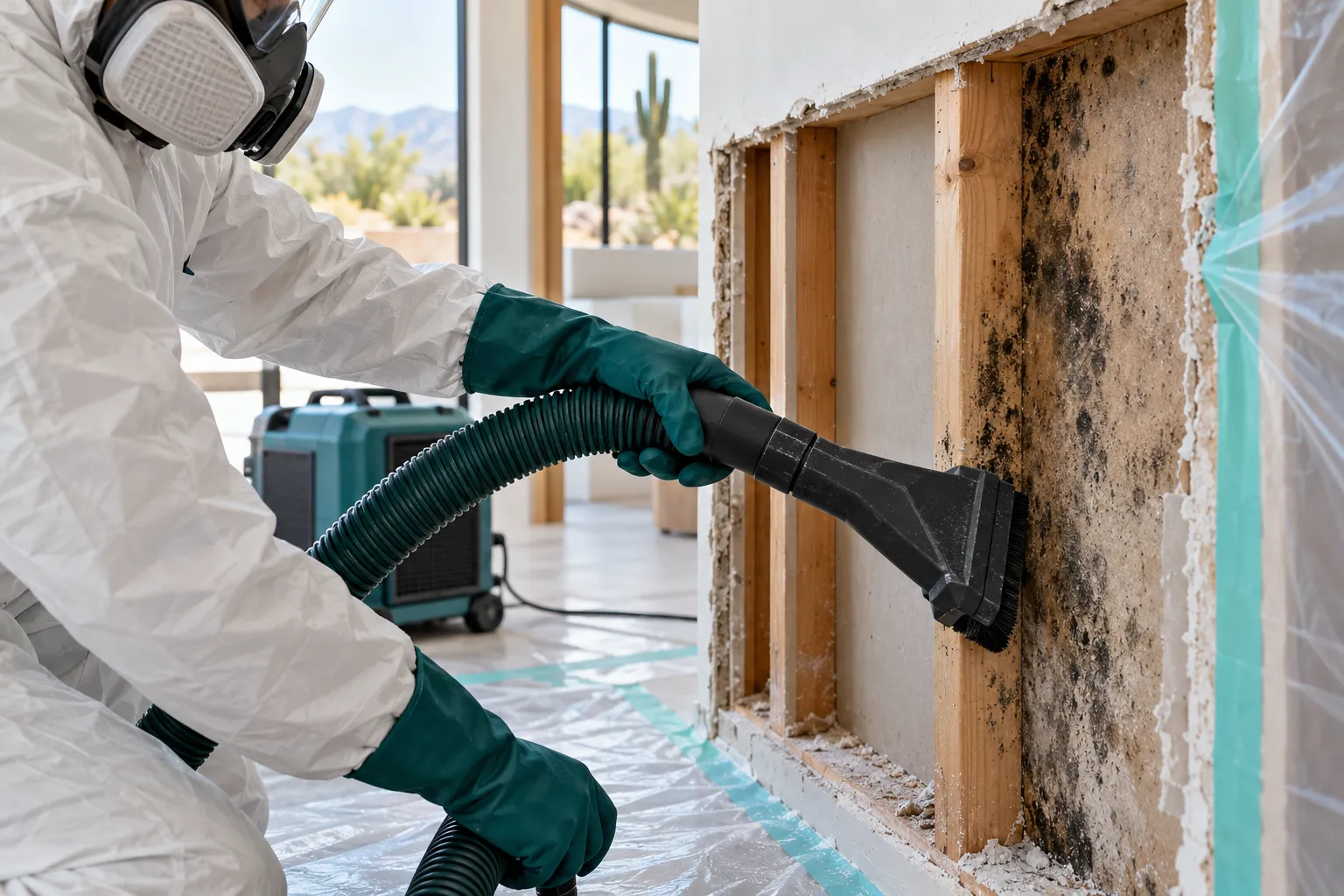
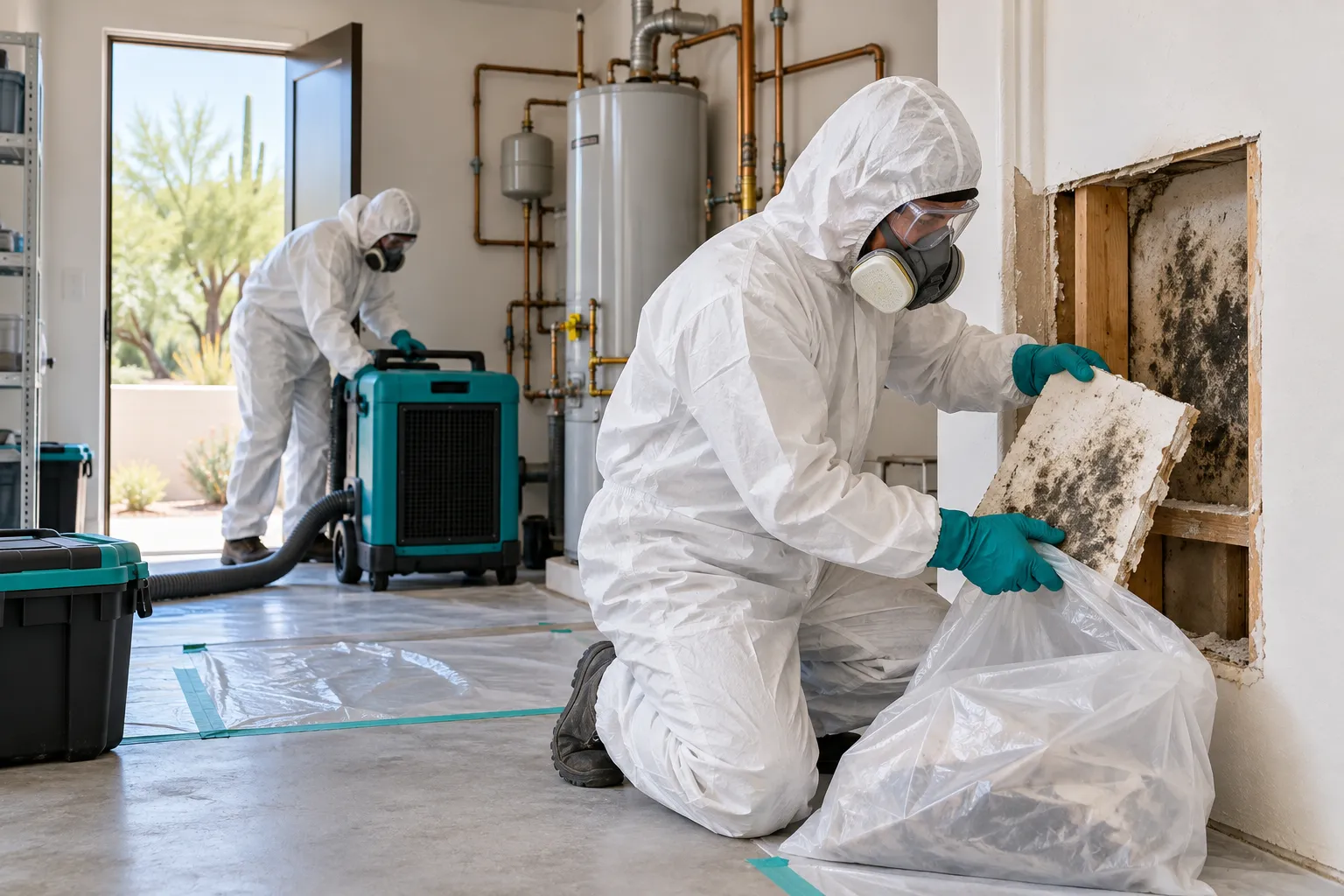
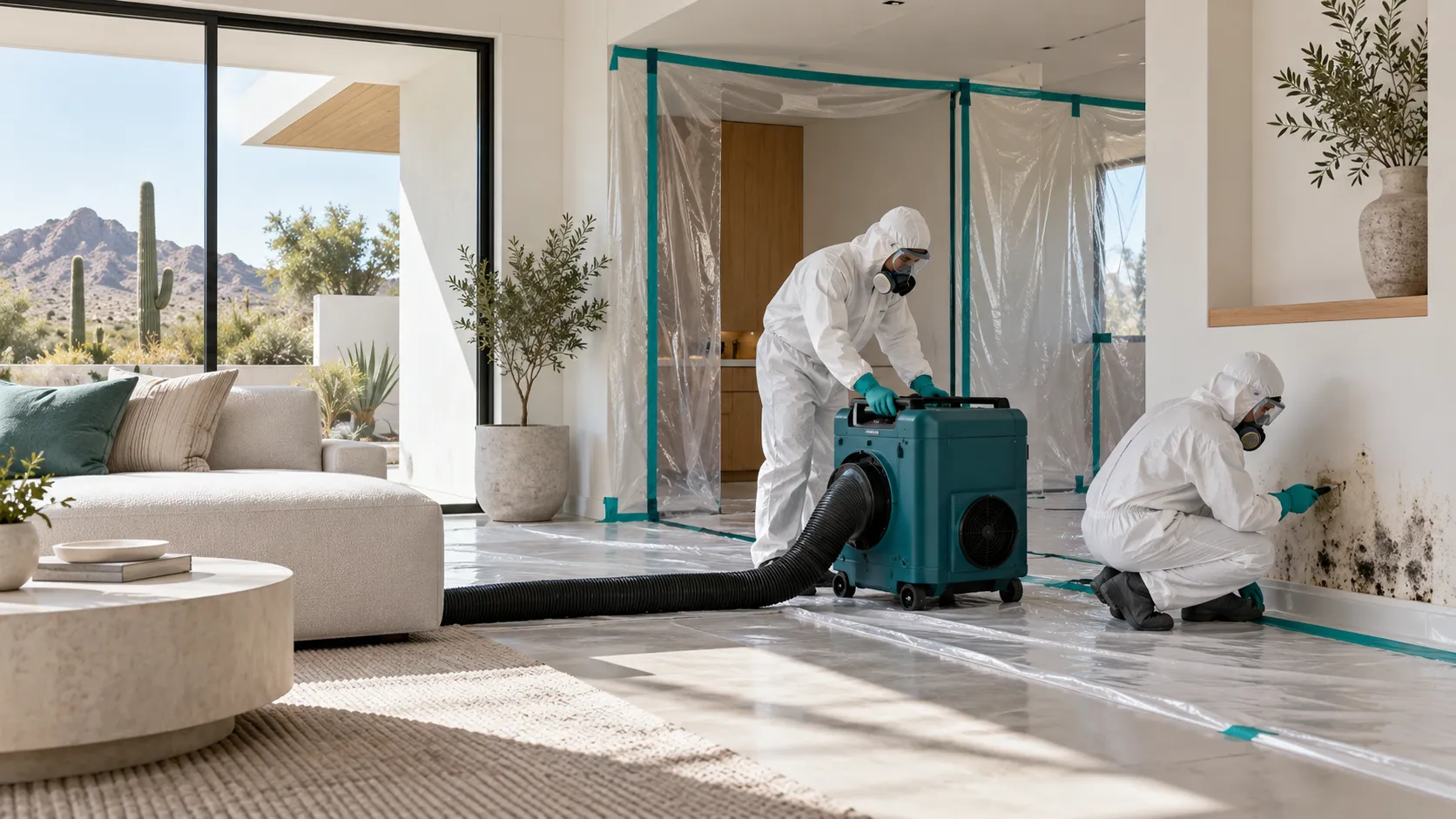
Every job starts with the water, not the growth. The roof leak or AC problem gets traced first, because the EPA's Brief Guide to Mold, Moisture and Your Home (opens in a new tab) says to fix the water problem, and that killing mold is not enough, it has to be removed. Then the attic gets sealed off from living space. Insulation that is wet or growing gets bagged and carried out, along with any sheathing that cannot be saved. Surfaces left behind get HEPA vacuuming, then drying until a moisture meter reads normal. The last step is repair: fresh insulation, replacement sheathing, and a permanent fix for the leak itself. Timing matters too: the sooner the water stops, the less material has to go.
§ 02 / 06
Why do North Huntersville attics get mold when homes sit closed for the summer?
In North Huntersville, roof leaks, blocked drainage and AC condensate can leave attic materials damp. Inspect flashing, roof penetrations and the insulation below a new ceiling stain. Wind-driven rain may reach a gap that does not leak in light weather. A moisture reading helps distinguish an old mark from an active leak. Fix the water source before removing damaged materials, and inspect the same location again after rain. Keep gutters and downspouts clear and have a qualified contractor assess roof repairs and safe attic access. For current weather hazards, consult the National Weather Service.
§ 03 / 06
How do you know the attic has mold?
In North Huntersville, roof leaks, blocked drainage and AC condensate can leave attic materials damp. Inspect flashing, roof penetrations and the insulation below a new ceiling stain. Wind-driven rain may reach a gap that does not leak in light weather. A moisture reading helps distinguish an old mark from an active leak. Fix the water source before removing damaged materials, and inspect the same location again after rain. Keep gutters and downspouts clear and have a qualified contractor assess roof repairs and safe attic access. For current weather hazards, consult the National Weather Service.
§ 04 / 06
What does attic mold removal cost in North Huntersville?
Attic work is priced by what has to come out, not by a flat rate. Published reference-market data for 2026 bands attic remediation at $1,050 to $4,150 (Masters' Guild), and the spread is real: one wet patch near the hatch is a smaller job than growth running the length of a ridge. Access counts too, since a walkable attic moves faster than one you crawl, and access often decides the labor. Those are published ranges, not a quote. Any number only becomes real after an on-site assessment, and the affected area, its location, and what has to come out are what move it. The full table of reference ranges, with sources, sits on the Huntersville mold removal price guide.
Line open now
Mold in a North Huntersville home?
Describe what you see or smell. You do not need to diagnose anything yourself.
§ 05 / 064 questions
Questions people ask
01Does every North Huntersville attic mold problem come from the roof?
No. Air handlers and condensate lines are another source, and so are failed vent boots. All of them leave water sitting in insulation, so the fix starts at the entry point.
02The house sat closed all summer and the attic smells. How bad can it be?
A musty smell in a closed house usually means moisture has been there for weeks, and growth has had the same head start. A moisture check shows how far it spread; waiting rarely helps.
03Did the September 2025 storm create attic leaks around here?
Moisture problems in North Huntersville can come from plumbing leaks, AC condensate, storm runoff or persistent indoor humidity. A closed room or a concealed wall cavity may remain damp even after the visible surface feels dry. Check the water source, document the affected area and arrange a moisture assessment when the cause is unclear. The EPA recommends drying water-damaged materials within 24 to 48 hours. Keep drainage working, monitor indoor humidity and inspect a previously wet area after the next rain. The condition of the individual home matters more than a neighborhood average.
04Is mold on attic sheathing a health risk for the household?
It can matter to some people, and it will not fix itself either way. Reactions like allergy symptoms are possible in sensitive people; any health questions belong with a doctor. The house answer is removal plus a roof repair.
Price ranges are reference-market and national planning examples, not verified Huntersville prices or a quote. Your contractor sets the price after assessing your property.