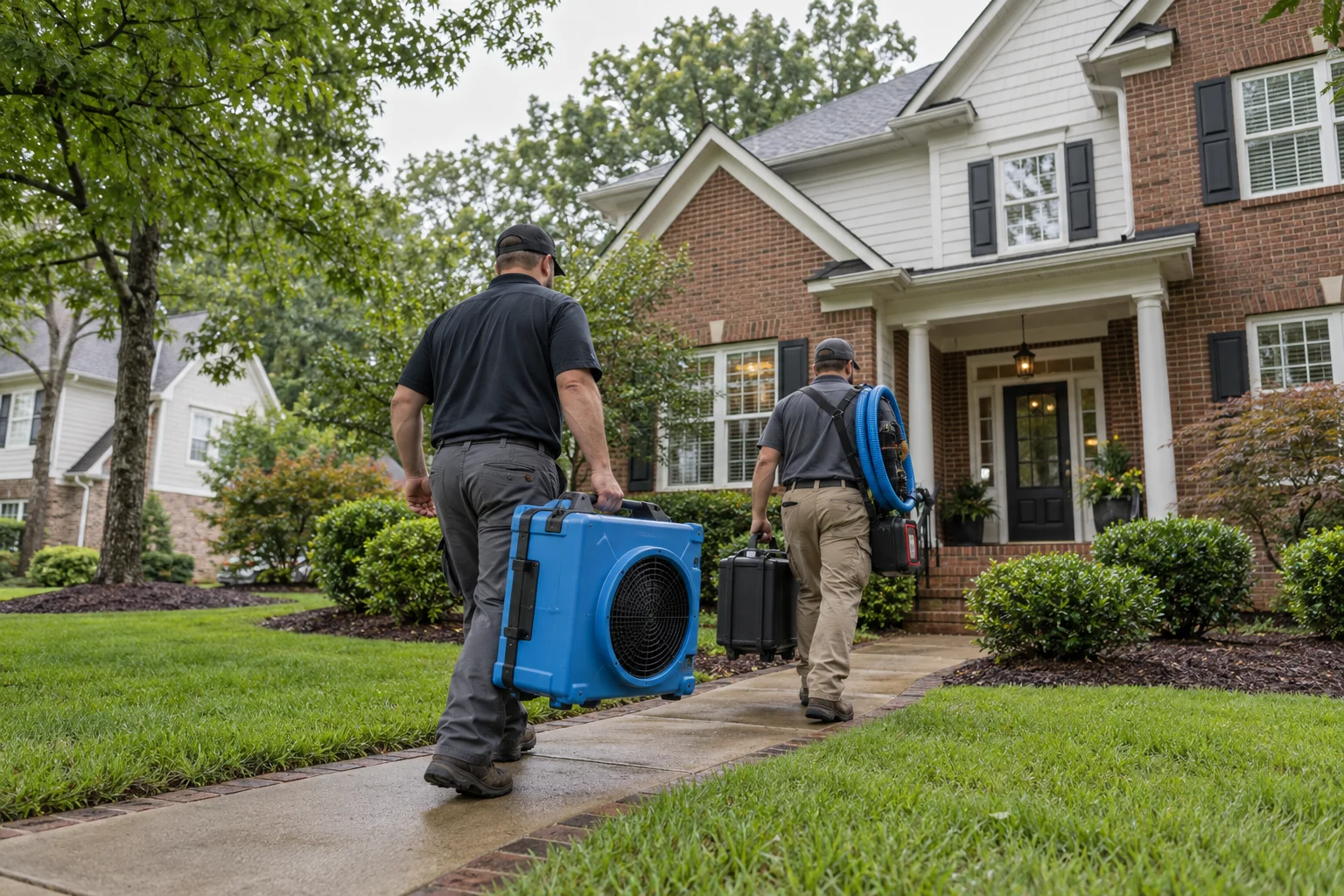

Water Damage Restoration in Huntersville, NC
You have water in the house, and the EPA's drying window is 24 to 48 hours. Call day or night or send the form, and someone from our team will call you back soon.
Get a call back
Fill in the form or call (980) 250-4059. Calls are answered day and night.
§ 01 / 15
Water out, house dry, mold checked
Water damage restoration is the work of stopping the water, removing what is already in the house, drying the structure, and repairing what got damaged. Past 24 to 48 hours wet, mold growth goes from risk to likely, so speed beats perfection on day one. Water in the house right now? Call (980) 250-4059, day or night.
- The source is stopped first: a plumber fixes a burst line, a roofer stops a roof leak.
- Pumps and extractors pull the standing water off the floor and out of the carpet.
- Moisture readings map everywhere the water reached, including the spots that look dry.
- Air movers and dehumidifiers run until the readings reach the dry standard for each material.
- Drywall, paint, flooring and trim are fixed or replaced once the structure tests dry.
§ 02 / 156 signs
6 signs you need water damage restoration
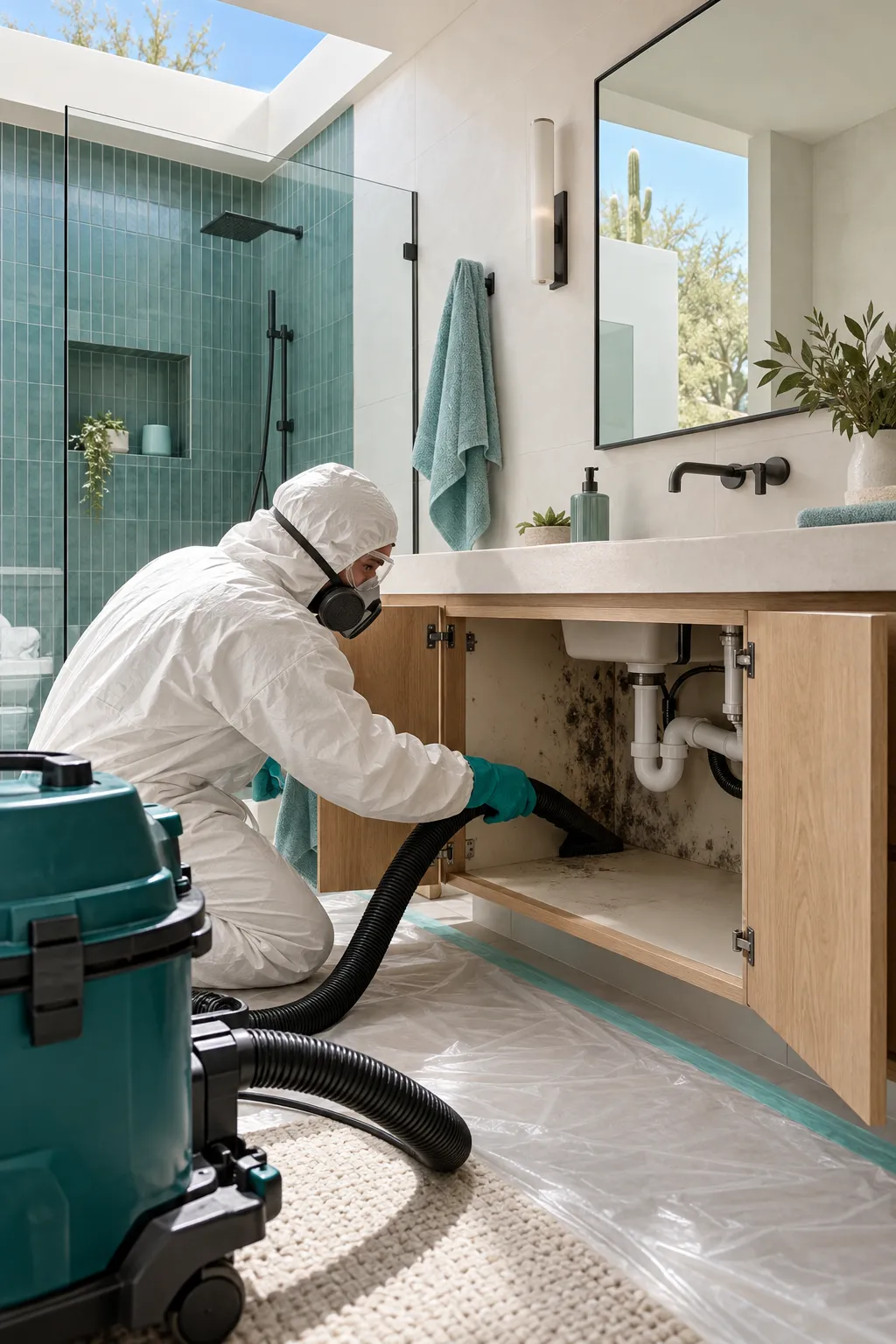
Past 24 to 48 hours wet, drywall, insulation and carpet pad often have to be removed instead of dried, and mold can establish itself. Standing water keeps spreading on its own, hour by hour.
- 01
Standing water on the floor or in the carpet
Extraction comes before drying.
- 02
A supply line, water heater, AC condensate line or roof leak let go
Most Huntersville jobs start this way.
- 03
An area that stayed wet longer than 48 hours
That is when mold becomes likely.
- 04
A musty smell that showed up after the leak
A moisture meter or a mold inspection settles it either way.
- 05
A wall that feels dry but is not
A dry surface can hide damp drywall, a wet stud cavity or a soaked subfloor.
- 06
Gray, smelly water, or water that came up through a drain
Stop touching things and leave the area.
§ 03 / 153 steps
How water damage restoration works, in 3 steps
- 01
Call or send the form, day or nightTell us what you see or smell, and where.
- 02
Someone from our team calls you backWe go over what you found.
- 03
Water removal, drying and repairs followThe source is stopped first.
§ 04 / 15
What does water damage restoration cost in Huntersville?
Published market ranges give a realistic picture. A typical restoration job runs $1,200 to $5,000, with a national average near $3,000 (Fixr (opens in a new tab)), and most homes land between $1,200 and $8,500 (Home Restoration Costs (opens in a new tab)). Water extraction alone runs $500 to $3,000, drying with fans and dehumidifiers runs $500 to $2,500, and extraction and drying is often quoted at $3 to $7 per square foot (Home Restoration Costs). What moves the number: how far the water spread, how dirty it is, which materials it reached, and how long it sat before drying started. These are published market figures rather than a quote; the real price comes after a walkthrough of the space. When mold is part of the picture, remediation has its own published ranges on the pricing page.
§ 05 / 15
What is water damage restoration?
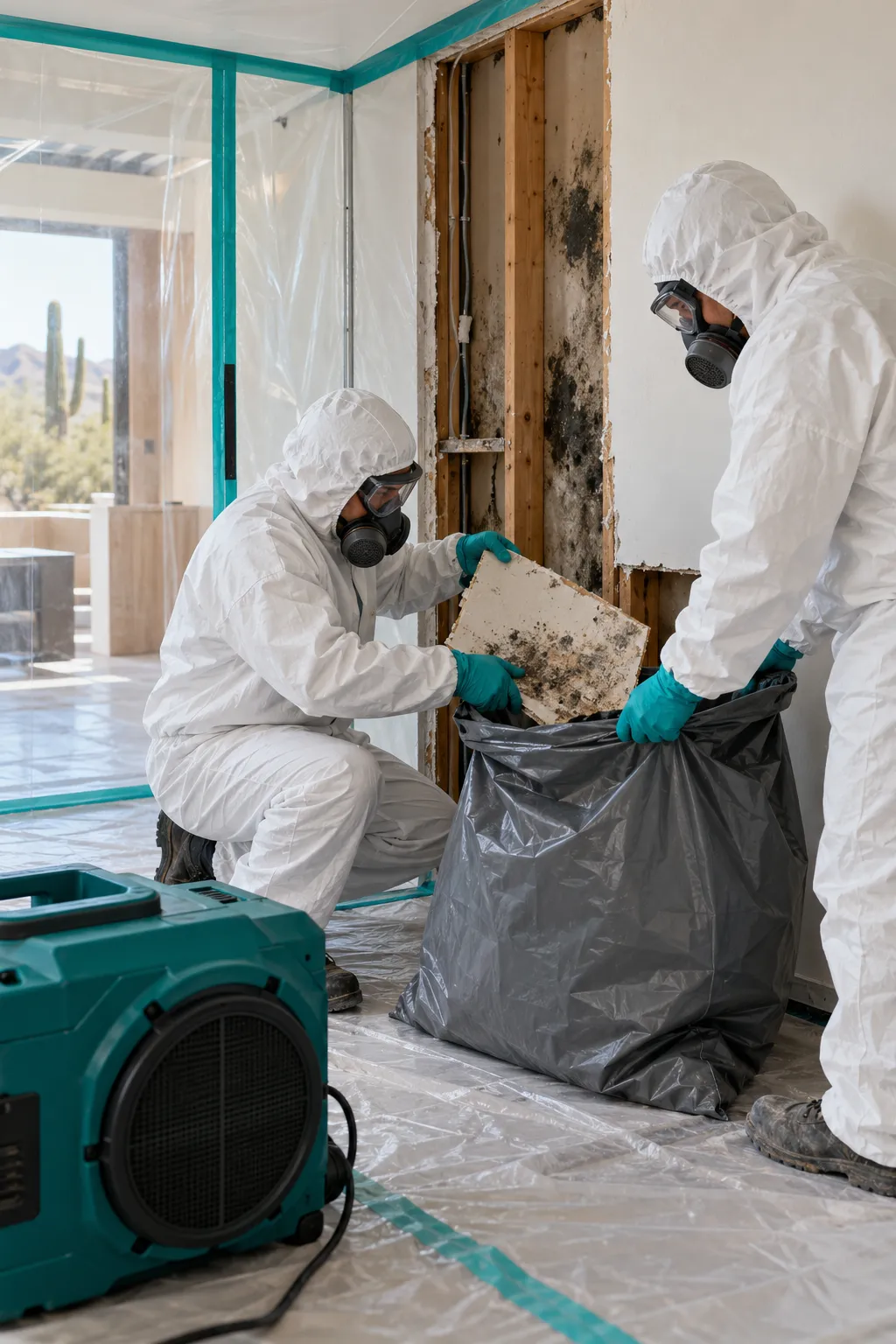
Water damage restoration is a 5 part job: stop the water, remove the standing water, dry the structure, repair the damage, and confirm with readings that everything is dry. The first 3 parts are about the water. The last 2 are about your house going back to normal. Restoration is not the same as a cleanup, because a cleanup can leave a wall looking fine while it is still wet inside, and an unfinished job is exactly how water damage turns into mold. In Huntersville, most jobs start the same way: a supply line, a water heater, an AC condensate line, or a summer storm roof leak. The work is the same whether the water came from a pipe or from the sky. What changes is who fixes the source.
§ 06 / 15
What should you do in the first 10 minutes?
Shut the water off first, at the fixture or the main valve, then keep everyone out of the wet rooms. Do not touch outlets, cords or appliances sitting in water; cut power to that room only if you can reach the breaker without stepping in water. Take photos and a short video before you move anything, because the insurer will ask. Lift rugs, papers and electronics out of the water and put them somewhere dry. If the water is gray, smelly, or came up through a drain, stop touching things and leave the area. Then call (980) 250-4059 and describe what you see: where it came from, how much floor is wet, and how long it has been that way. The first call decides how fast drying starts.
§ 07 / 155 steps
What are the steps of a water damage restoration job?
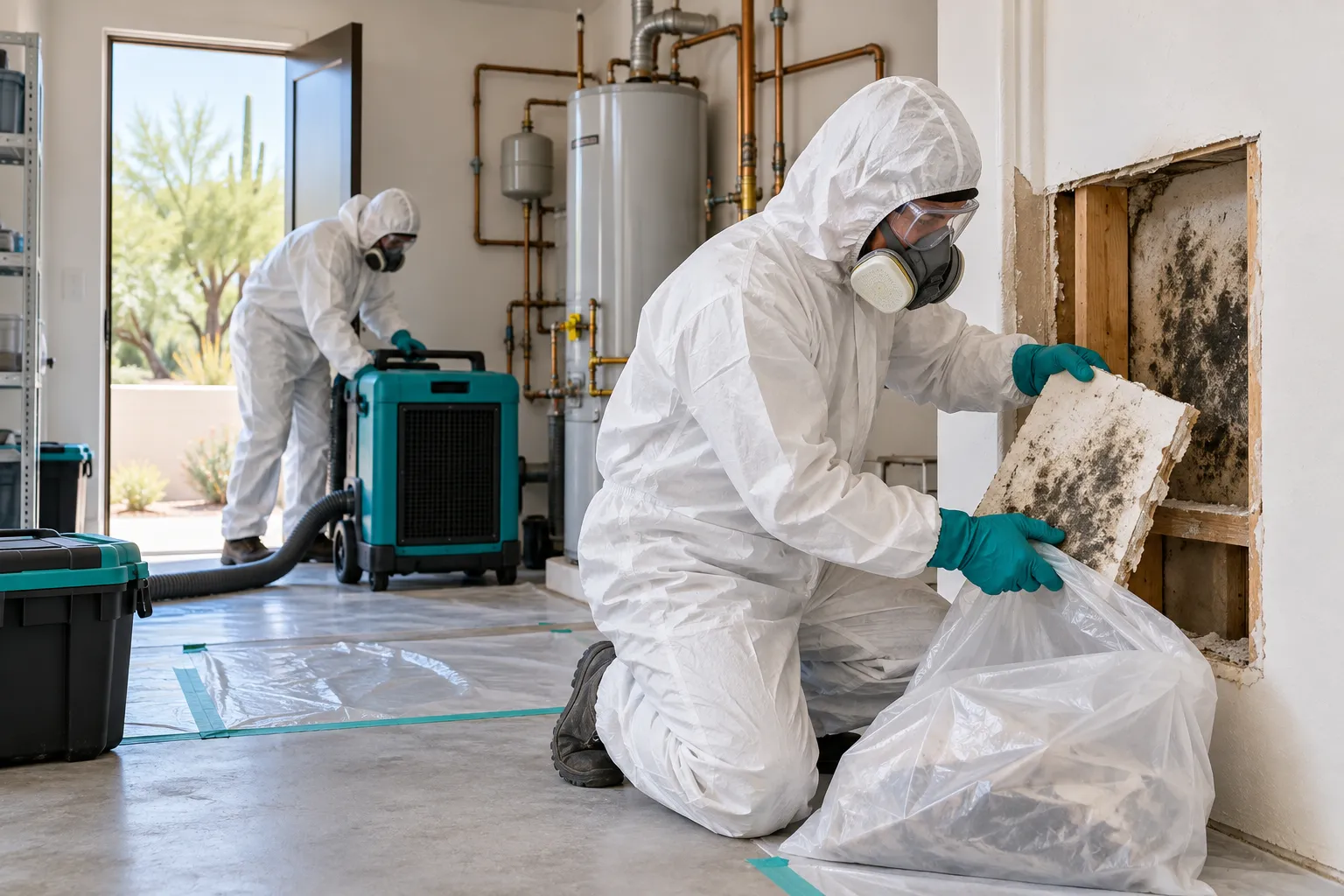
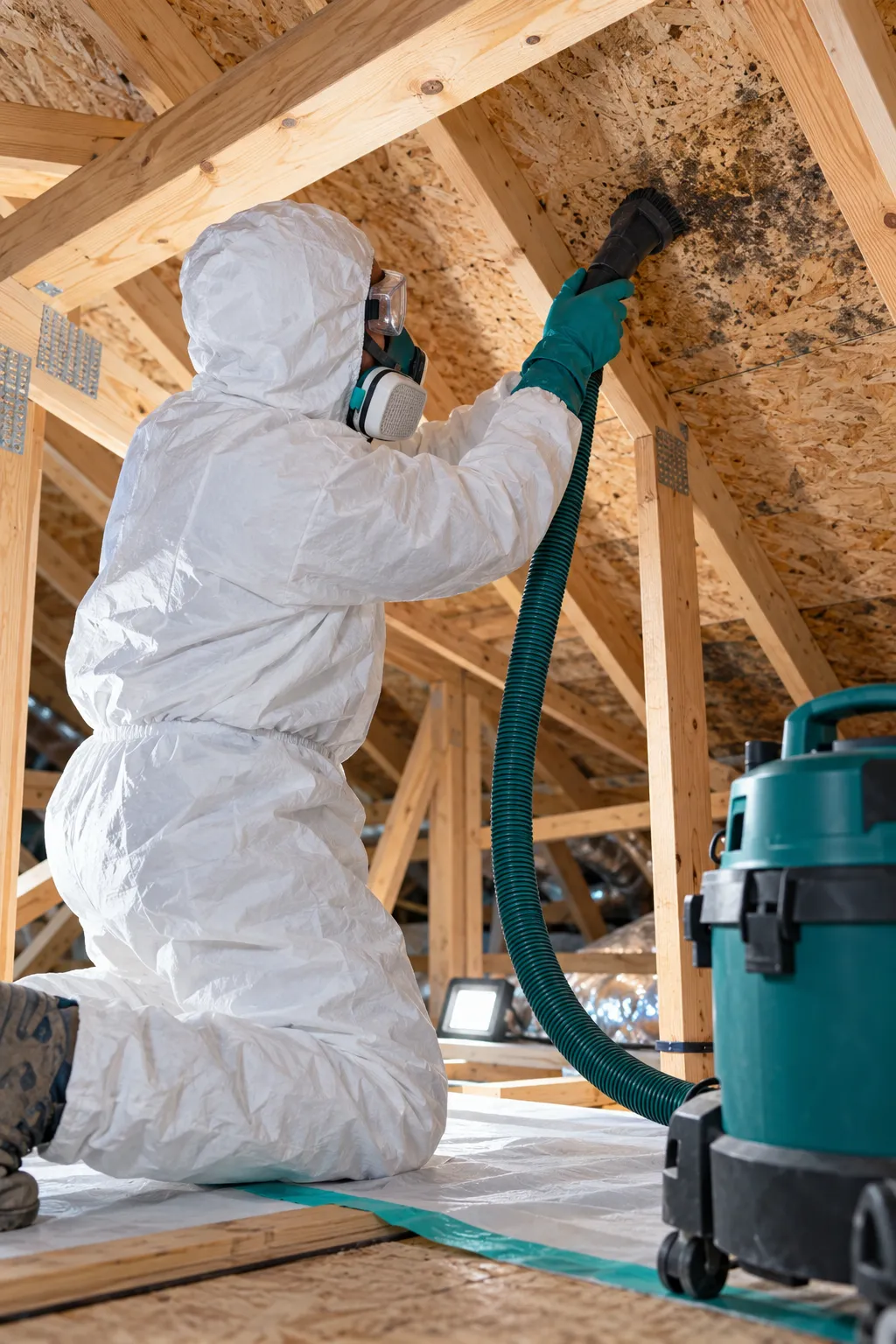
Most jobs move through the same 5 steps, in order:
Stop the source
A plumber fixes a burst line, a roofer stops a roof leak. Drying cannot outrun running water.
Extract
Pumps and extractors pull the standing water off the floor and out of the carpet.
Measure
Moisture readings map everywhere the water reached, including the spots that look dry.
Dry
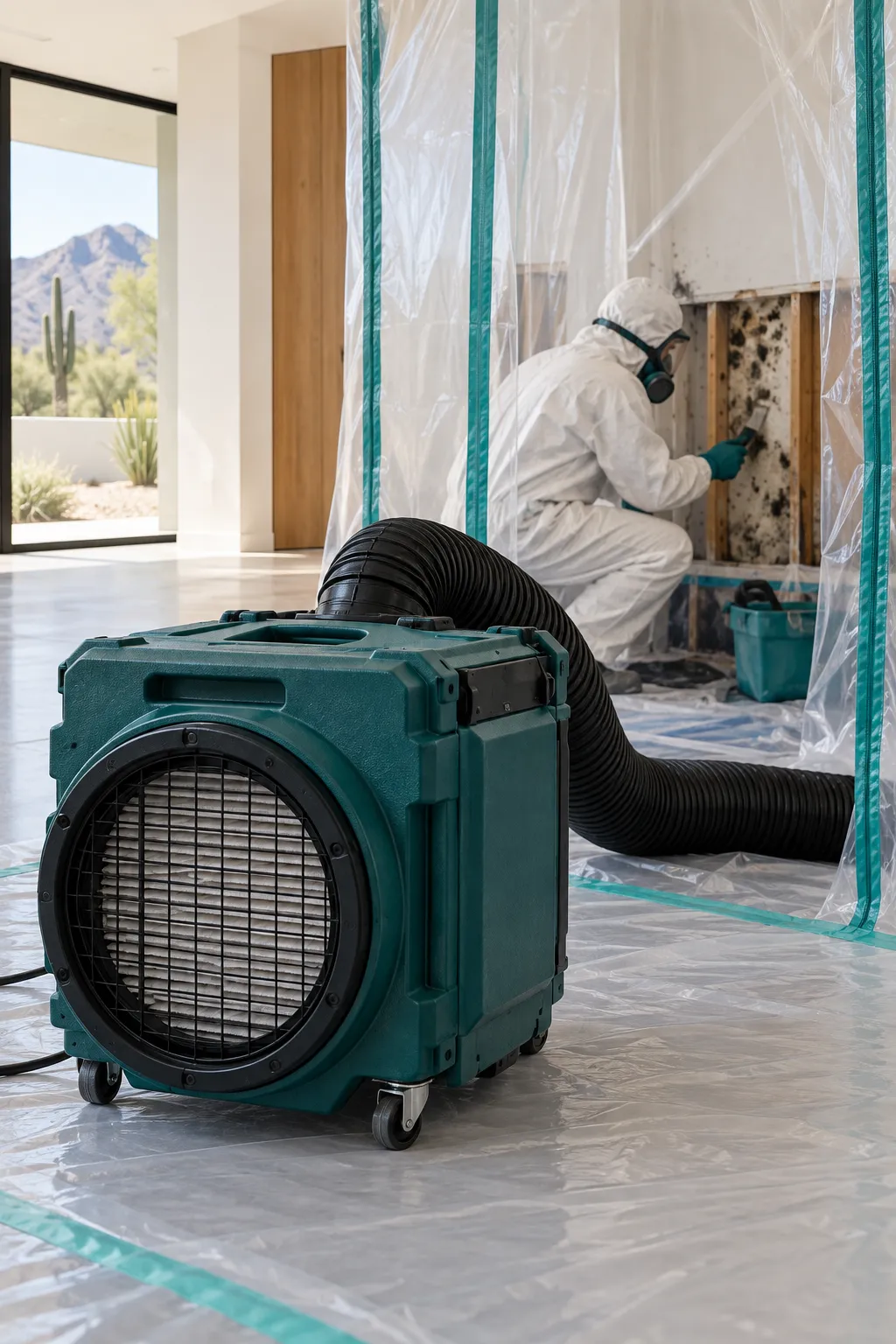
Air movers and dehumidifiers run until the readings reach the dry standard for each material, checked day by day.
Repair
Drywall, paint, flooring and trim get fixed or replaced once the structure tests dry.
The order matters. Every step that gets skipped or rushed shows up later as a stain, a smell, or a repair done twice.
Line open now
Water in the house right now?
Describe what you see or smell. You do not need to diagnose anything yourself.
§ 08 / 15
Why do the first 24 to 48 hours matter so much?
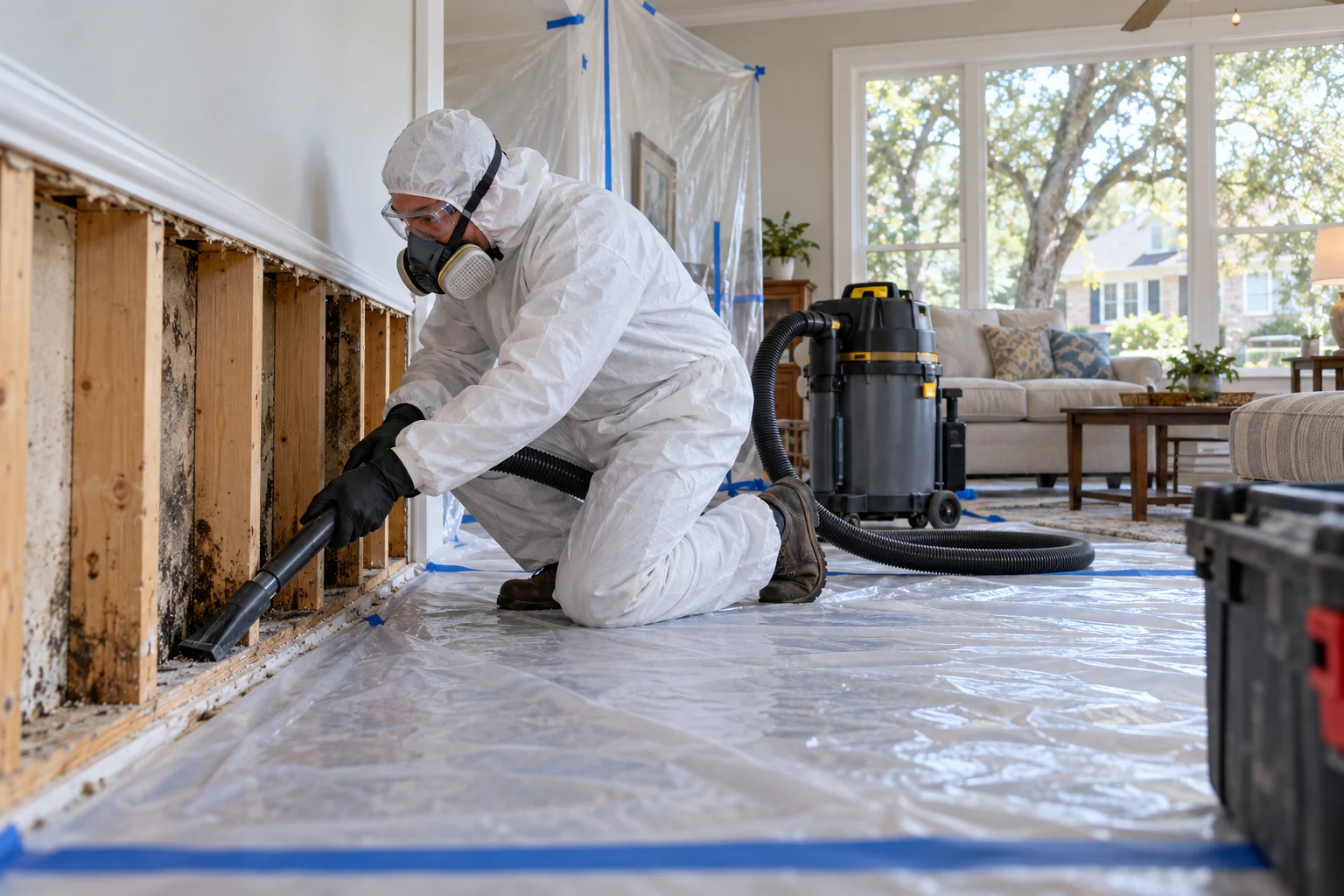
The EPA's (opens in a new tab) rule of thumb is to get wet areas and materials dry within 24 to 48 hours, because past that window mold growth goes from risk to likely, and that timing is why speed beats perfection on day one. Inside the window, most materials can be saved: drywall dries, cabinets dry, floors dry. Past it, wet drywall, insulation and carpet pad often have to be removed instead, because mold can establish itself, and no amount of later drying undoes that. Standing water also keeps spreading on its own. It climbs the bottom of drywall, wicks into baseboards, and soaks carpet pad hour by hour. That is why extraction comes before drying, and why the clock is treated as part of the job, not a warning on a brochure.
§ 09 / 15
How do you know the structure is actually dry?
With a moisture meter, in writing, day by day. A surface that feels dry can hide damp drywall, a wet stud cavity, or a soaked subfloor, so a proper drying job reads the materials themselves: walls, floors, ceilings, cabinets. The readings get recorded on a moisture map and repeated daily until each material reaches the dry standard, the number the IICRC S500 standard (opens in a new tab) defines for water damage work. That standard is what separates a finished job from a paused one. This is also where mold work begins, because the same readings that prove dryness are the ones that show whether mold has a moisture source to live on.
§ 10 / 15
Does homeowners insurance cover water damage?
It depends on the cause and on your policy, and your insurer decides. The pattern in most policies: accidental discharge from a plumbing system, like a burst supply line or a failed water heater, is commonly covered, while flood water from outside and long-term seepage are not, and flood coverage needs its own policy. Triple-I (opens in a new tab), the insurance industry's research group, tracks how these losses work, and the practical takeaway is the one adjusters repeat: document everything as it happens. Photograph the water and the cause before cleanup, keep receipts, and keep a list of what was wet and where it was moved. That file is what makes a claim go smoothly, whichever way the coverage decision lands. More photos than you think you need is the standard; they cost nothing and answer questions nobody has asked yet.
§ 11 / 15
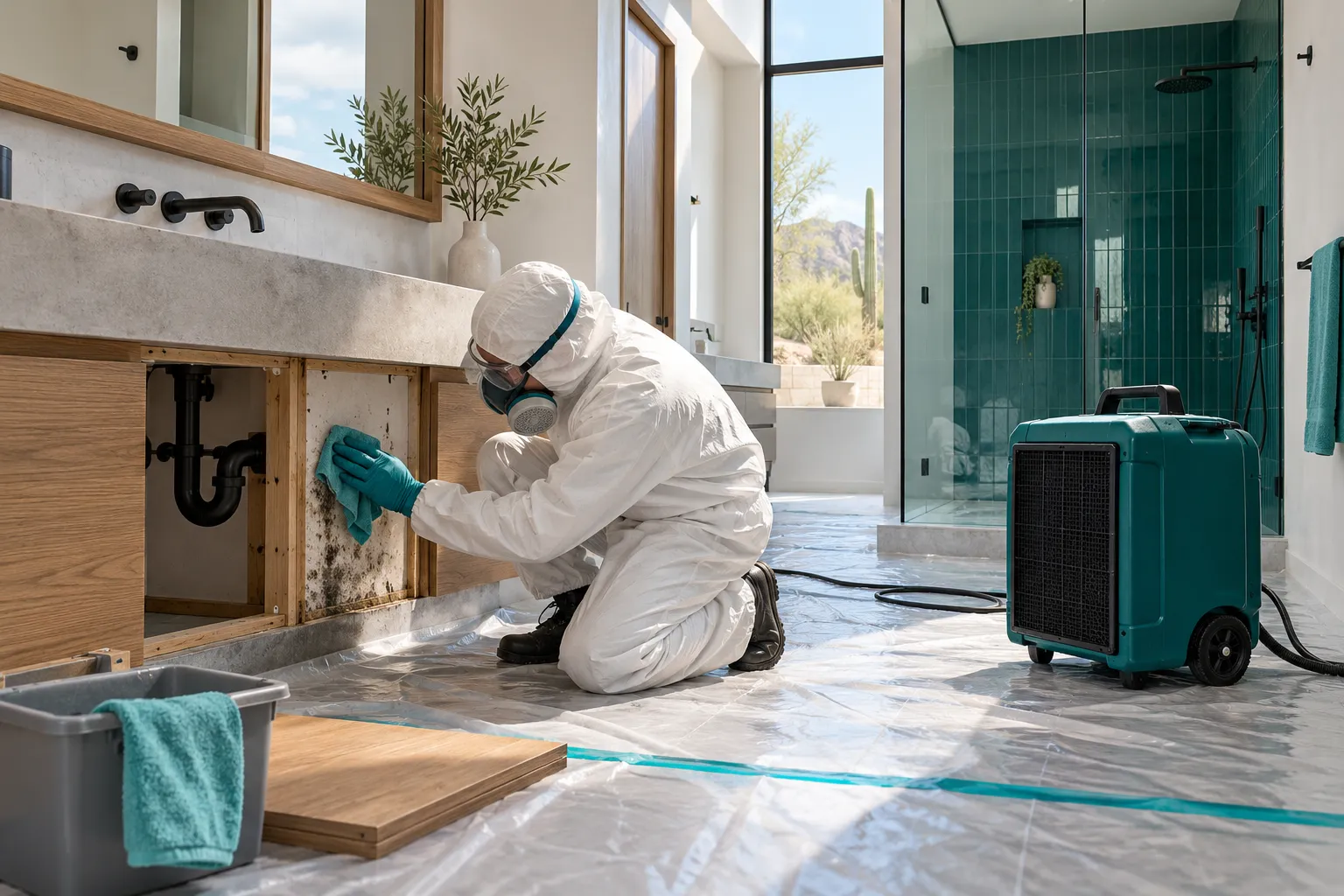
When does water damage turn into mold?
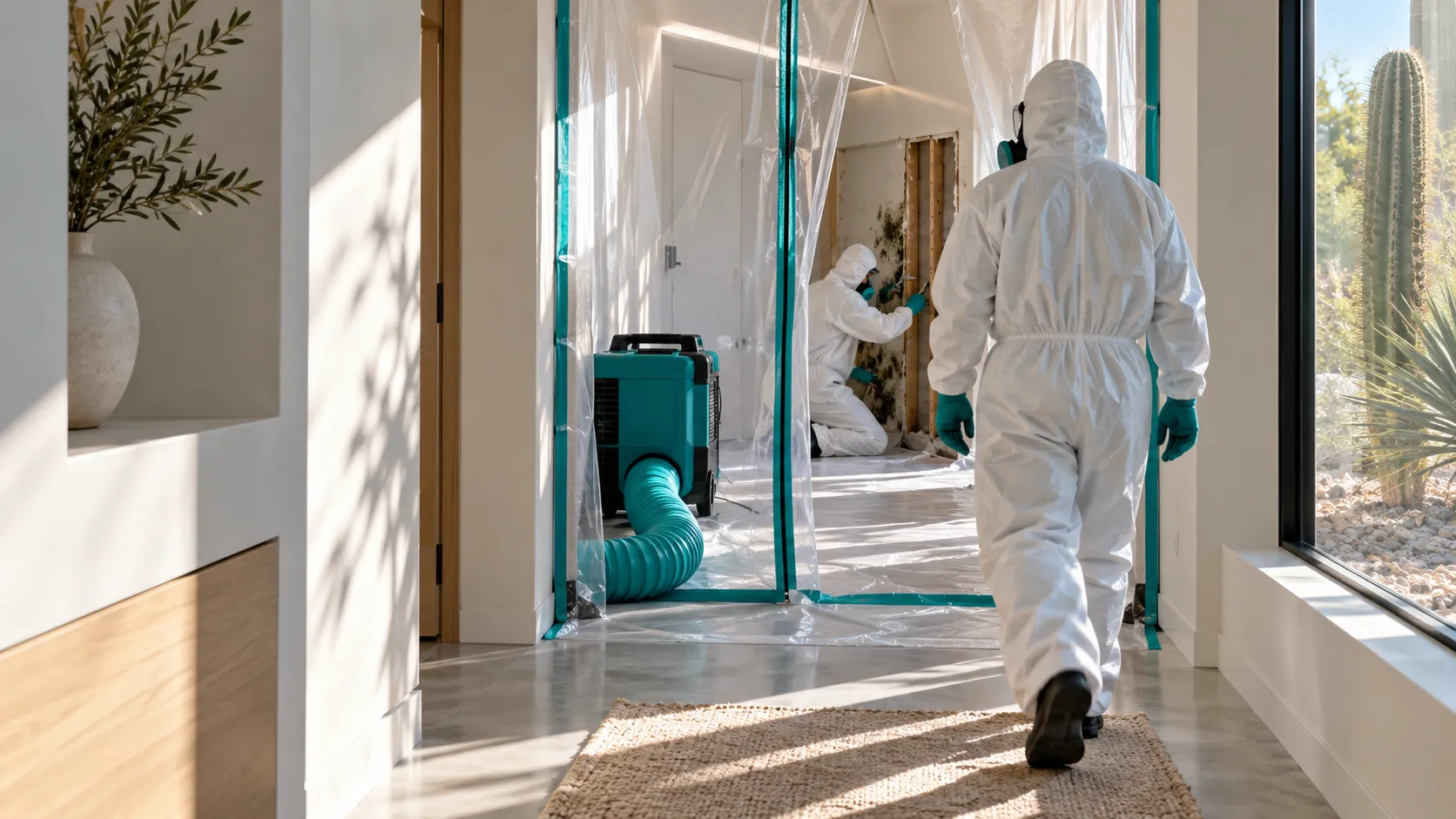
Usually within a day or two, if the materials stay wet. Mold needs moisture, and a wall cavity or a carpet pad holds it long after the surface looks dry. That is where our mold services pick up: when growth starts, the mold side, from inspection to removal, can run in the same project instead of you switching companies in the middle of the problem. Two signs mean it is time for mold eyes: a musty smell that showed up after the leak, and any area that stayed wet longer than 48 hours. A moisture meter or a mold inspection settles it either way. The mold remediation page covers the removal path, and the inspection and testing page covers how the answer gets confirmed.
§ 12 / 15
Which areas around Huntersville do you serve?
Huntersville first, then the towns around it. North Huntersville, where summer storms and AC condensate lines keep crews busy all summer. Cornelius, where older plumbing and unoccupied homes hide leaks for weeks at a time. Denver, where homes from the 1980s and 1990s tuck slow leaks behind cabinet bases. Kannapolis, with its flat roofs and rural lots. And Concord, where shared unit walls hand one neighbor's leak to the next. Coverage reaches all of them, and the dispatch question is only ever where. Each town has its own page on this site covering its water story, and the service areas page collects them all. If you are near any of these, call (980) 250-4059 and describe the address; the coverage answer is quick.
§ 13 / 15
What if the leak sat for weeks before anyone noticed?
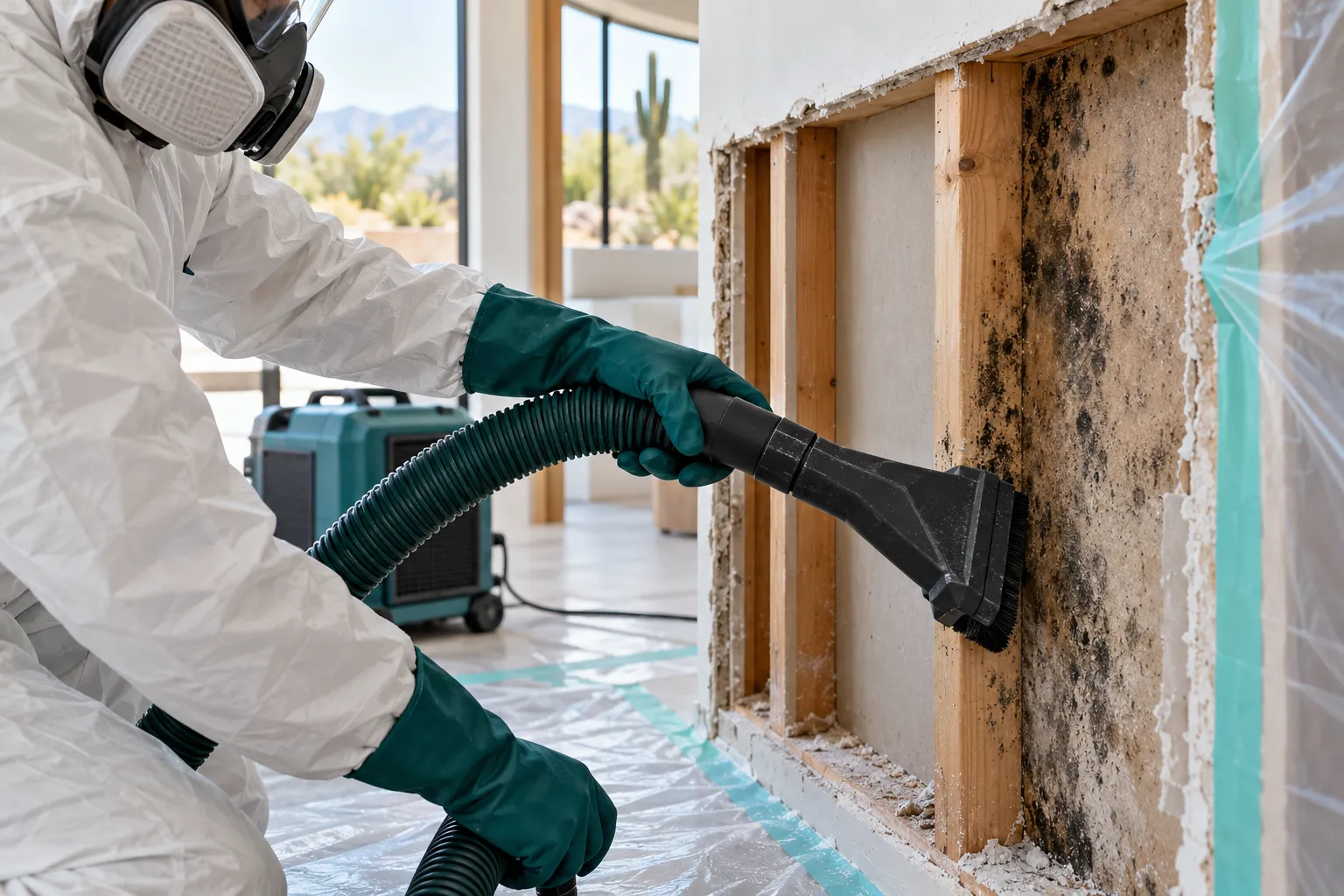
Then assume the water went further than it looks. A slow supply line drip behind a cabinet, or a closed-up summer home with an overflowing AC pan, gives water weeks to move into drywall, trim and flooring, and gives mold the same head start. The first clues are usually smell and staining, not a puddle. Start the same way anyway: stop the source, then get moisture readings across the room and beyond it, because the hidden wet areas are the whole problem. If the meter finds materials that stayed wet for weeks, plan for two things in the same visit: a mold check, and a drying plan for whatever the check finds. One visit, one scope, no guessing. A late find is a scheduling problem, not a lost cause, and it is why the first visit brings both a meter and a nose.
§ 14 / 155 questions
Questions people ask
01How long does it take to dry a house?
Most materials dry in about 3 to 5 days with equipment running, and the readings decide the finish line, not the calendar. Larger losses, or materials like hardwood and plaster, can take longer.
02Can I stay home during the work?
Usually yes. The rooms with equipment are off limits and the machines are loud, but most families stay in the home. After a sewage backup or flood water, the affected area is a different story, and keeping out is a safety decision, not a comfort one.
03Who fixes the pipe or the roof?
A plumber or a roofer fixes the source, and drying starts as soon as the water is stopped. The two work side by side, and the order matters: a dry house with a running leak is a redo.
04How does the paperwork work on a water claim?
The loss gets documented the way adjusters ask: photos, moisture readings, daily logs. You keep control of the claim, and the paperwork is ready when they need it.
05What happens if mold is found during a water job?
If readings or smell point to growth, inspection and removal happen in the same project: mold inspection and testing, then remediation. One project instead of two contractors trading blame.
§ 15 / 15Keep reading
- Mold remediation and removal: when the water left growth behind, and how it gets removed.
- Mold inspection and testing: how hidden moisture and growth get confirmed.
- Emergency water extraction: water still on the floor right now.
- Pricing: published ranges by job type, with every source listed.
- All service areas: Huntersville and the 5 towns around it.