Black Mold Removal in Kannapolis, NC
When a summer storm hits Kannapolis, the water finds the weak spot: a scupper full of leaves, a vent boot that has dried out, a roof that ponds instead of draining. When that water ends up in a ceiling or an attic, black mold removal follows; call (980) 250-4059 and someone will call you back.
Get a call back
Fill in the form or call (980) 250-4059. Calls are answered day and night.
§ 01 / 06
What does black mold removal in Kannapolis involve?
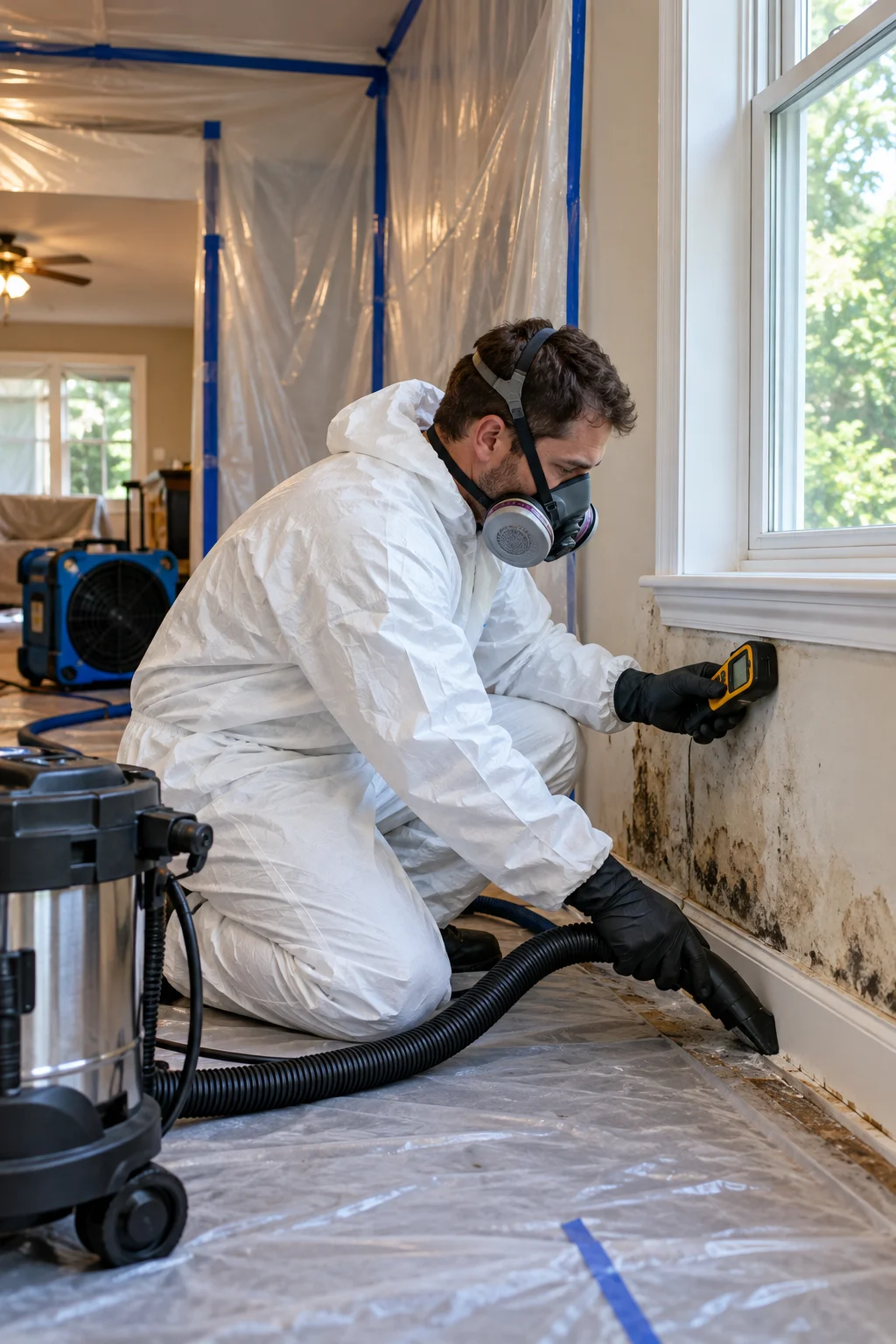
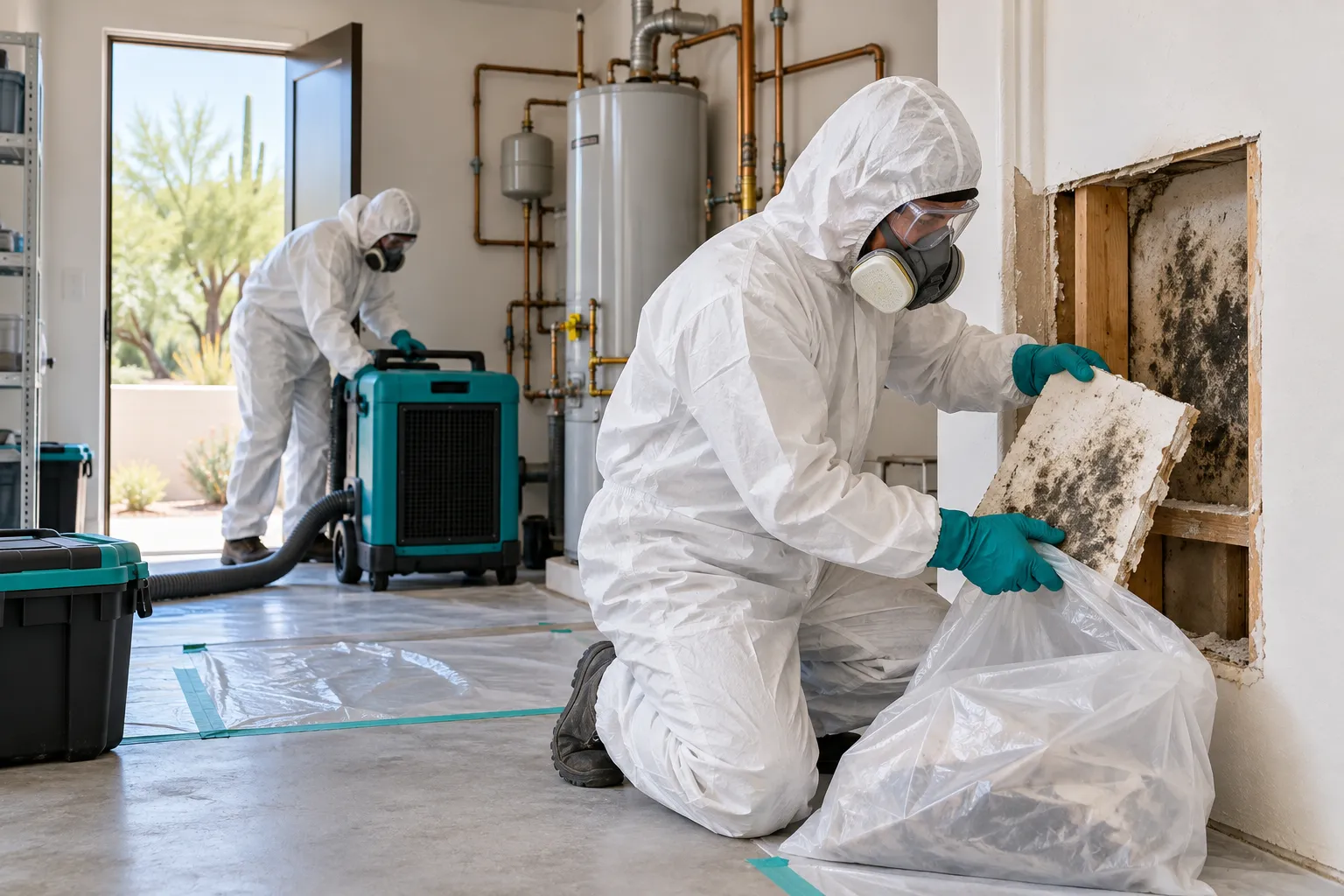
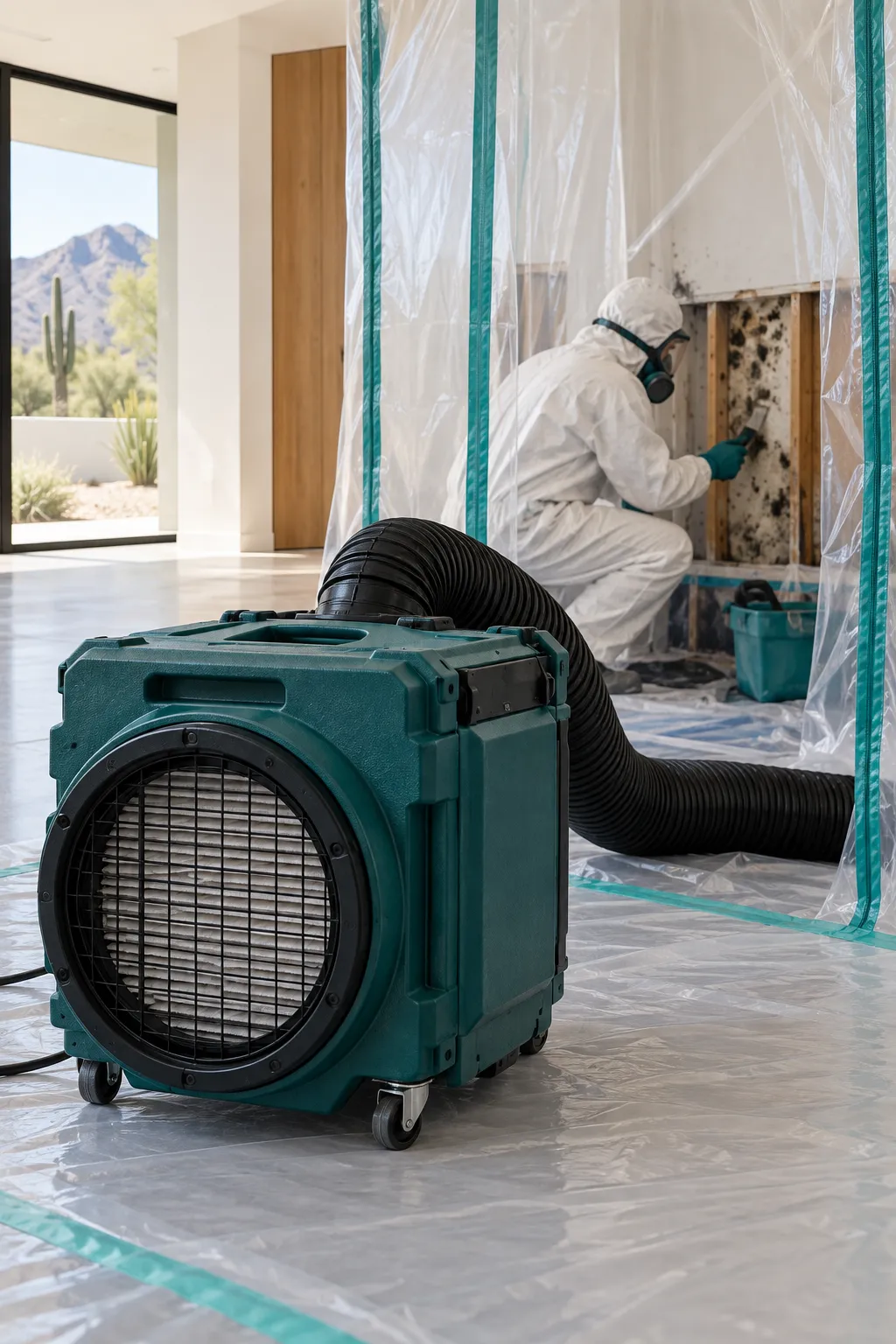
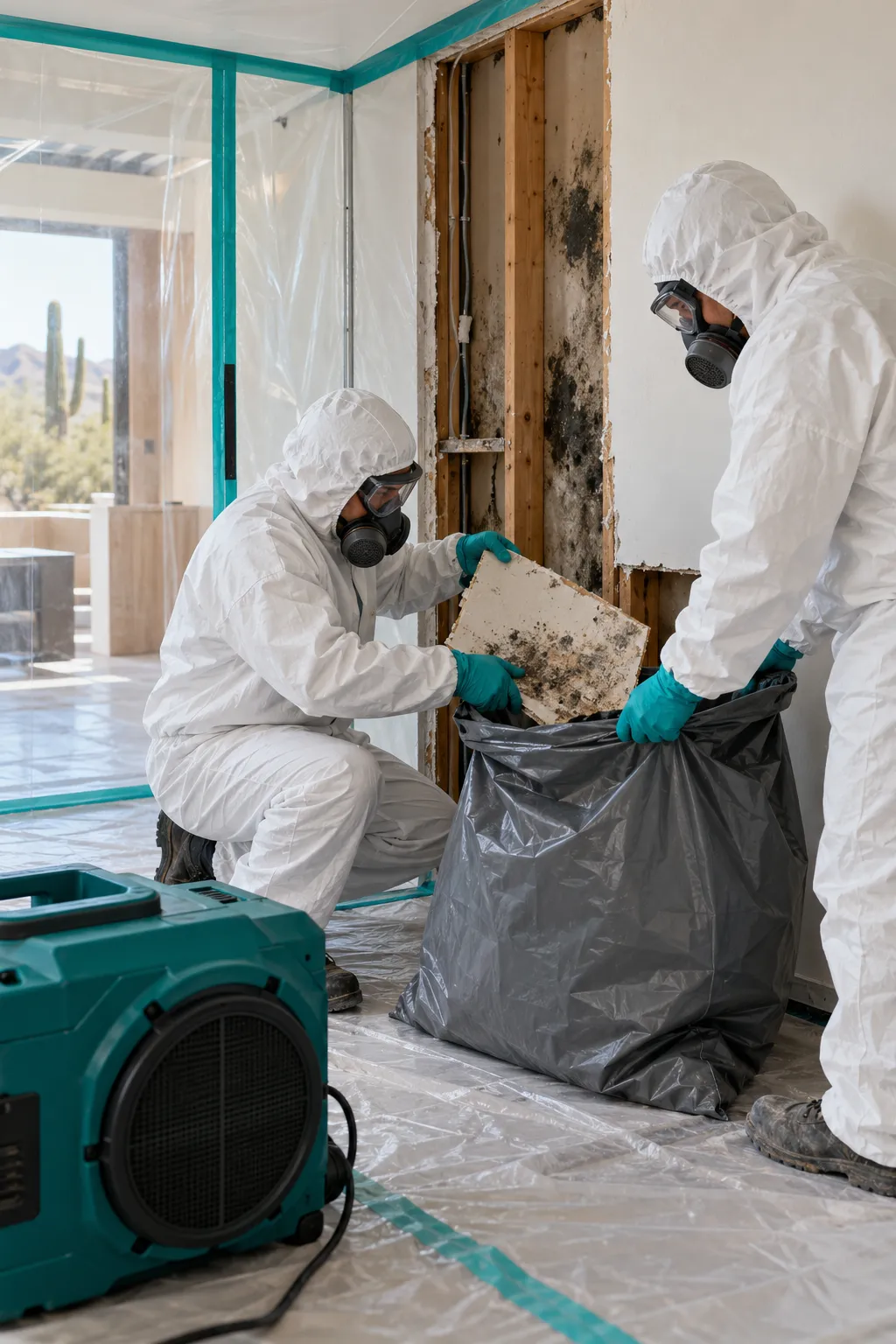
Attic and roof-deck growth is the common case here, and it shapes the work: most of it sits above finished living space. The work zone gets sealed with plastic sheeting and held under negative pressure, so spores and dust stay out of the rooms below. Materials that have molded are cut out and bagged: wet sheathing, insulation, the paper face of drywall. Cleaning products do not pull spores out of wood, so removal, not treatment, is the standard, consistent with the EPA's advice for homes. Water damage work is guided by the restoration industry's reference standard for water damage (IICRC S500). Masking floors and fixtures comes before anything comes down, because the bagged debris travels out through the house.
§ 02 / 06
Why do Kannapolis roof leaks start at scuppers and vent pipes?
In Kannapolis, roof leaks, blocked drainage and AC condensate can leave attic materials damp. Inspect flashing, roof penetrations and the insulation below a new ceiling stain. Wind-driven rain may reach a gap that does not leak in light weather. A moisture reading helps distinguish an old mark from an active leak. Fix the water source before removing damaged materials, and inspect the same location again after rain. Keep gutters and downspouts clear and have a qualified contractor assess roof repairs and safe attic access. For current weather hazards, consult the National Weather Service.
§ 03 / 06
What should I do first?
Keep everyone out of the room under the stain, because a saturated ceiling can come down and the air is not good to breathe. Leave the growth alone; poking it or aiming a fan at it moves spores through the house. Next, stop new water from getting in. Clear a blocked scupper from the ground only, and stay off a wet roof during a storm. Photograph the roof, the ceiling and any soaked belongings first. If the wet area sits near the air handler or ducts, turn that system off, following EPA guidance on running a system that may be contaminated with mold. Then get drying and removal going; the first 24 to 48 hours after the water stops decide how big this job gets.
§ 04 / 06
What does black mold removal cost in Kannapolis?
Published reference-market ranges, put out by cost guides and market data sites (checked October 2026), are on our pricing page. What moves a Kannapolis job is access as much as square footage: long driveways, gates, detached shops and guesthouses all add handling time before a single panel comes down. Published ranges are market research, not an offer. The actual price is set after an on-site assessment, and on a rural property, access and travel time are part of that assessment. If a summer storm did the damage, talk to your insurer early; coverage depends on your policy, and your insurer decides.
Line open now
Mold in a Kannapolis home?
Describe what you see or smell. You do not need to diagnose anything yourself.
§ 05 / 064 questions
Questions people ask
01How do I know if my roof is ponding?
Look for standing water 48 hours after a storm, dark rings around the scupper, or debris lines on the roof. Inside, brown streaks at a ceiling edge or around a vent pipe are the tells. Wet sheathing above an active leak is prime ground for black mold.
02Is the rainy season the only time to worry?
It is the peak, but not the only window. Heavy rain can occur throughout the year, and a winter storm can pond a roof too. Heat ages sealant and boots all year.
03The creek came up near our property last storm. What should we check?
Moisture problems in Kannapolis can come from plumbing leaks, AC condensate, storm runoff or persistent indoor humidity. A closed room or a concealed wall cavity may remain damp even after the visible surface feels dry. Check the water source, document the affected area and arrange a moisture assessment when the cause is unclear. The EPA recommends drying water-damaged materials within 24 to 48 hours. Keep drainage working, monitor indoor humidity and inspect a previously wet area after the next rain. The condition of the individual home matters more than a neighborhood average.
04Do rural lots change how the work is done?
They stretch it out. Equipment has to reach the building, and detached shops, guesthouses and pump houses each need a look. Mention gates and access roads on the call so the assessment covers the property.
Price ranges are reference-market and national planning examples, not verified Huntersville prices or a quote. Your contractor sets the price after assessing your property.