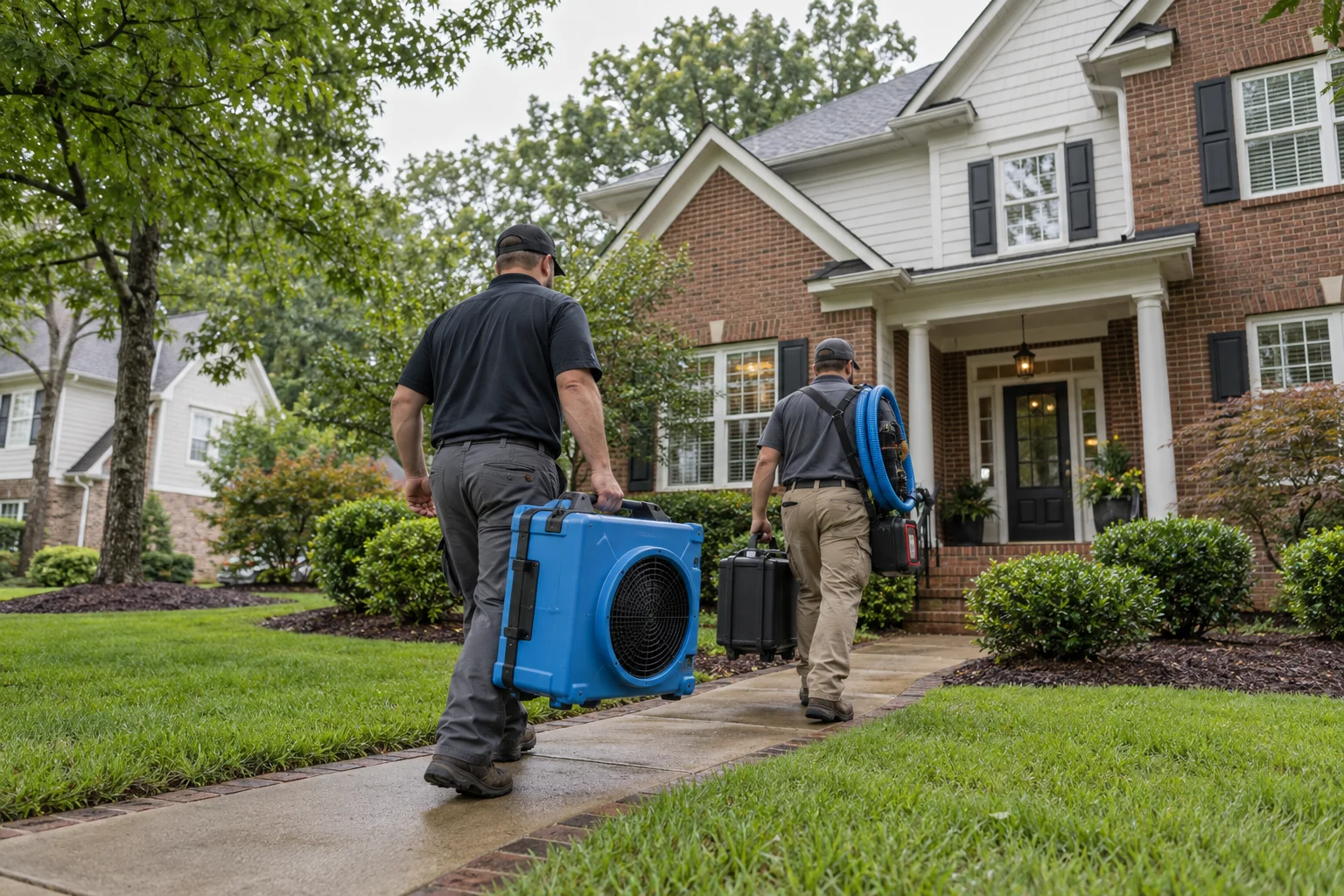

Attic Mold Removal in Huntersville, NC
You have a ceiling stain that grows after storms, or a musty smell upstairs. Call day or night or send the form, and someone from our team will call you back soon.
Get a call back
Fill in the form or call (980) 250-4059. Calls are answered day and night.
§ 01 / 12
Leak found, attic mold removed, deck dry
Mold on attic sheathing and framing is common here, and it almost always traces back to water getting in above your head. The leak is found first, because nothing else lasts until the water source is fixed. To talk through what you found in your attic, call (980) 250-4059.
- The leak is found first, from the outside when the roof is the source.
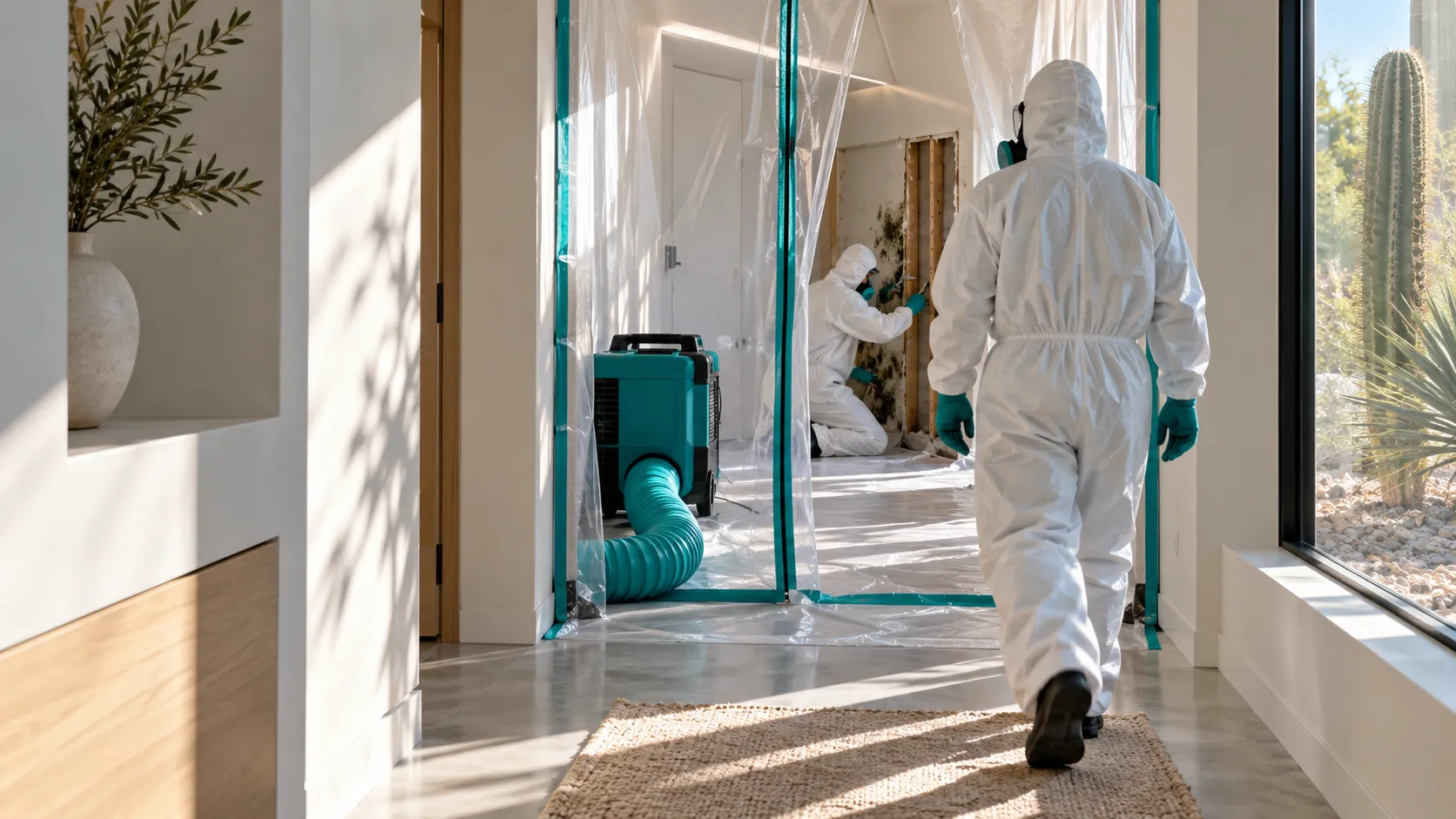
- Plastic sheeting, negative air pressure and HEPA filtration contain the work.
- Wet insulation and any sheathing or framing that cannot be cleaned come out, bagged inside the work zone.
- What stays gets HEPA vacuuming and damp wiping, then the structure dries.
- New insulation, patched decking and the roofing fix that closes the leak finish the job.
§ 02 / 125 signs
5 signs you have attic mold
Attic mold is dangerous in two ways. It spreads quietly, because a slow drip keeps working for months without anyone noticing. And mold can cause allergic reactions and other health effects in some people.
- 01
A ceiling stain that appears or grows after a storm
Water is entering right above that spot.
- 02
A musty smell that does not clear
Airing the house out does not help. Closets under low roof slopes often notice it first.
- 03
Dark staining on the roof sheathing
Often near the chimney, a vent or a low slope where water sits longest.
- 04
Streaked or patchy growth under the deck
It is the picture most people find with a flashlight.
- 05
Wet insulation
It holds moisture against wood for weeks.
§ 03 / 123 steps
How attic mold removal works, in 3 steps
- 01
Call or send the form, day or nightTell us what you see or smell, and where.
- 02
Someone from our team calls you backWe go over what you found.
- 03
Leak repair, mold removal and drying followThe leak is found first.
§ 04 / 12
What does attic mold removal cost?
Attic jobs have a wide published band because access, insulation, and material removal vary so much. Masters' Guild lists $1,050 to $4,150 for reference-market attic remediation (reference-market, 2026), and This Old House publishes $1,000 to $4,000 for attic work nationally. If the air handler or ductwork is part of the problem, HVAC cleaning is priced separately, at $3,000 to $10,000 (This Old House). What pushes a job toward the top of the range: insulation that must be removed and replaced, sheathing that needs to come out, and attic access that slows the work down. For comparison, a bathroom or single room is published at $520 to $1,050, which shows how much location matters. For the wider Huntersville market, MoldGuide puts a typical remediation job at $1,100 to $3,400. Ranges are published by cost guides and market data sites on their websites (checked October 2026). They are market figures, not a quote. The actual price is set after an on-site assessment. The full table is on the pricing page.
§ 05 / 12
Why do Huntersville attics get mold?
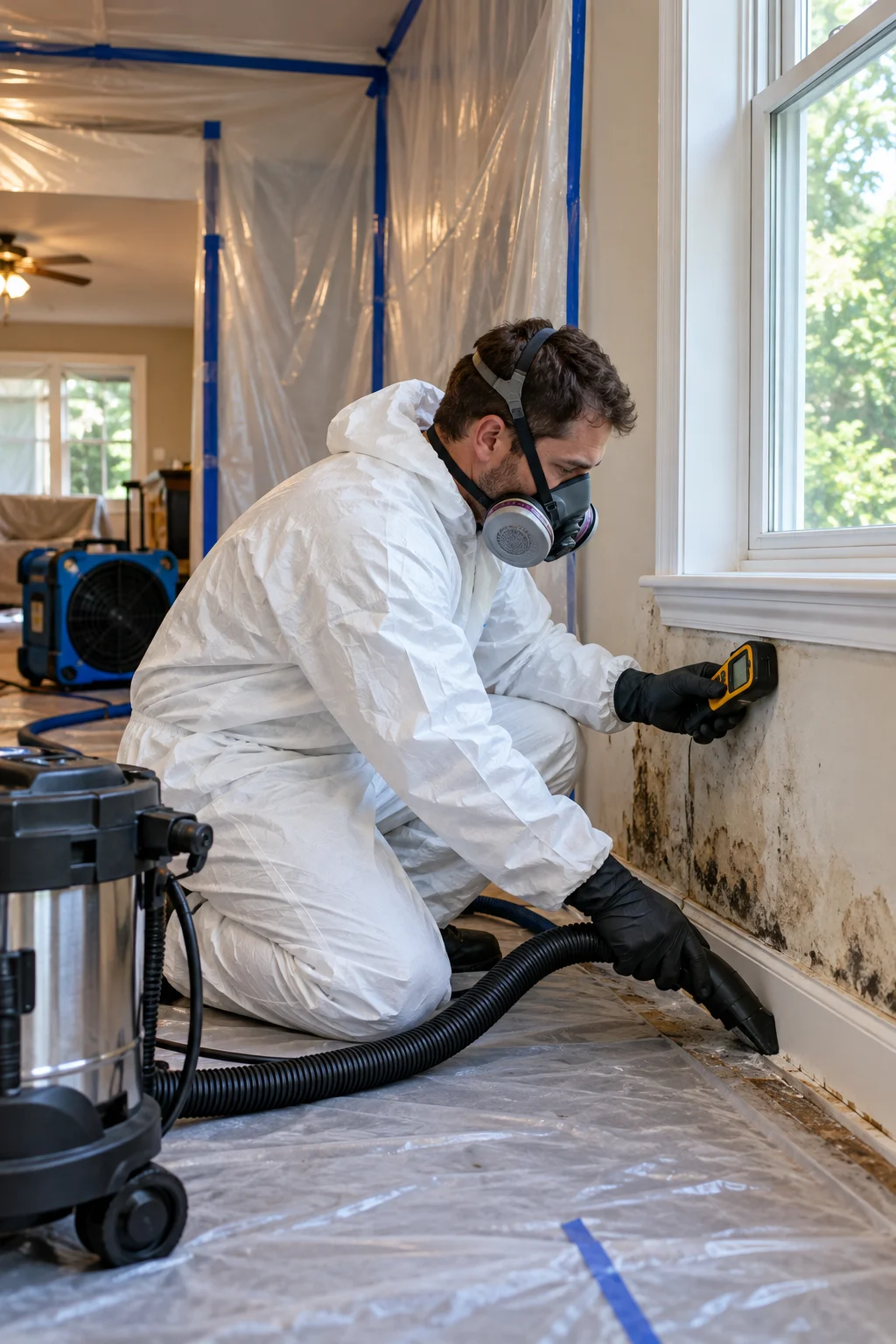
In Huntersville, roof leaks, blocked drainage and AC condensate can leave attic materials damp. Inspect flashing, roof penetrations and the insulation below a new ceiling stain. Wind-driven rain may reach a gap that does not leak in light weather. A moisture reading helps distinguish an old mark from an active leak. Fix the water source before removing damaged materials, and inspect the same location again after rain. Keep gutters and downspouts clear and have a qualified contractor assess roof repairs and safe attic access. For current weather hazards, consult the National Weather Service.
§ 06 / 12
What are the signs of attic mold?
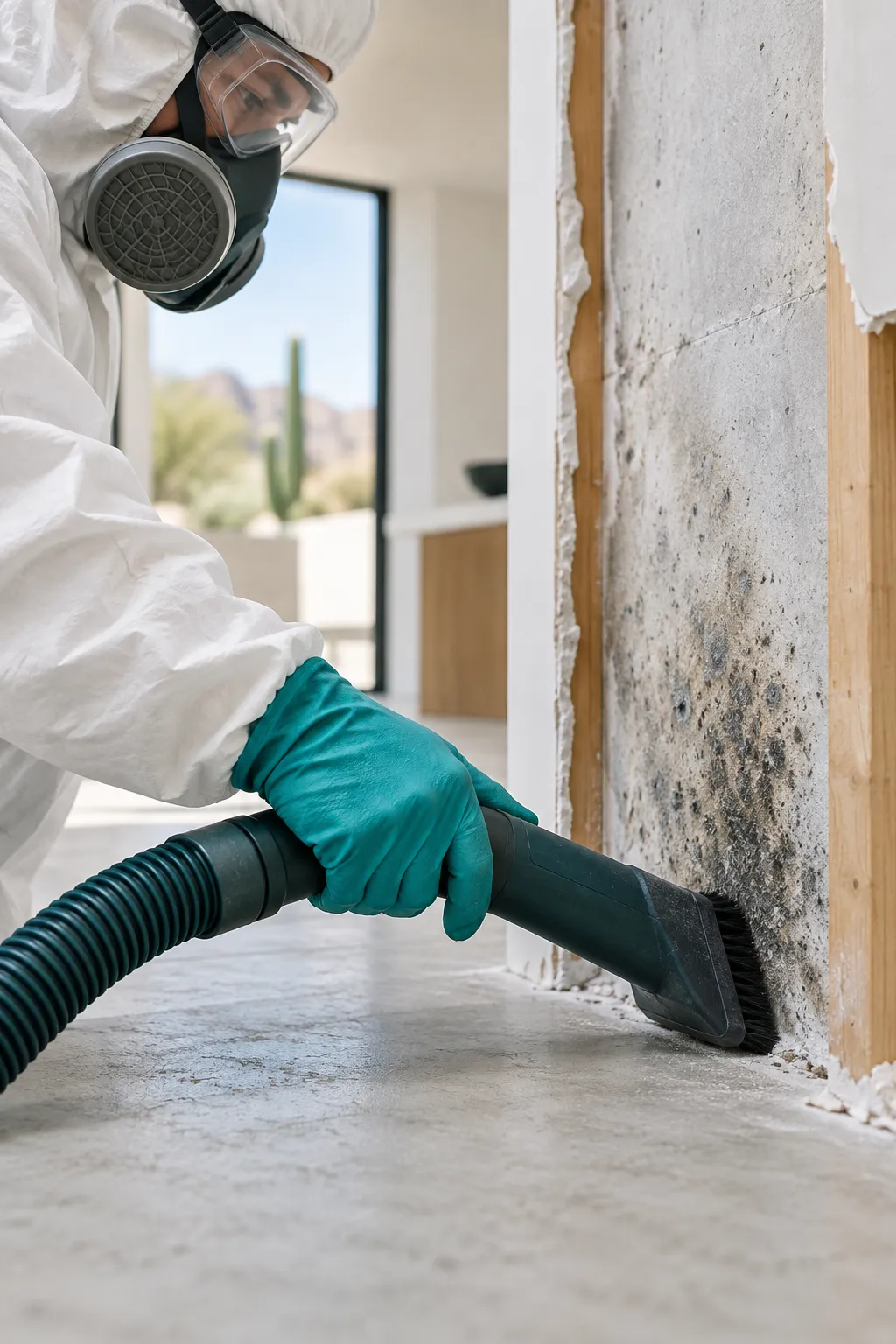
The classic signs: ceiling stains that appear or grow after a storm, which point to water entering right above that spot; a musty smell in a closet, hallway, or upstairs room that does not clear no matter how long you air the house out, with closets tucked under low roof slopes often registering it first; and when someone finally looks into the attic, dark staining on the roof sheathing, often near the chimney, a vent, or a low slope where water sits the longest. Streaked or patchy growth on the underside of the deck is the picture most people find when they go up with a flashlight. Look along the roof line where the sheathing meets the framing, check under any wet insulation, and photograph what you see. If you are not comfortable crawling through a hot attic, an inspection can document the deck for you. The cleanup scope follows the wet material, not the color of the stain.
§ 07 / 12
Why is attic mold a bigger job than a bathroom patch?
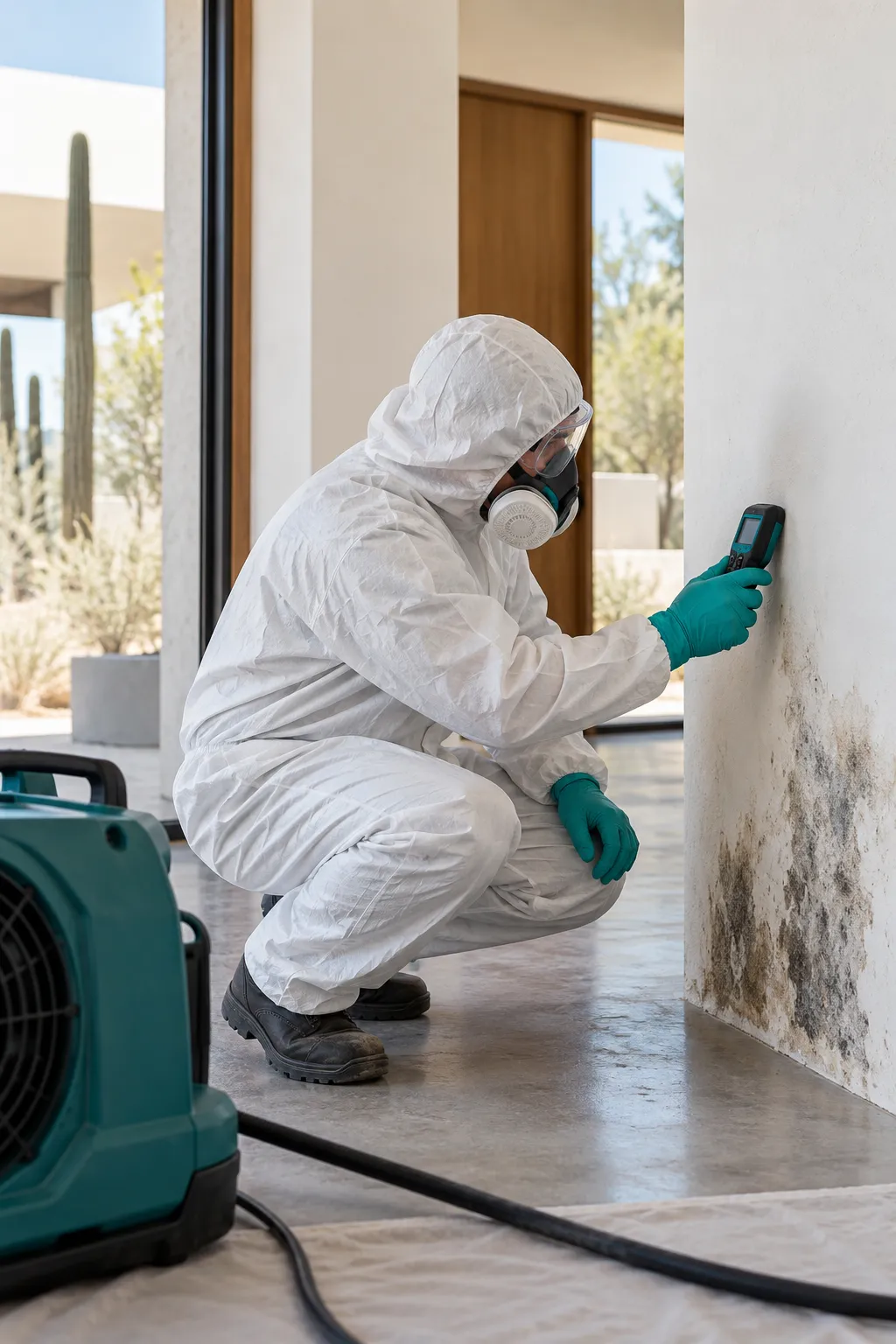
Access is the first difference. An attic is hot, tight, and sometimes reachable only through a small hatch, so every step takes longer and planning matters more than muscle. Insulation is the second. Fiberglass batts and blown insulation that got wet cannot be cleaned back to clean, so they come out, and replacing them is part of the job. Containment is the third. A bathroom patch can be sealed at the doorway; an attic needs floor protection, sealed work zones, and HEPA air scrubbing so debris does not settle down through the living space. And the roof deck itself is often in scope: growth on sheathing has to be cleaned or removed where it sits, and the leak that fed it is found from the outside, which can bring a roofer into the project. A small stain on your ceiling can turn into work across several trades. None of that shows in a photo taken from the hatch, which is why quotes for attic work can vary so much.
Line open now
Ceiling stains that grow after storms?
Describe what you see or smell. You do not need to diagnose anything yourself.
§ 08 / 126 steps
What does attic mold removal involve?
6 steps.
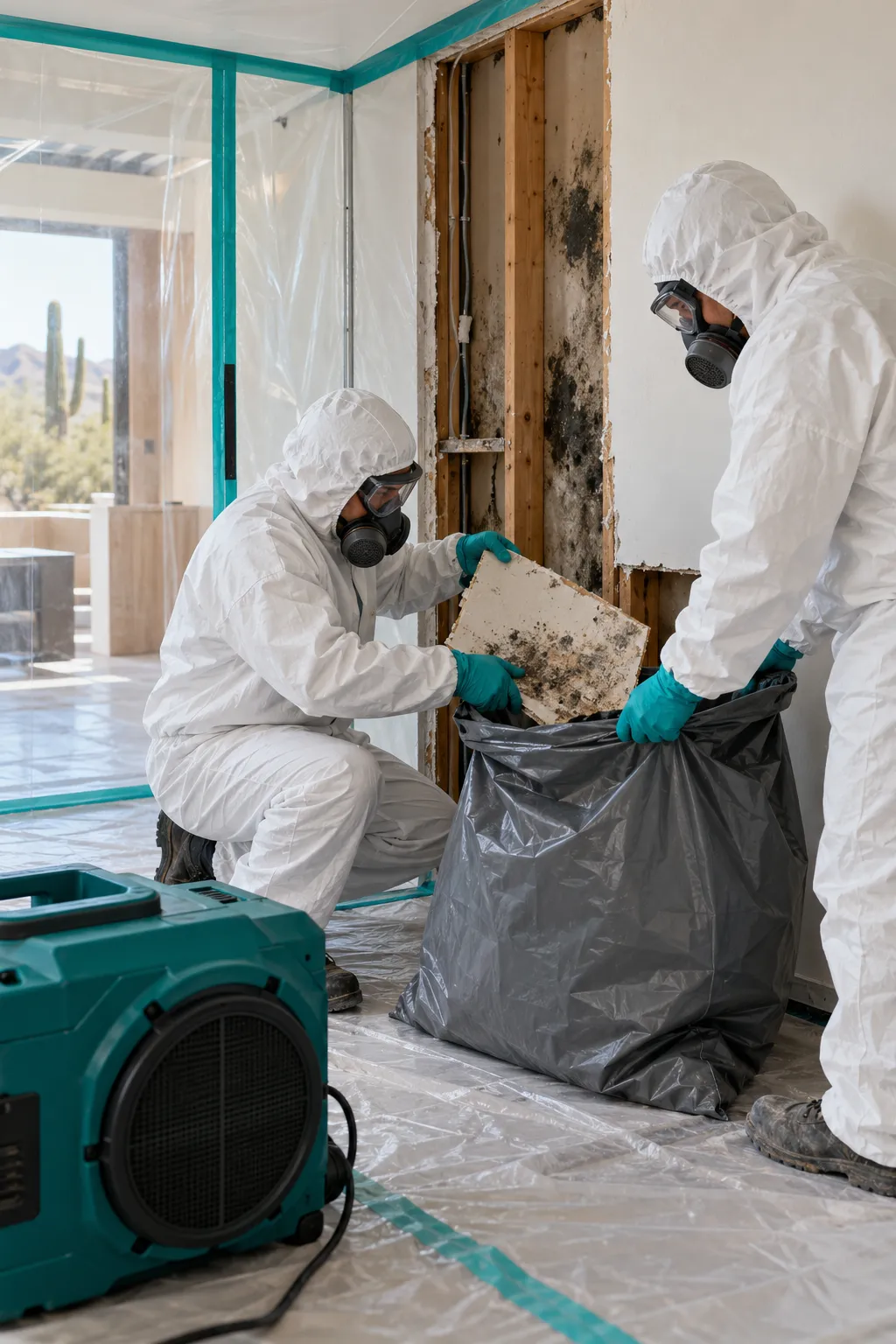
Find the leak, because nothing else lasts until the water source is fixed.
Contain the work with plastic sheeting, negative air pressure, and HEPA filtration.
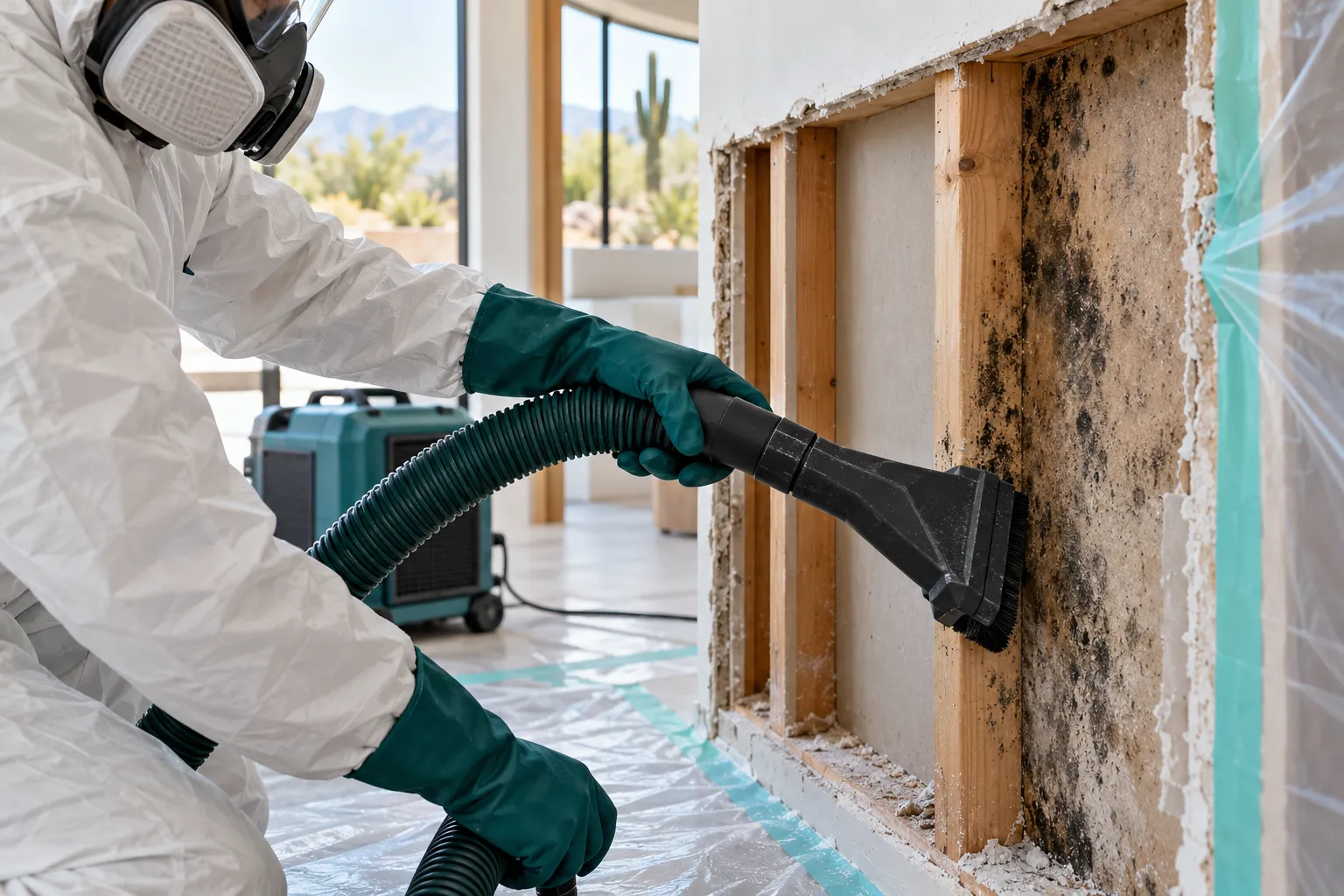
Remove the affected materials, wet insulation and any sheathing or framing that cannot be cleaned, bagged inside the work zone and carried down through it.
Clean what stays with HEPA vacuuming and damp wiping.
Dry the structure, since leftover moisture restarts growth.
Repair. new insulation, patched decking, and the roofing fix that closes the leak.
Before, during, and after photos and a written scope make a clear record of the job. Fogging, spraying, or sealing an attic does not fix it while the leak is open or wet insulation is still in place. To talk through what you found in your attic, call (980) 250-4059. Calls are answered day and night. If all lines are busy, leave a message or send the form and someone will call you back.
§ 09 / 12
What causes attic moisture in a local home?
Rain from above is the main cause, and mechanical drips are a close second. Roof leaks show up at flashings, valleys, and flat roof details; flat roofs pond when scuppers clog with leaf debris, and water gets in at exhaust fans and vent pipe connections. AC air handlers sit in many Huntersville attics, and a clogged condensate line drips steadily into the insulation and framing below. Evaporative coolers add supply and drain connections of their own, and a single loose fitting is enough to keep a section of deck damp. Insulation holds whatever it catches, so a slow drip keeps working quietly for months without anyone noticing. The EPA (opens in a new tab) keeps the fix simple: control moisture to control mold, and dry water-damaged areas and items within 24 to 48 hours, the window before growth starts. In this climate, that usually means repairing the roof or the drain line now, not next season. Check the deck each year before wet weather, while a leak is still easy to spot.
§ 10 / 12
Can I remove attic mold myself?
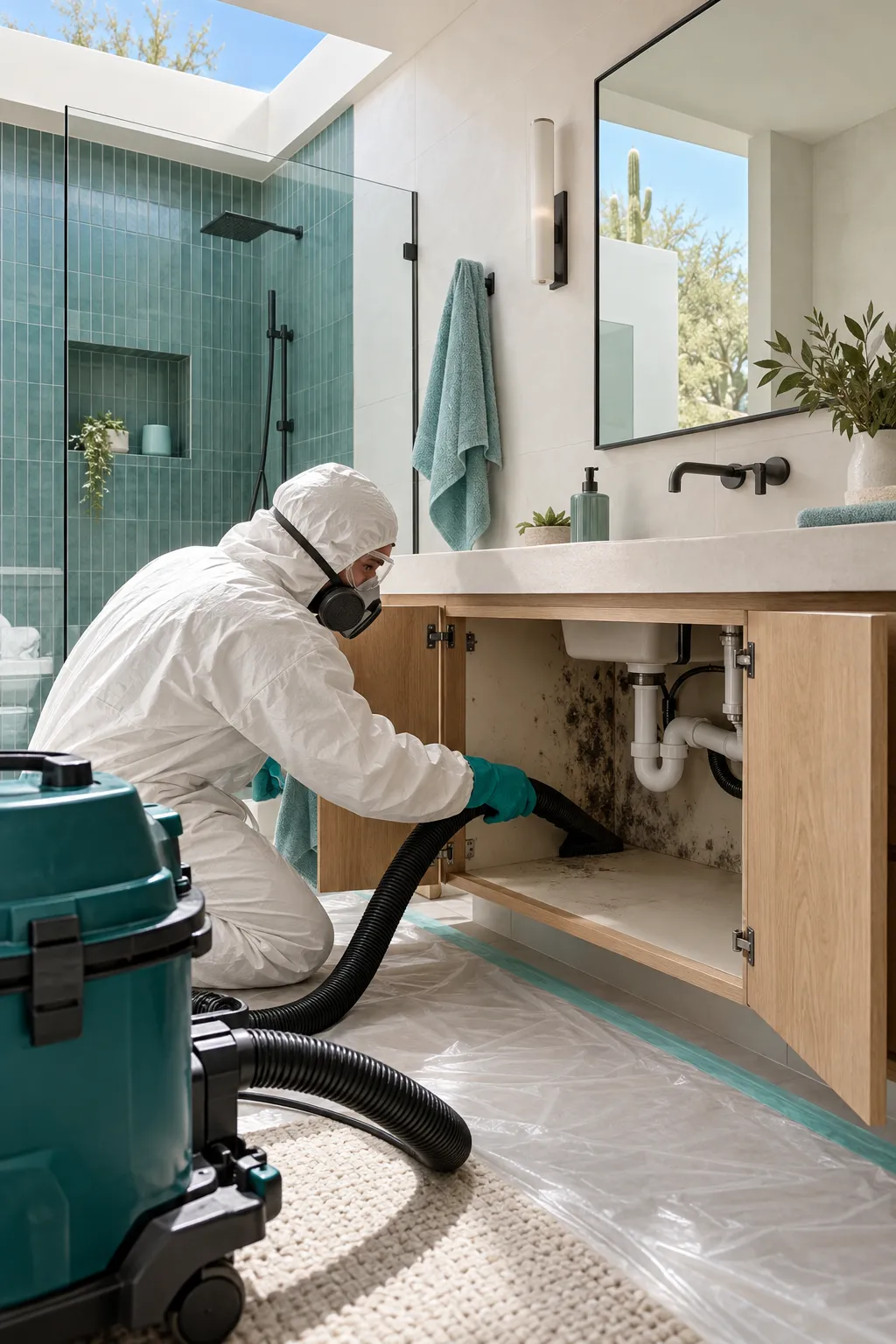
Usually it is not worth it. The EPA's rule of thumb is that under about 10 square feet, in most cases you can handle a mold cleanup yourself, and larger areas need a professional. Attic growth rarely stays under 10 square feet once it reaches the sheathing, and even small patches sit in a space with no floor, hot air, and wiring, which adds real fall and safety risks. You would still need to fix the roof leak, pull any wet insulation, dry the structure, and put the insulation back before the job is done. If the patch is tiny and the leak is already repaired, cleaning it yourself with gloves, eye protection, and a respirator is reasonable. If the staining runs along the deck above a living space, get an assessment before you touch it. Published inspections run $450 to $800 (Fixr, checked October 2026), and they tell you what the job actually is before you commit to it.
§ 11 / 125 questions
Questions people ask
01Will attic mold come back after removal?
Only if the water comes back first. Mold needs moisture, so the removal is only as durable as the leak repair behind it. If the roof keeps dripping, or the condensate line clogs again, growth restarts in the same spot. That is why the drying step and the repair matter as much as the cleaning itself. Moisture is the only thing that brings it back.
02Do I have to remove moldy insulation?
In most cases, yes. Wet insulation cannot be cleaned back to clean, so it comes out with the other affected material, and new insulation goes in after the deck is dry. The EPA notes that absorbent materials like carpet and ceiling tiles may have to be thrown away when moldy, and attic insulation is the same story once it has been soaked.
03Can I paint over attic mold?
No. Sealing over growth hides the stain and leaves the mold in place, and if moisture keeps arriving, the problem continues under the paint. The EPA's guidance is that mold has to be removed, not killed or covered, and the water source has to be fixed first. Paint can also trap moisture in the wood, which is the condition that started the growth in the first place.
04Does homeowners insurance cover attic mold removal?
That depends on the cause and your policy, and your insurer decides. Some water events are covered under standard homeowners policies, like accidental discharge from a plumbing system, while ground seepage and flood are not, according to Triple-I (opens in a new tab). Photograph everything, keep receipts and repair records, and report the loss promptly; the paper trail is what an adjuster works from, and the timeline of the water matters to the claim.
05Is attic mold dangerous to live under?
For some people, yes. Mold can cause allergic reactions and other health effects in some people, and sensitivity varies from person to person, so if you think mold is making someone sick, talk to a doctor. Until the work is done, keep the attic hatch closed and anyone sensitive away from the space.
§ 12 / 12Keep reading
- Mold services: the full rundown of inspection, remediation, black mold, attic and HVAC work across the Huntersville area.
- Mold remediation: the removal process when growth is beyond a small patch.
- HVAC mold removal: when an attic air handler or ductwork is part of the growth.
- Pricing: published Huntersville ranges on attic remediation and related work, with sources for every range.
- Kannapolis: flat roofs, scuppers, and summer storms, and what they mean for the ceilings below.
Price ranges are reference-market and national planning examples, not verified Huntersville prices or a quote. Your contractor sets the price after assessing your property.