
Black Mold vs Mildew in Huntersville, NC
Mildew sits on the surface and wipes off. Black mold grows into the material it feeds on, and in Huntersville it usually means water has been sitting somewhere for weeks. The cleanup is not the same job.
Get a call back
Fill in the form or call (980) 250-4059. Calls are answered day and night.
§ 01 / 08
The short answer
Mildew is a surface nuisance. It grows on shower caulk, window tracks, and sills where condensation collects, and it scrubs off hard materials with household work. Black mold is a colony that feeds on the paper face of drywall and other cellulose, and it only gets established where water has been present for a long stretch. By the time black mold is visible in a Huntersville house, the leak or the drip has usually been running unnoticed.
What you do depends on the surface and the water source, not on the color of what you are looking at.
§ 02 / 08
Black mold: what it actually is
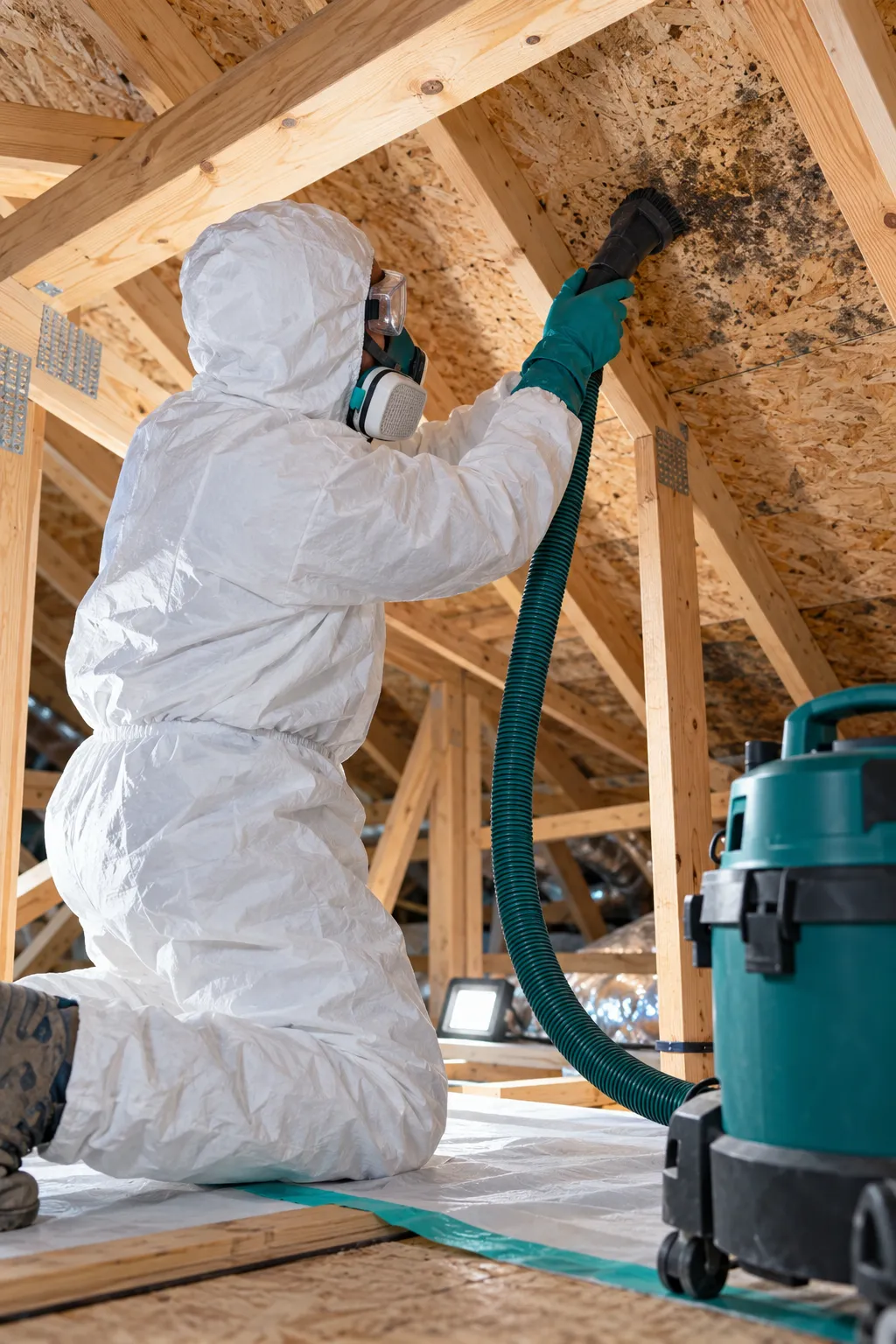
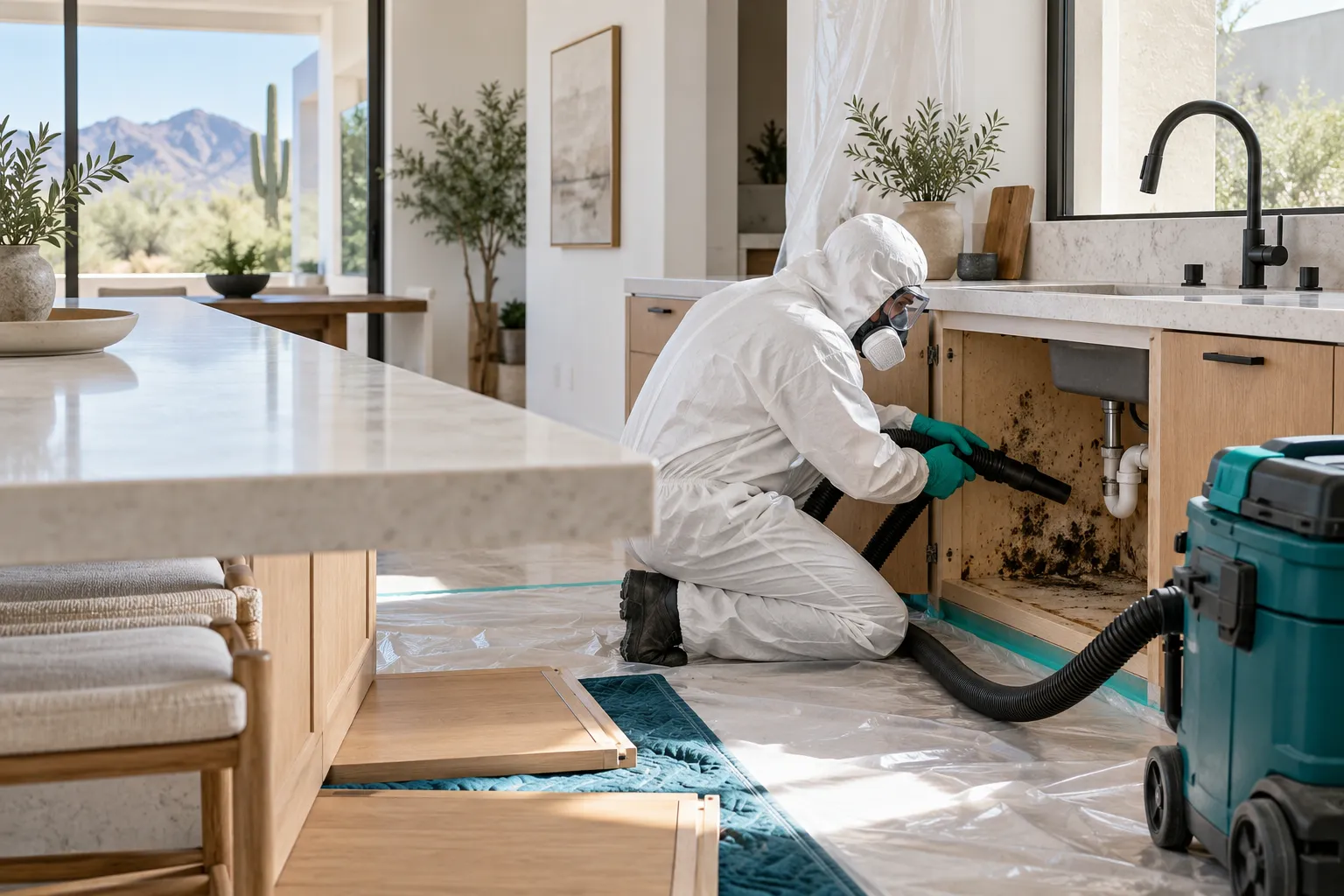
Black mold is the name people give to the dark, slimy or sooty colonies that appear on water-damaged drywall, ceiling cavities, and the back side of baseboards. The growth feeds on cellulose, which means the paper in drywall and the fibers in wood are dinner. It needs three things: food, warmth, and water that stays. A brief spill usually does not do it. A slow drip that runs for weeks does.
The colony sends threads through the paper and into the material behind it. That is the difference that matters. What you see is the fruiting body; the organism runs through the material like roots through soil. A musty, earthy smell usually shows up before the black patch does, and in a house that has been closed up, the smell alone is worth taking seriously.
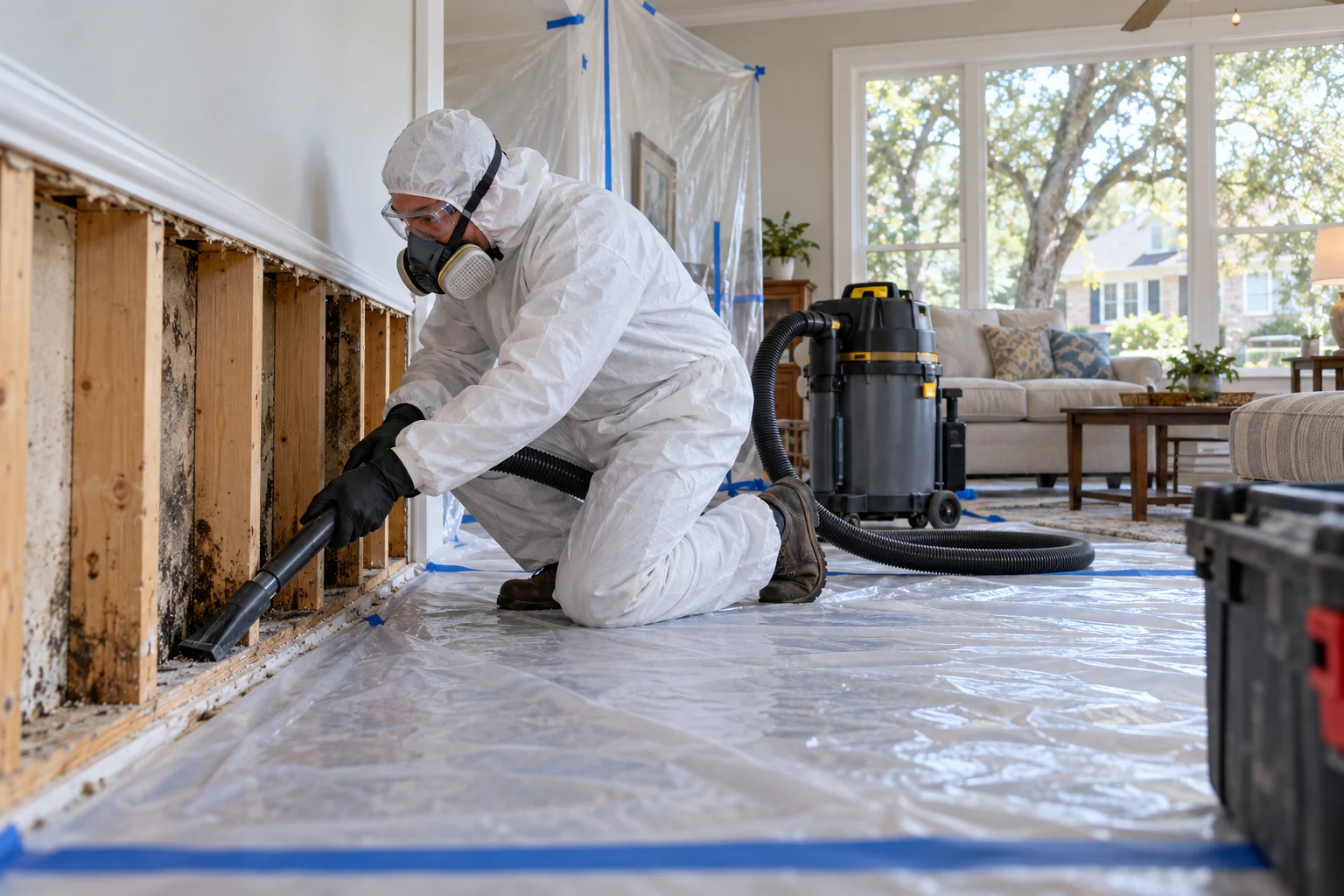
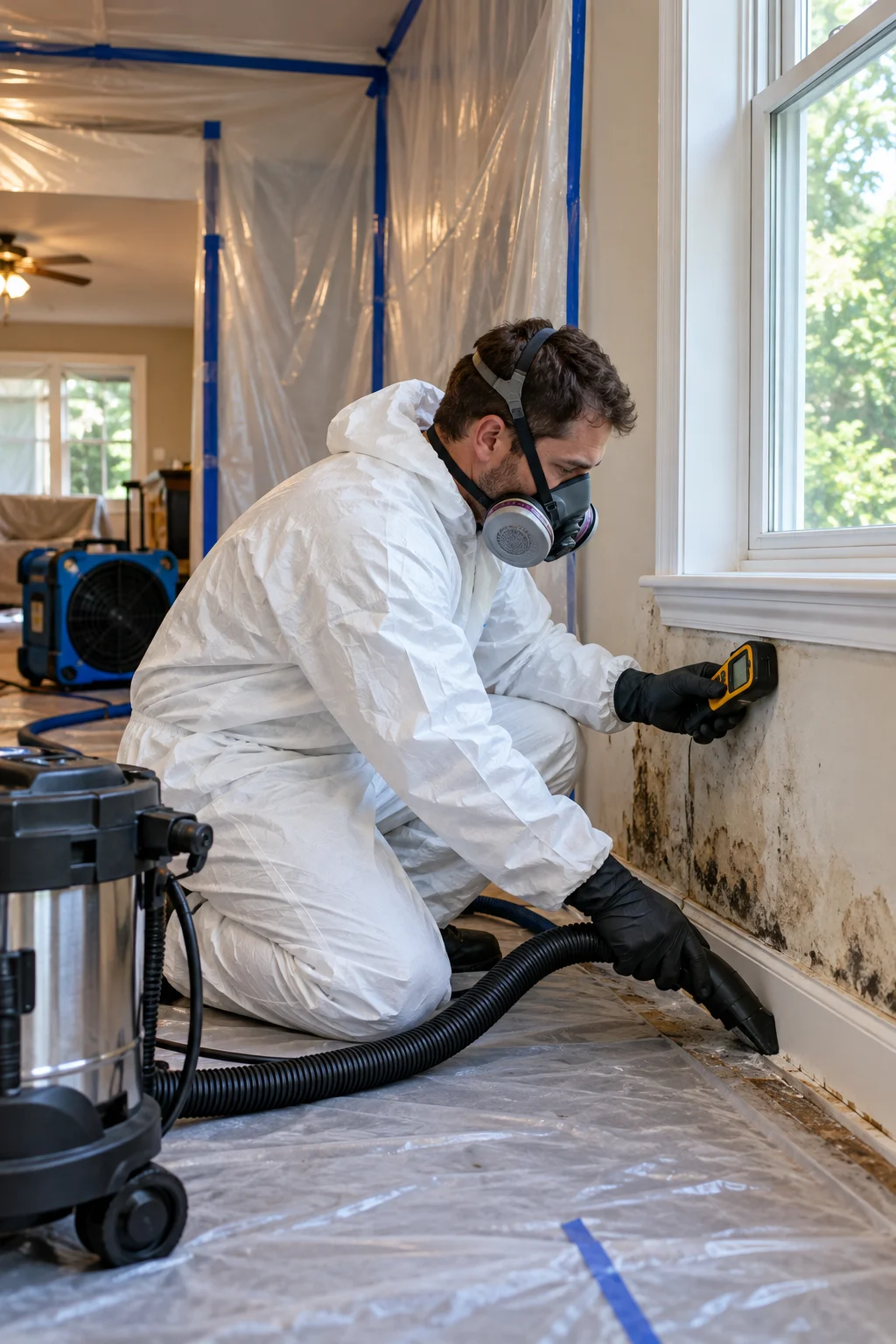
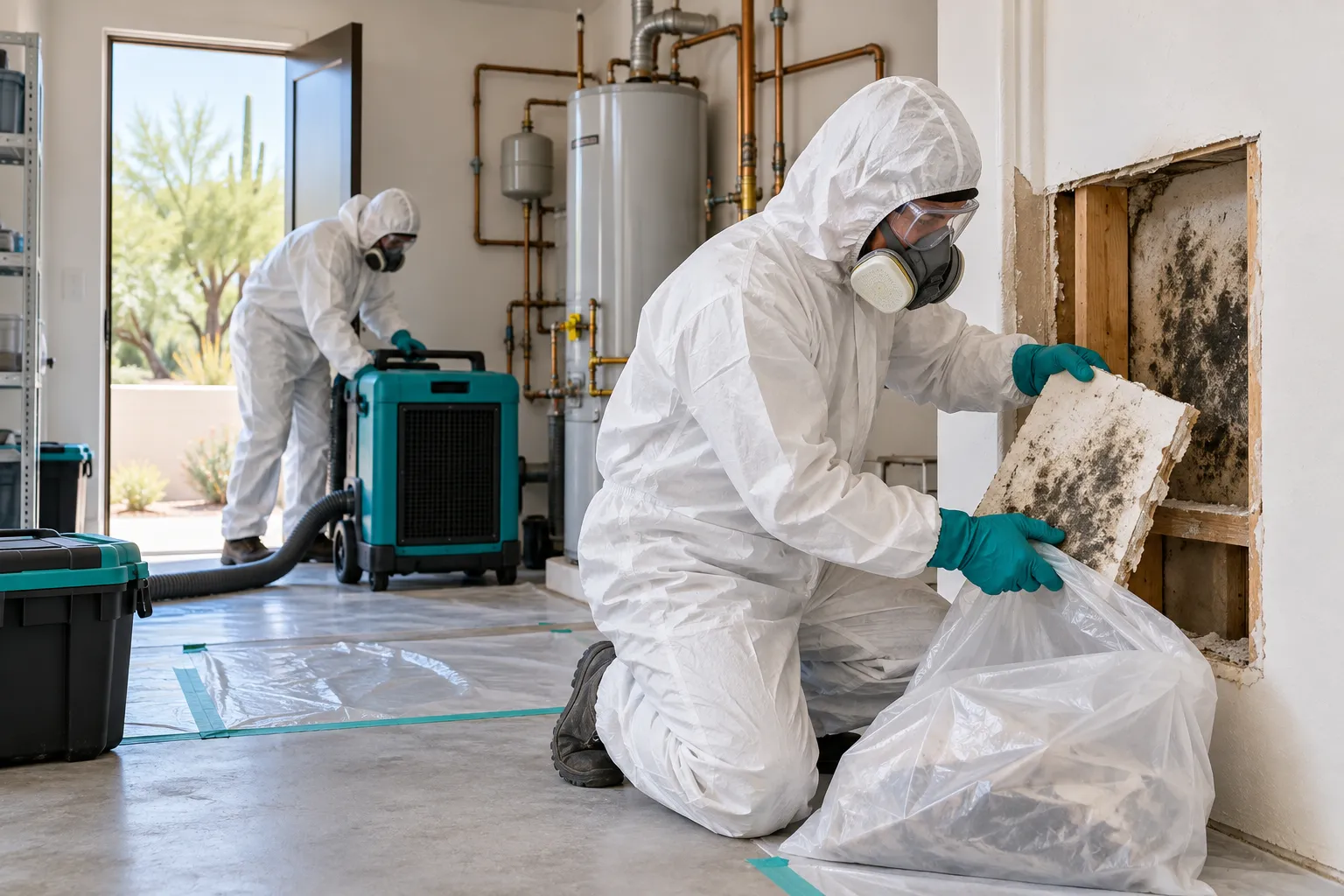
Because it grows into the material, black mold on drywall is almost never a wipe job. The colonized section comes out, the cavity gets dried, and the source gets fixed. Anything less is a repaint of a problem. If the growth is widespread, you are facing the removal vs remediation decision, not a cleaning question.
§ 03 / 08
Mildew: what it actually is
Mildew is a flat, powdery or slightly fluffy fungus that stays on top of the surface it sits on. It shows up on shower grout and caulk, on window tracks and sills, on the bottom of a curtain that hangs in a damp corner. Mildew does not need a leak. It needs condensation: humidity in the air settling on a cool surface and staying there.
Mildew is a surface film, which is why it scrubs off. On tile and glass, a wipe with a household cleaner, followed by drying the surface, is usually the whole job. The catch is that mildew is a signal. It tells you the surface is staying wet. Wipe it off a window track and it will be back in August unless the condensation stops. In the Piedmont, that surprise is seasonal: summer storm humidity bursts from July through September push interior condensation onto caulk and sills that stay dry the rest of the year.
§ 04 / 08
Where black mold fails here
The worst black mold cases in Huntersville are not found by people who live in the house. They are found by people who come back to one. Second homes that sit closed through the summer are the textbook setup: the AC runs in setback or is off, a condensate line above a ceiling drips onto drywall for weeks, and nobody is home to hear it or see the stain spread. A summer storm storm ponds on a flat roof and seeps at a parapet, and the ceiling cavity stays wet through September.
By the time a homeowner unlocks the door in October, the colony has had the whole summer. The dark patch on the ceiling is the last chapter, not the first. This is also where the visual check fails people: a patch that dried over the summer looks older and less active than it is. The material behind it is still colonized. The closed-up house guide walks through the places these colonies hide.
Line open now
Mold growing right now?
Describe what you see or smell. You do not need to diagnose anything yourself.
§ 05 / 08
Where mildew fails here
Mildew fails people in Huntersville the opposite way. It looks trivial, so it gets ignored, and the ignoring is what lets it win. Summer storm humidity lands on cool tile, caulk, and window frames in bursts, and a closed house with no air movement lets those films of condensation linger. Hard water makes it worse: the mineral film left by evaporated tap water gives mildew something to grip and a place for moisture to hold.
Shower corners without ventilation, laundry closets, window tracks that hold water after a storm. None of these are emergencies, and all of them come back until the surface is dried out and the air is moving. Mildew is also the usual false alarm: a dark spot on caulk is rarely a black mold emergency. Knowing which one you are looking at is what the testing vs inspection page is for.
§ 06 / 08
What it costs and what drives the number
The two problems live at opposite ends of the price scale, and both vary. A mildew scrub costs whatever a cleaner and an afternoon of your time cost, and the real expense is fixing whatever keeps the surface wet: a vent fan, a caulk bead, a window track that drains. Black mold in drywall is a material-removal job. The number moves with how much drywall comes out, how tall the ceiling is, and whether containment and clearance are part of the scope. The pricing page breaks down how those line items stack up.
The expensive mistake is treating one like the other in either direction: paying remediation money for caulk mold, or wiping a drywall colony and calling it fixed.
§ 07 / 08
What good work looks like in Huntersville
- Color does not diagnose. The question is what the growth is on and where the water is, not whether the patch is black or gray.
- The work starts with the water, whether it is a drip in a ceiling or condensation on a sill.
- Sometimes it is just mildew. A caulk line does not need containment, and should not be quoted as if it does.
- Closed-house signs matter. A musty smell in a Huntersville home that sat through summer gets a source hunt, not an air freshener.
§ 08 / 086 questions
Black Mold vs Mildew: your questions
01How can I tell black mold from mildew?
Look at where it is and what it is on. Mildew sits on hard surfaces like caulk and tile and wipes off. Black mold appears on drywall and wood, often with a musty smell, and it grows into the material.
02Is mildew dangerous?
Mildew is a surface fungus and a condensation signal. It does not call for the same cleanup as a colony inside drywall, but it should tell you the surface is staying wet.
03Why is there mold in my North Carolina house?
Local houses do not get mold from outdoor humidity. They get it from water: a slow leak, a condensate line, a summer storm roof leak. The closed-up house guide walks through the usual sources.
04Can I clean black mold myself?
On a hard surface with the water stopped, maybe. On drywall, no: the colony is inside the material, and scrubbing spreads spores. That is when the job changes from cleaning to removal.
05Does black mold always come with a smell?
Often, but not always. A closed-up house concentrates the musty smell, which is why the smell is the first sign people notice when they reopen after summer.
06Should I test it to find out what it is?
A test can tell you spore types, but a visual and moisture check tells you where the water is, which matters more. See mold testing vs inspection.