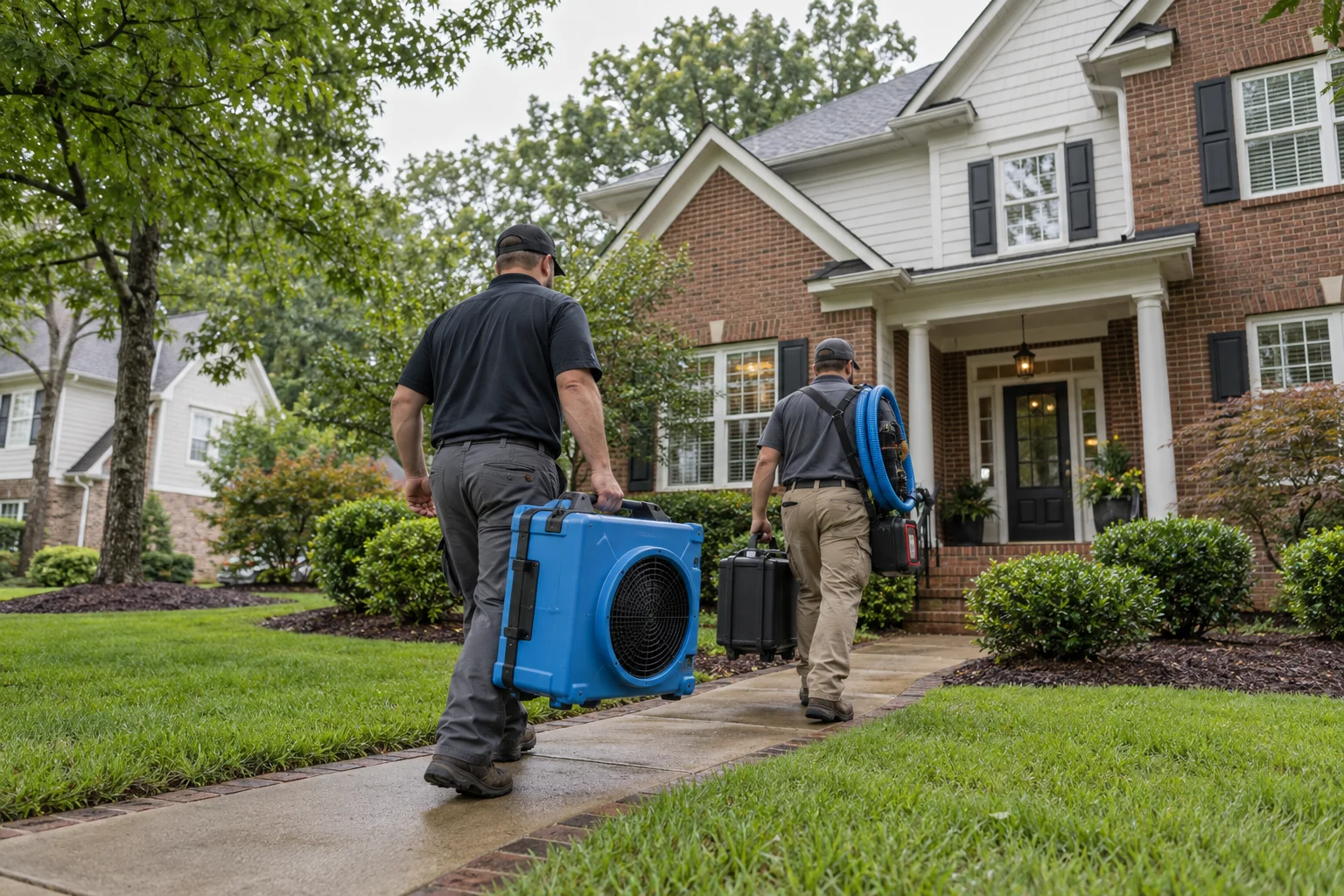

Black Mold Removal in Concord, NC
In Concord, a water line that fails in one condo can show up as a mold complaint 1 floor down, and the trail of photos and approvals matters almost as much as the cleanup. Black mold removal across shared walls and units means looping in the right people; call (980) 250-4059 when you need help with the next step.
Get a call back
Fill in the form or call (980) 250-4059. Calls are answered day and night.
§ 01 / 06
What does black mold removal in Concord involve?
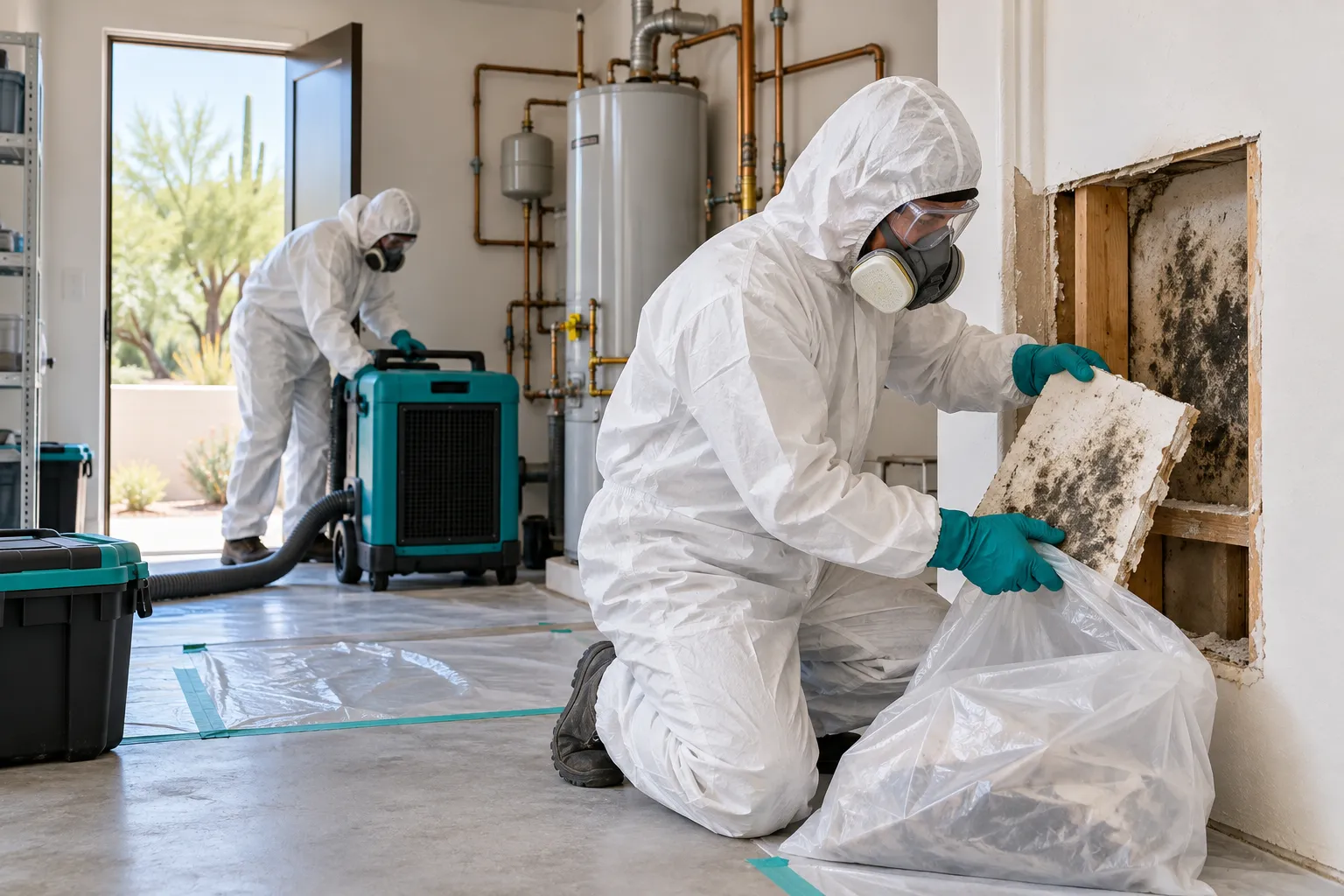
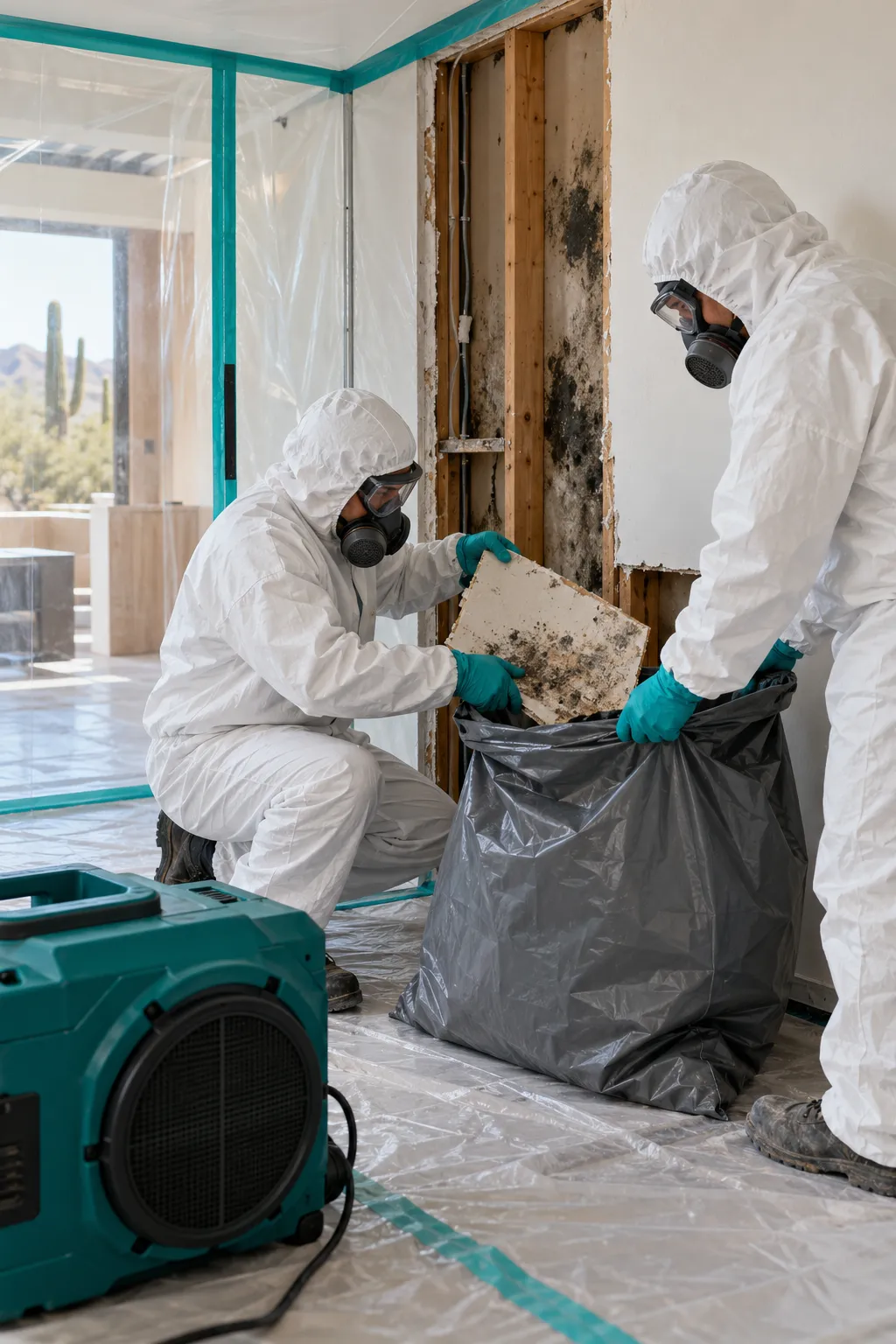
The work follows a familiar sequence: isolate the area with plastic sheeting and negative air pressure, remove the material that has molded, HEPA vacuum and wipe what stays, then bag it. What changes in a shared building is the map of the job: water does not respect unit boundaries, it moves down through ceiling assemblies and along shared plumbing, and the unit showing the stain is not always the unit with the cause. Before anyone opens a ceiling, the owner, the association and whoever is paying should agree on the scope. The EPA's underlying rule is simple: control the moisture or the mold comes back (EPA, Brief Guide to Mold, Moisture and Your Home (opens in a new tab)). In a Concord condo, that can mean repairing a shared line and drying 2 units, not 1.
§ 02 / 06
How does a leak in one Concord condo end up in the unit below?
Moisture problems in Concord can come from plumbing leaks, AC condensate, storm runoff or persistent indoor humidity. A closed room or a concealed wall cavity may remain damp even after the visible surface feels dry. Check the water source, document the affected area and arrange a moisture assessment when the cause is unclear. The EPA recommends drying water-damaged materials within 24 to 48 hours. Keep drainage working, monitor indoor humidity and inspect a previously wet area after the next rain. The condition of the individual home matters more than a neighborhood average.
§ 03 / 06
What should I do first?
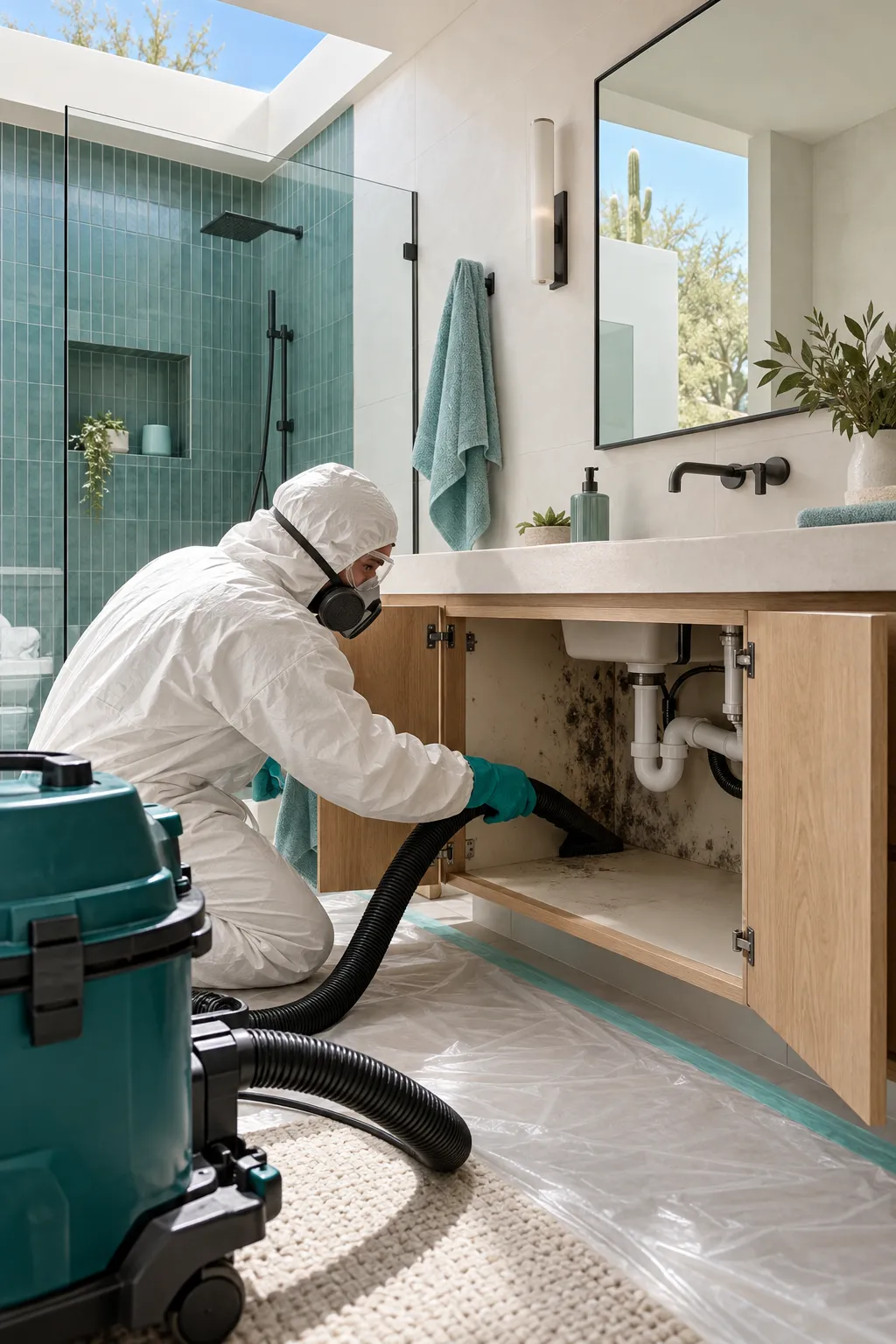
Document before you dry, because in a building with 2 owners and an association, the paper trail is part of the job. Take dated photos inside your unit, and matching photos in the unit above, since an adjuster will want both sides of a shared ceiling. Keep people out of the affected rooms, and anyone sensitive to mold out of that part of the building. Do not paint over the stain or scrub it; paint traps what is growing. Work with the manager to identify the water source so the repair happens before cleanup starts. If the building shares ductwork, keep that system off when growth is near a vent, per EPA guidance for contaminated HVAC systems. Then line up removal for the wet material, not just the visible stain.
§ 04 / 06
What does black mold removal cost in Concord?
Published reference-market ranges are collected on our pricing page, and the Concord wrinkle is usually responsibility, not scope: when a shared line failed, part of the repair may sit with the association while interior finishes sit with owners, and your insurer decides how coverage lands against your policy. Keep receipts and photos either way. Published ranges are market data, not a quote. The actual price is set after an on-site assessment, and a single wet wall can touch several units, which is why staging matters so much in a condo.
Line open now
Mold in a Concord home?
Describe what you see or smell. You do not need to diagnose anything yourself.
§ 05 / 064 questions
Questions people ask
01The leak came from the unit above. Who pays for the mold work?
It depends on what failed. Shared lines may belong to the association, while in-unit fixtures usually sit with the owner, and the HOA documents spell out the split. Your insurer decides coverage, so report it and keep copies.
03Should more than 1 unit be inspected after a leak?
At least the unit below the source, plus any unit sharing the wet wall or ceiling assembly. Water takes the easiest path, and in a stacked building that path usually runs downward.
04Does the HOA have to approve the work?
Usually the manager wants notice in advance before anything touches shared structure or shutoffs. Keep the approval with the photos.
Price ranges are reference-market and national planning examples, not verified Huntersville prices or a quote. Your contractor sets the price after assessing your property.