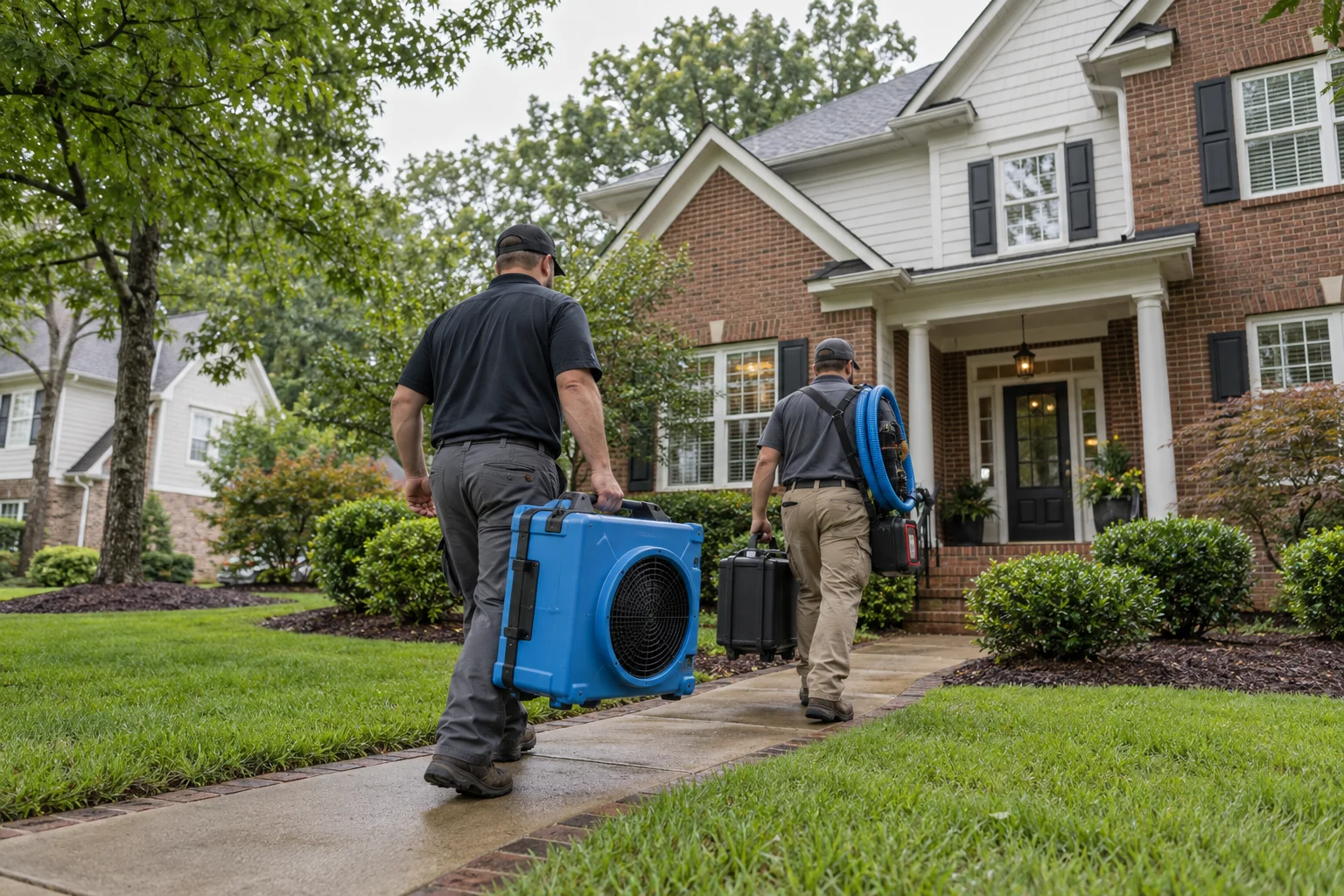

Mold Removal in Skybrook, Huntersville, NC
Skybrook is part of our Huntersville-area coverage. The first visit focuses on the property itself: how the rooms are used, where plumbing runs, how roof water drains, and whether the AC condensate line is working. Homes of different ages can develop the same hidden leak. Check beneath sinks, beside water heaters, behind appliances and below roof valleys after storms. If a property is unoccupied, arrange regular checks so a small drip does not continue unnoticed. Tell us the address and what you have found when you call; the inspection and written scope should reflect your home.
Get a call back
Fill in the form or call (980) 250-4059. Calls are answered day and night.
§ 01 / 10
About Skybrook
In Skybrook, roof leaks, blocked drainage and AC condensate can leave attic materials damp. Inspect flashing, roof penetrations and the insulation below a new ceiling stain. Wind-driven rain may reach a gap that does not leak in light weather. A moisture reading helps distinguish an old mark from an active leak. Fix the water source before removing damaged materials, and inspect the same location again after rain. Keep gutters and downspouts clear and have a qualified contractor assess roof repairs and safe attic access. For current weather hazards, consult the National Weather Service.
§ 02 / 10
Why do Skybrook homes get mold after storms?
Because the rain does not come straight down. A summer storm that drops an inch in an hour arrives with wind, and wind pushes water against surfaces that shed a calm rain fine: window frames, door thresholds, vents, and the joints where a roof plane meets a wall. Stucco is good at many things and perfect at nothing, so a hairline crack on a windward face can pass water into the framing behind it. On the slopes, runoff adds a second path: water that misses a drain, a swale or a scupper keeps moving downhill until it finds a foundation line, a stem wall, or a lower-level wall. A leak that starts during one storm often keeps working quietly for weeks after the sky clears.
§ 03 / 10
Where does mold hide in a Skybrook home?
Three places come first after a storm. The ceilings and walls below the roof's valleys and parapets, where a leak tracks before it stains. The window frames and lower walls on the faces the storm hit, where wind-driven water gets in around seals and flashing. And the attics, where wet insulation and decking sit in the heat long after the interior looks dry. From there, the list follows the house's grade: lower-level rooms under decks, garage walls cut into the slope, and storage rooms that nobody visits weekly. A musty smell that shows up in one wing after storm season is the classic Skybrook find. One mark on a ceiling usually means a wider wet area above it. The reverse is worth remembering too: no mark does not mean no leak, because an attic dries its own surfaces before anything shows below.
§ 04 / 10
What should you do in the first 10 minutes?
Stop any water you can reach, and stay clear of what you cannot. If a window or door is passing water, shut that room's door and put towels at the base, then photograph the entry point from inside and out when the storm passes. Do not stand under a ceiling that is bulging or dripping; leave the room and cut power to it at the breaker if you can reach it dry. Skip the scrub brush if you find growth, because disturbing it spreads spores. Write down the storm date, because the insurer and the inspection both start their timelines from it. Then call (980) 250-4059: the storm date, the entry point, and every room with a mark or a smell.
Line open now
Mold in a Skybrook home?
Describe what you see or smell. You do not need to diagnose anything yourself.
§ 05 / 10
The ceiling stain dried out. Is it still a problem?
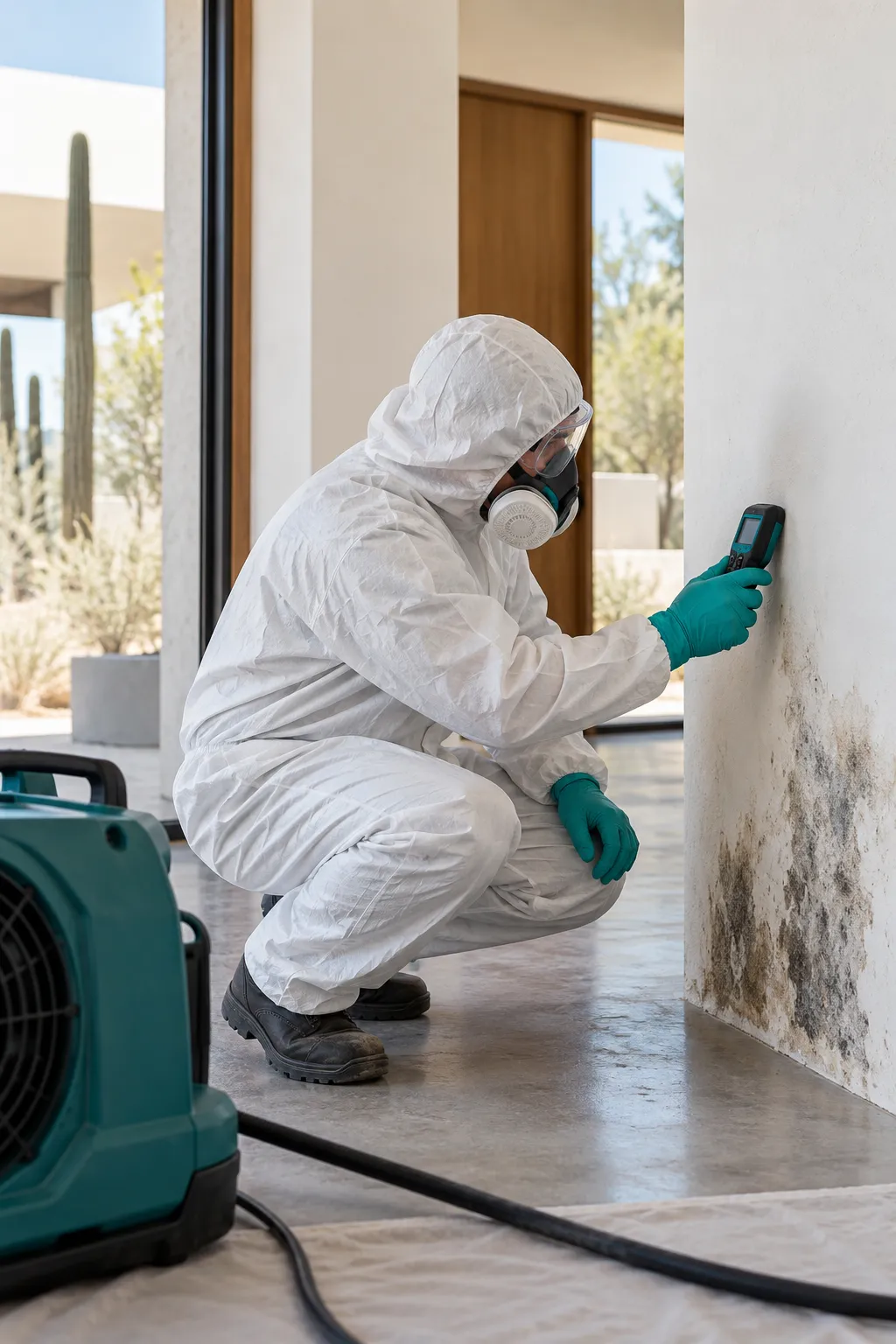
Usually, yes, because ceilings dry on the surface first. Above that dry paint sits the attic side: insulation, decking, and framing that hold moisture much longer, and summer storm heat bakes it in place. The stain fading is not evidence the leak stopped; it is evidence the surface dried. The two things that actually settle it: an attic inspection with a moisture meter after any roof leak, and a repeat reading a few days later, because a leak that reopens with the next storm will show up again in the same spot. Treat a dried ceiling stain as a bookmark, not a green light. Write down the 2 dates when you first spot it: the storm, and the day you saw the mark.
§ 06 / 10
How does a summer storm leak turn into mold?
In the same window as anywhere else, but the attic makes it faster. Mold needs wet material and a few days; an attic in July is warm, dark, and closed, which is the closest thing the Piedmont has to ideal growing conditions once moisture is present. The EPA's drying clock, which it sets at 24 to 48 hours, is running the whole time, and roof leaks found late blow past it, because the wet spot is above the room where anyone would look. By the time a stain shows below, the attic has usually been wet for days, not hours. That is why an attic check belongs in the same visit as any ceiling stain, and why the smell shows up before the stain sometimes does.
§ 07 / 10
How does the work handle hillside and attic access?
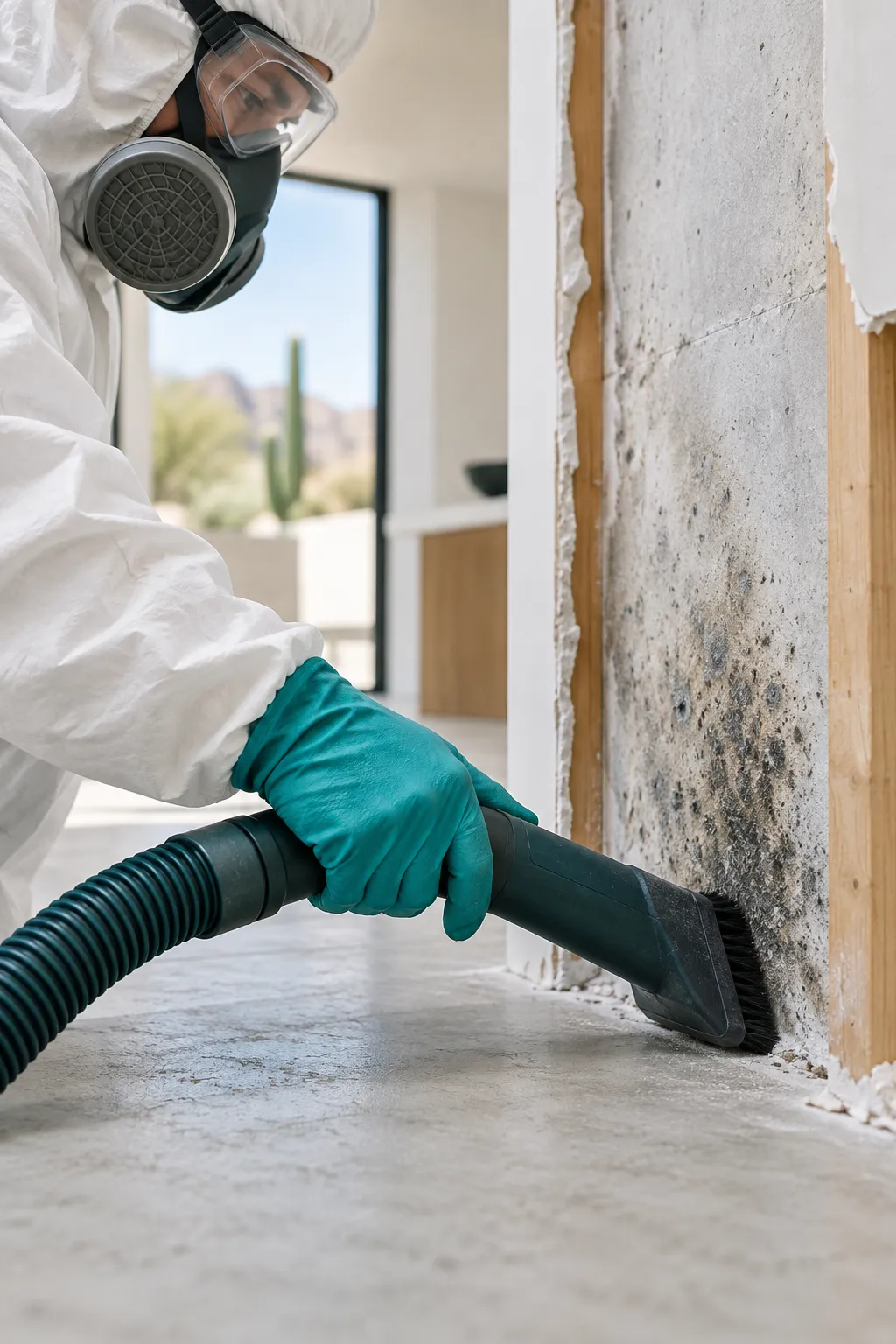
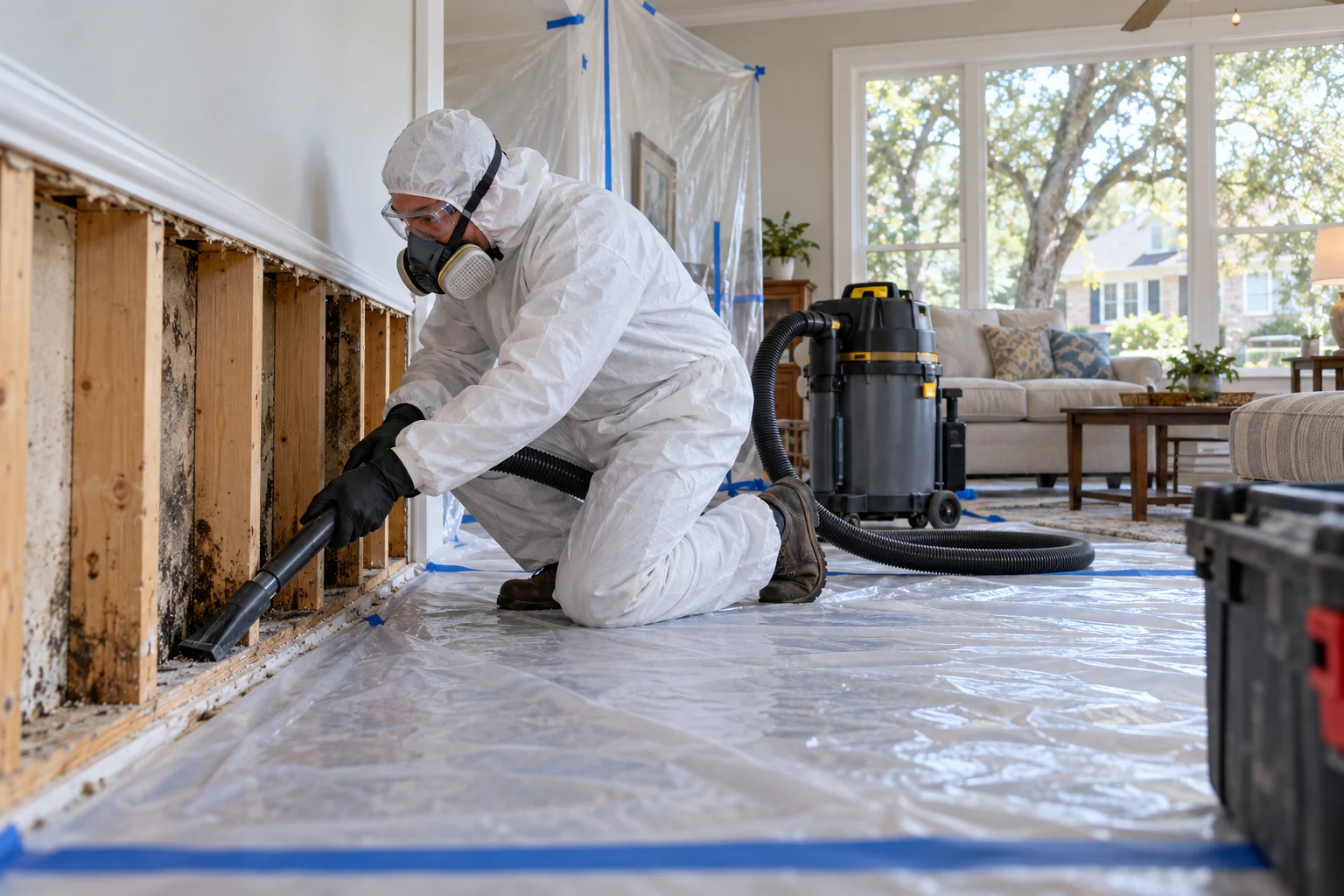
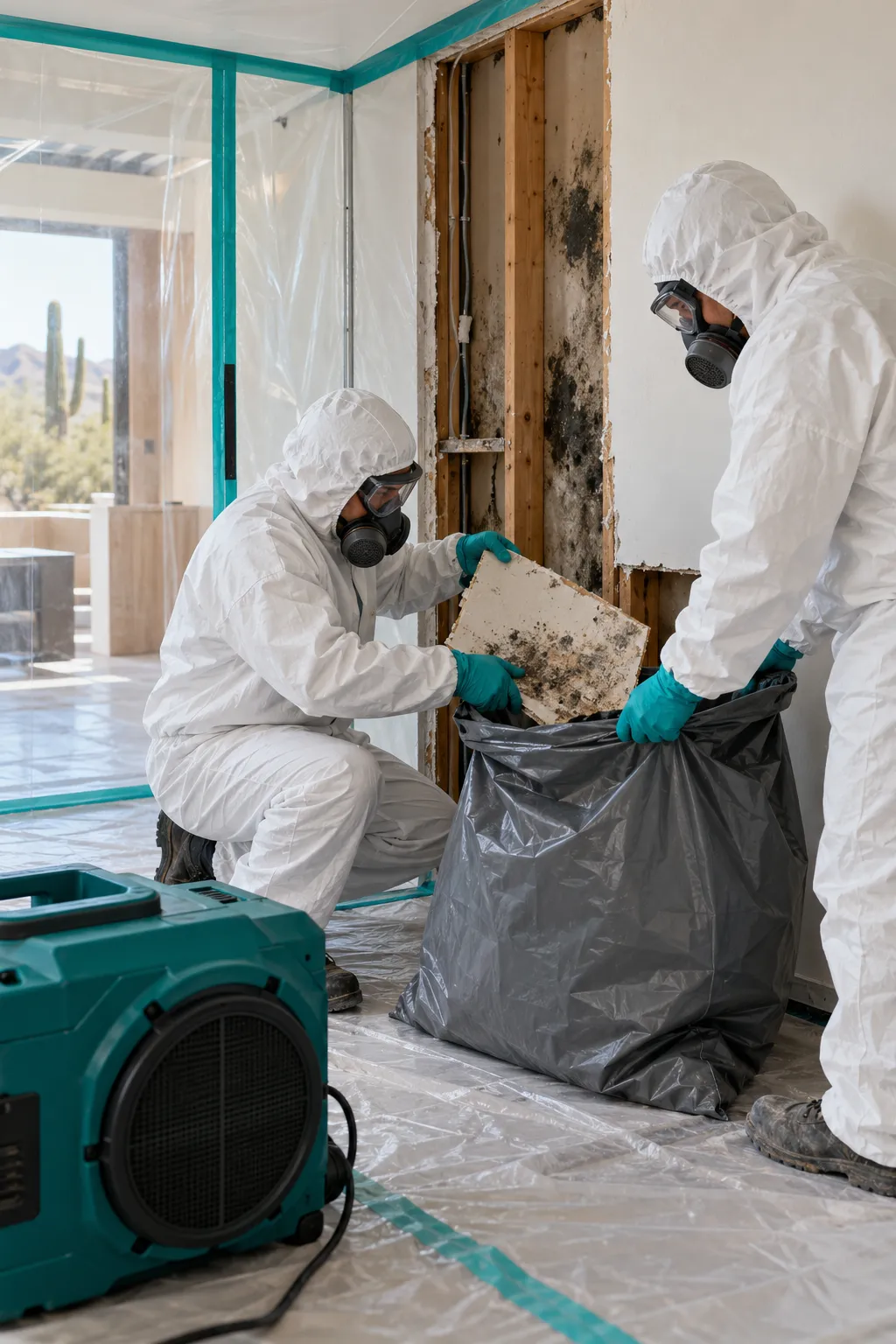
With equipment sized to the house, and containment that respects the layout. Attics with low clearances, vaulted ceilings and split levels get scoped first, because access decides how the job runs. Containment goes up around the work area with negative air, so dust stays out of the living space, and the crew works to the moisture map room by room, including the rooms below the actual leak, which is where water traveled. Readings set the finish line, and nothing gets rebuilt until the structure tests dry. The mold remediation page and the attic page cover both halves of this work. Ask for the attic access plan in the first conversation, because in a house on a grade, access decides how the week gets shaped. Equipment that fits through the actual stairwell beats equipment that does not.

§ 08 / 10
Our mold services for Skybrook homes
Inspection and testing traces the smell or the stain to the actual wet material. Attic mold removal covers the decking and insulation side after a roof leak. Remediation and removal handles confirmed growth anywhere in the house, and water extraction starts the clock when water is still moving. Skybrook is part of the North Huntersville area for coverage, alongside Birkdale, Northstone and the 28078 and 28078 ZIP codes. After storm season, a moisture check of the storm-side rooms and the attic is the highest value hour you can spend, and it catches most of what a visual walkthrough misses. Book it the week the storms taper off, before the heat settles back in. That hour is worth putting on the calendar now, before the next storm season writes its own version.
§ 09 / 103 questions
Questions people ask
01Does a Skybrook roof leak mean the roof is failing?
Not always. Wind-driven rain can find a seal, a flashing joint or a vent boot that handles normal rain fine. The roof gets evaluated after the leak is stopped, and the drying and inspection happen in parallel, so nothing waits.
02How soon after a storm should I get the attic checked?
As soon as you notice a stain, a smell, or a drip, and sooner if the storm was wind-driven. The 24 to 48 hour drying window starts at the leak, not at the discovery, so every day between the storm and the check is a day the attic stays wet.
03Is the slope itself a water risk for the house?
It is a water path. Runoff has to go somewhere, and on hillside lots it goes down until something stops it. Keeping drains, swales and scuppers clear in every season, and watching the low corners of the lot after storms, is the cheapest protection this terrain offers.