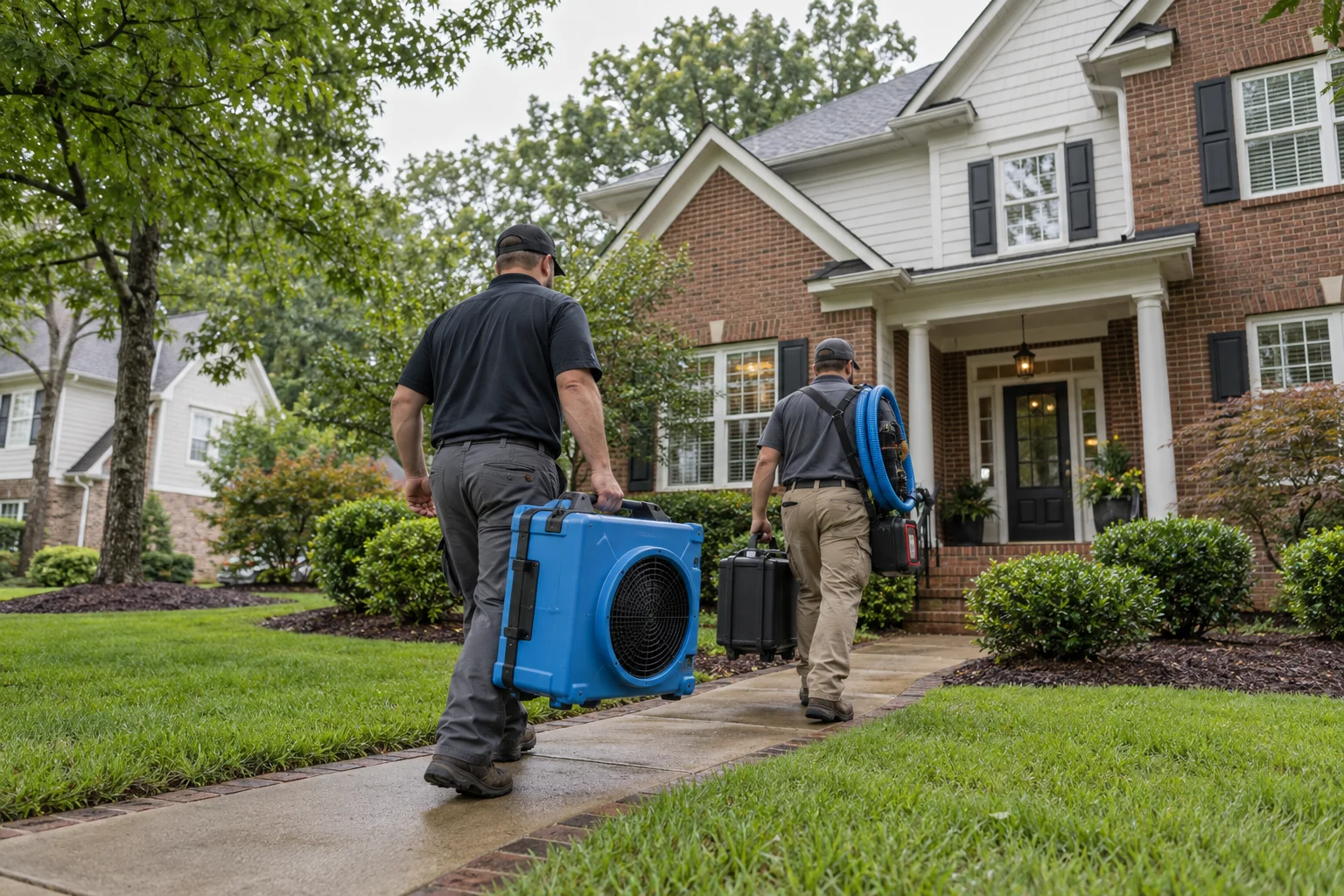

Mold Removal in Cedarfield, Huntersville, NC
Moisture problems in Cedarfield can come from plumbing leaks, AC condensate, storm runoff or persistent indoor humidity. A closed room or a concealed wall cavity may remain damp even after the visible surface feels dry. Check the water source, document the affected area and arrange a moisture assessment when the cause is unclear. The EPA recommends drying water-damaged materials within 24 to 48 hours. Keep drainage working, monitor indoor humidity and inspect a previously wet area after the next rain. The condition of the individual home matters more than a neighborhood average.
Get a call back
Fill in the form or call (980) 250-4059. Calls are answered day and night.
§ 01 / 10
About Cedarfield
Cedarfield is part of our Huntersville-area coverage. The first visit focuses on the property itself: how the rooms are used, where plumbing runs, how roof water drains, and whether the AC condensate line is working. Homes of different ages can develop the same hidden leak. Check beneath sinks, beside water heaters, behind appliances and below roof valleys after storms. If a property is unoccupied, arrange regular checks so a small drip does not continue unnoticed. Tell us the address and what you have found when you call; the inspection and written scope should reflect your home.
§ 02 / 10
Why do Cedarfield homes get mold?
Age and water, working together at low volume. Plumbing from the 1970s has been wet every day for 50 years, and the places it finally gives are the ones nobody sees: a supply line under a vanity, a drain behind a tub, a water heater at the end of its service life. Air conditioning was often added or replaced over the decades, and condensate lines from those retrofits run through closets and attics on paths that were not part of the original design. Add mature irrigation against the exterior walls, and the pattern shows: Cedarfield mold cases usually start as a slow leak that ran for weeks before anyone smelled it. The fix is the same everywhere: find the water, stop it, dry the space, verify.
§ 03 / 10
Where does mold hide in these homes?
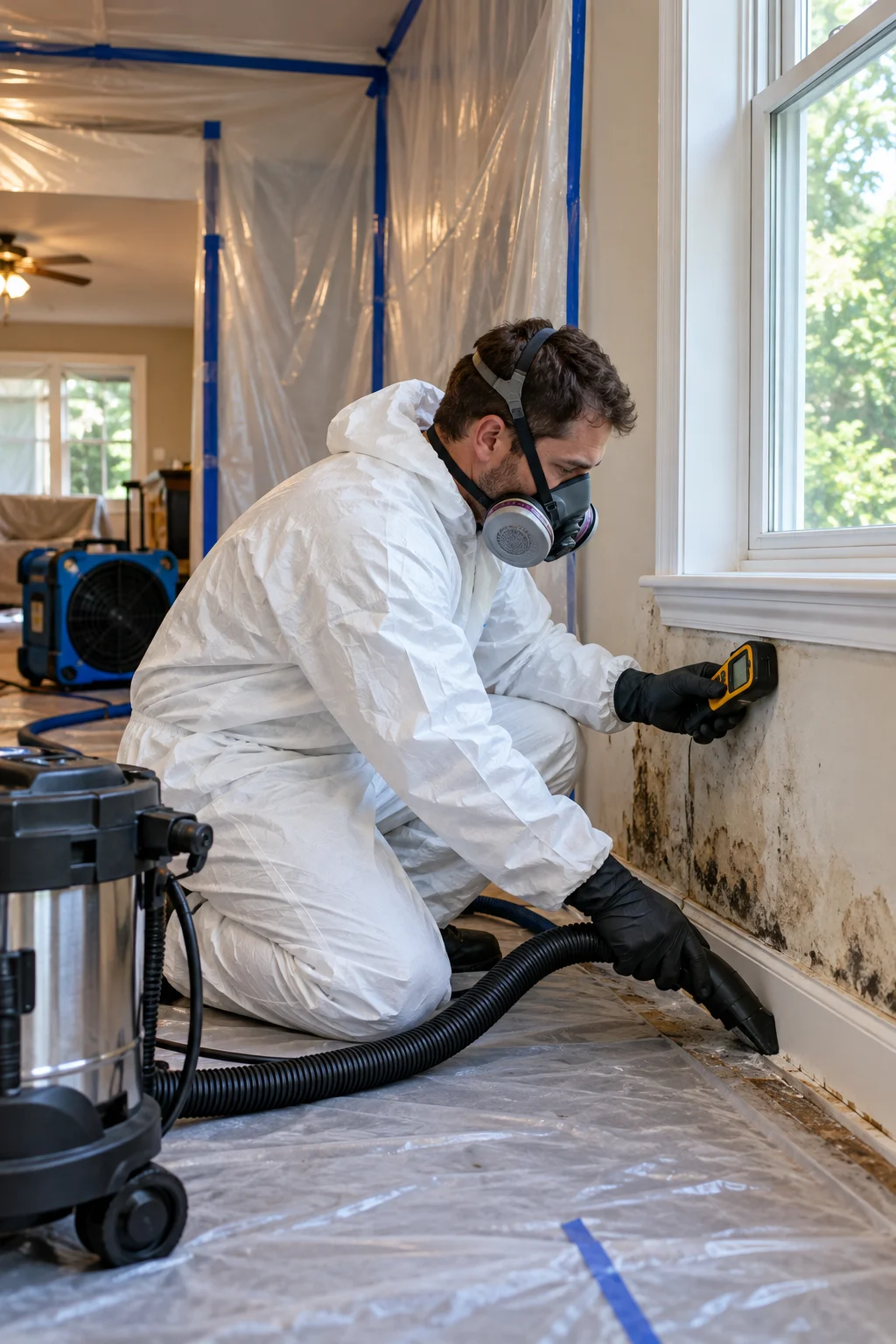
Start where 1970s plumbing ends: under the kitchen and bathroom sinks, behind the washing machine, and at the water heater. Then the retrofit spots: air handler closets and the drip pans added with newer AC, and the ceiling below an attic unit. Then the wet-use rooms: behind and below tubs and showers, where a slow pan or drain leak soaks the subfloor quietly. Townhomes and condos add the shared-wall question, since one unit's slow leak becomes the neighbor's stain. The single most common find in this neighborhood is a baseboard that looks fine and reads wet, because decades-old drywall is patient; the meter, not the eye, settles it. Start with the meter and the doubt disappears one room at a time, which is faster than any argument about a stain.
§ 04 / 10
What should you do in the first 10 minutes?
Stop the water first, even if that means shutting the whole house down at the main valve, which in an older home is the safest choice when you cannot tell what is leaking. Keep out of the wet room and away from outlets and appliances in the water. Photograph the area and the source before moving anything, including the stuff stored under the sink, because the insurer will want the whole picture. Do not scrub any growth you find; leave it and let the check confirm it. Then call (980) 250-4059 and describe the home: what year it was built, what you can see, and what you can smell, because in this neighborhood those three details usually find the source's family before the visit even starts.
Line open now
Mold in a Cedarfield home?
Describe what you see or smell. You do not need to diagnose anything yourself.
§ 05 / 10
What do 50 year old houses do differently?
They hide water better, and they leak slower. Materials were forgiving: drywall, plaster and wood absorb a small drip for a long time before showing a stain, so the visible mark is often the end of the story, not the start. Fixtures age in place, so shutoff valves under sinks stop closing fully, and a supply line that has been under pressure since the 1970s can fail without warning. Drain pans under AC units rust through at this age, and tile shower pans can leak below their tile for years. None of that changes how mold is removed; it changes how much detective work comes before, and how much material sits downstream of the discovery. That last part is why old-house leaks get planned like small projects instead of quick fixes.
§ 06 / 10
Condo or townhome: what changes?
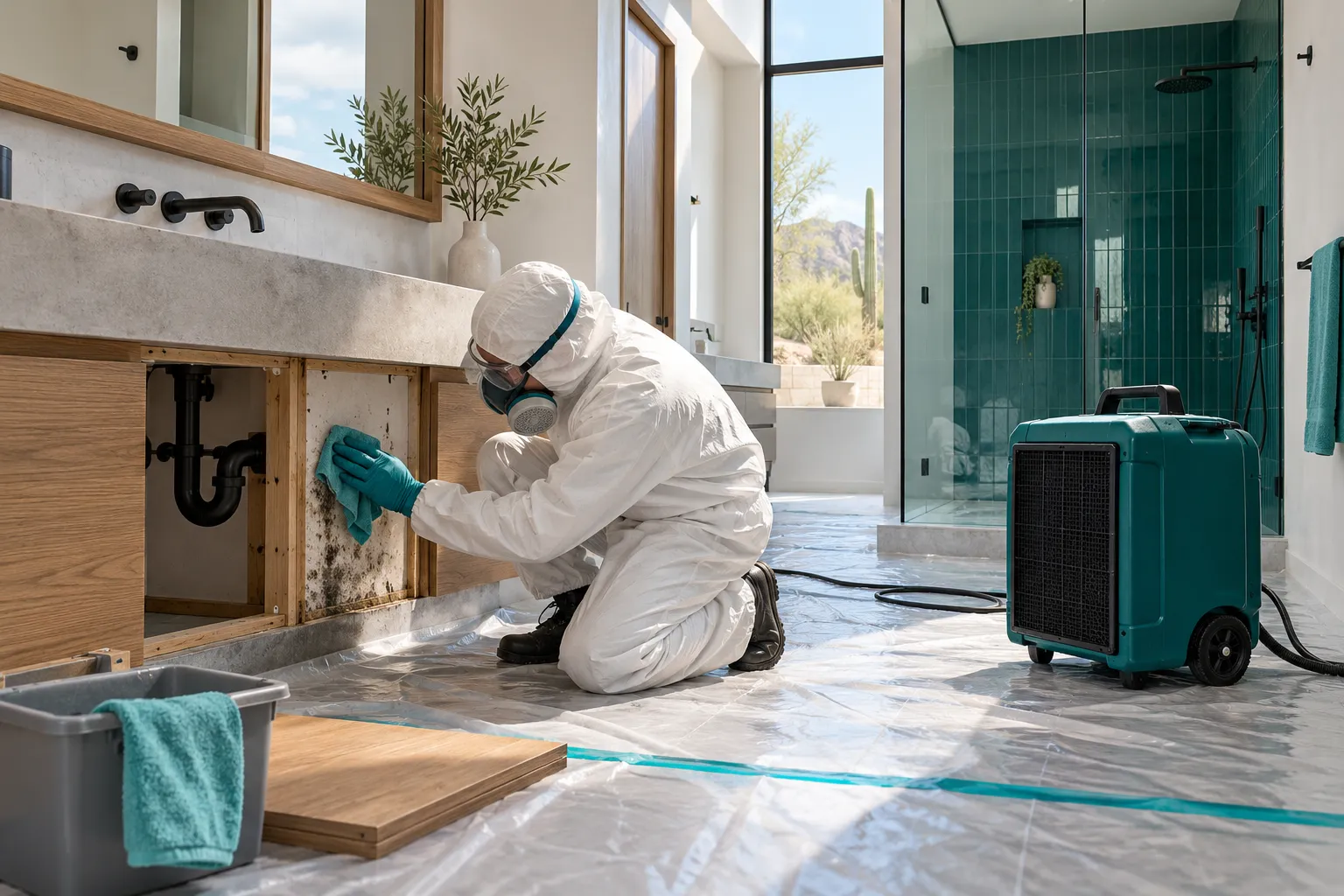
Two things: the walls, and the paperwork. Shared walls mean water can travel between units, so the first job is figuring out where the moisture actually started, inside your unit or next door, and containing the work so the neighbor's side stays clean. The paperwork matters because more than one party is usually involved: you, possibly a neighbor, and the HOA. Photograph your side the day you find it, report it to the HOA early, and keep every record together. The remediation itself is the same contained, verified process; the coordination is what decides how smoothly it goes. Keep every message in one thread with the HOA and the neighbor; in shared-wall situations, the paper trail beats memory every time.
§ 07 / 10
How does the work run in an older home?
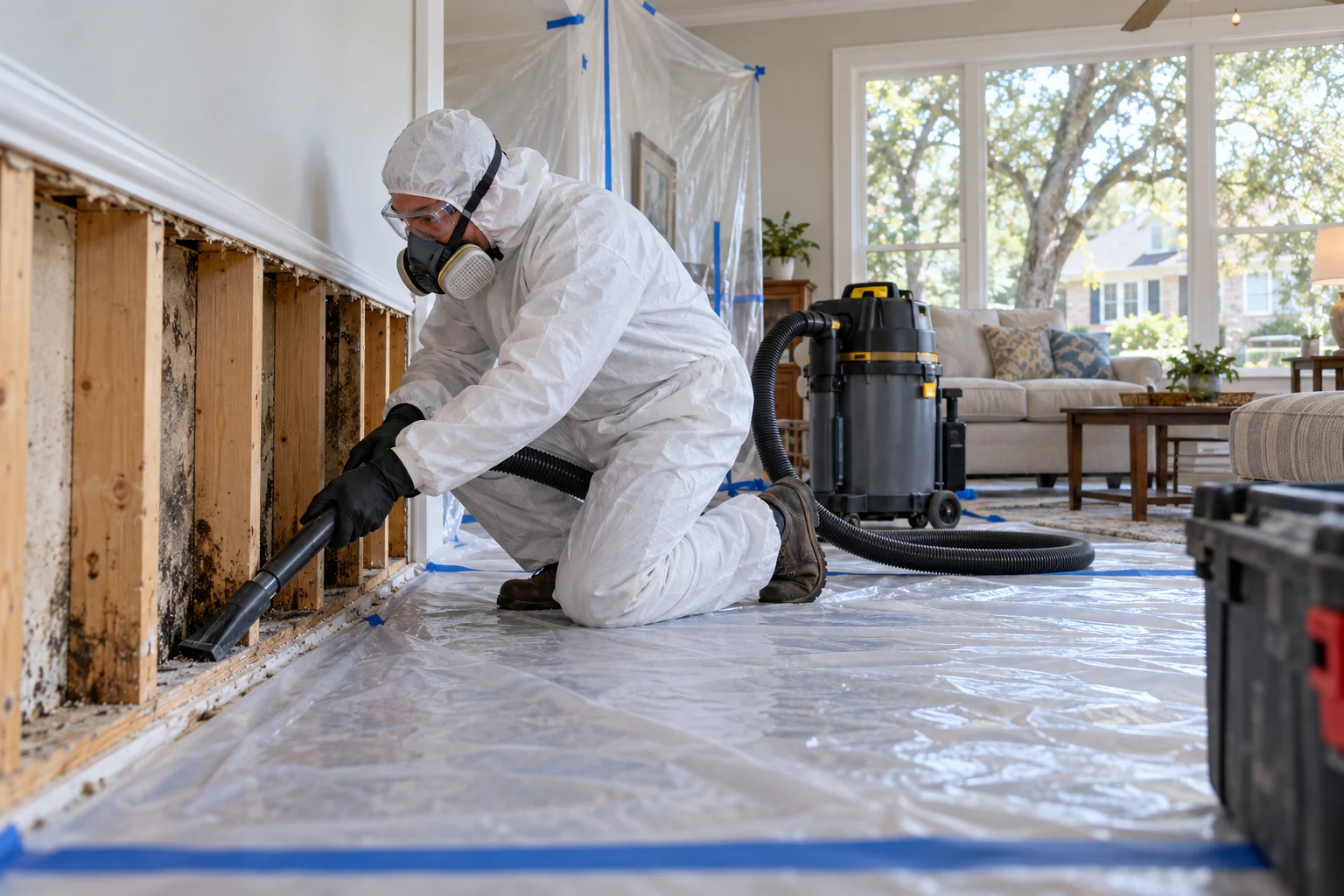
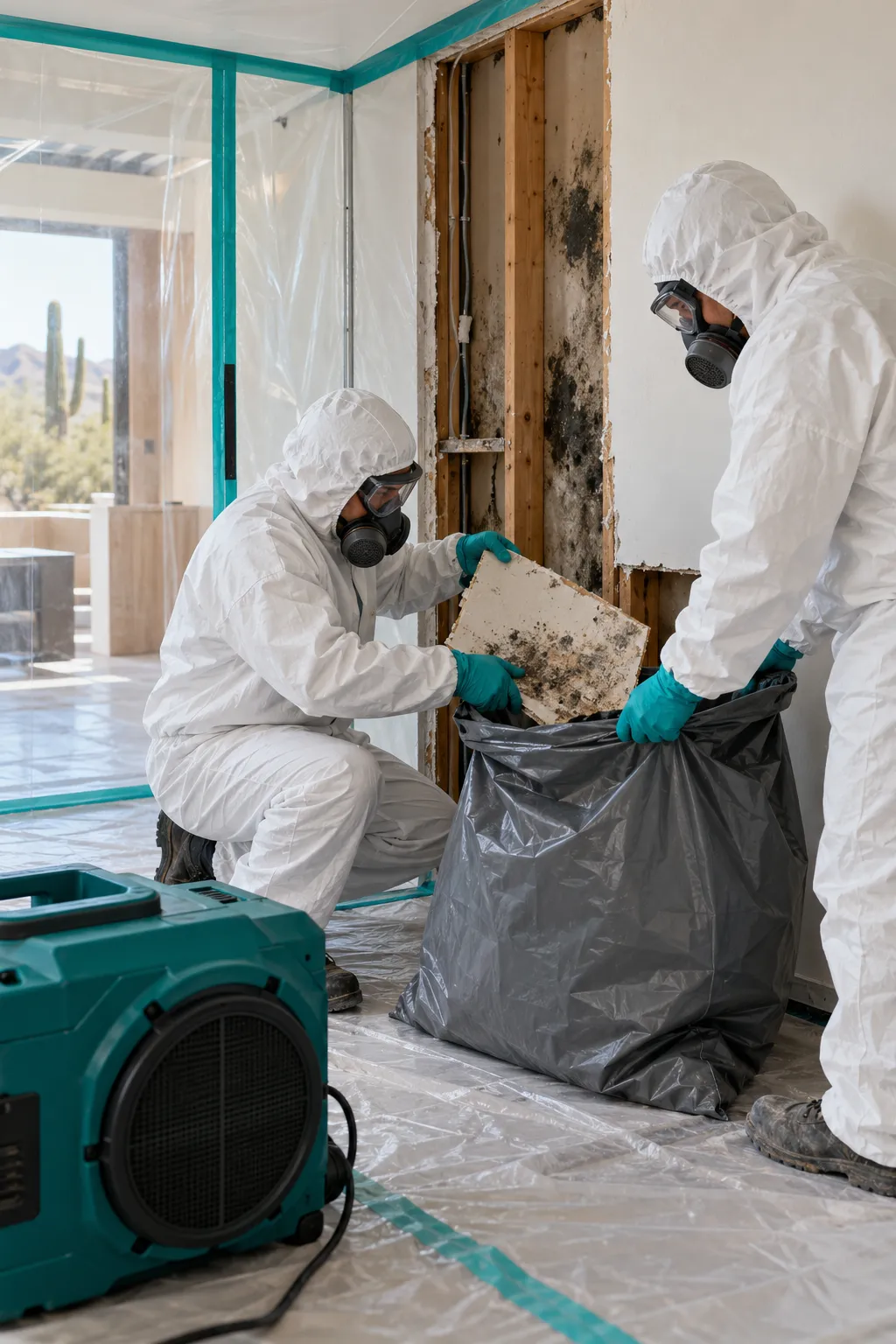
With the age of the house in the plan. Older shutoff valves get treated gently, and the crew expects the unexpected when it opens a cabinet that has not been moved since the 1980s. Water-soaked and moldy material gets bagged out, the remaining surfaces get cleaned, and drying runs to the dry standard with a daily log the owner can read. If the source is original plumbing, the repair gets coordinated with the plumber so both trades work from the same moisture map. The mold remediation page shows the full sequence. Ask for the log; it is the document that ends the arguments about whether the work is finished. The log also answers the question every owner asks around day three: are we there yet.
§ 08 / 10
Our mold services for Cedarfield homes
Inspection and testing is the right first step in a house this age, because the smell rarely points anywhere obvious. Remediation and removal handles confirmed growth, while the water damage side starts when the leak is still active. Cedarfield sits in central Huntersville, so it is covered along with the rest of the city on the service areas page. For an older home, one call and one walkthrough usually answers the whole question: what is wet, why, and what it takes to make it dry. The walkthrough visits every spot on the list above, and the report comes back in plain language, sized to the questions an older house actually raises, with the readings attached. The report is the point of the visit.
§ 09 / 103 questions
Questions people ask
01Should we replace the original plumbing before a problem starts?
That is a plumber's call, and a good plumber will assess the shutoff valves, the water heater age and the visible line materials before recommending anything. What a homeowner can do cheaply: look under cabinets quarterly, watch the water bill, and fix the first drip instead of the fifth.
02How do I know a shower pan is leaking if I cannot see under it?
The signs stack: a musty smell in the room next door, a soft spot beside the shower, a baseboard that swells, or a stain on the ceiling below if the shower is upstairs. A moisture meter confirms it without opening anything, and that reading decides the next step.
03We are in a condo. Who handles what?
The HOA's governing documents and your policy decide who covers which piece, and the discovery report is what both sides ask for. Photograph your unit, keep the timeline of events, and bring both the HOA and the neighbor in early, before the work spreads.